
How Do Octopuses Change Colour and Texture to Blend Into Their Surroundings?

Octopuses are among the ocean's most remarkable masters of camouflage. In just moments, an octopus can transform its appearance, shifting from a pale, smooth animal to a dark, spotted creature that resembles a rock or a patch of seaweed. This extraordinary ability helps it avoid predators, approach prey and survive in a wide range of underwater habitats.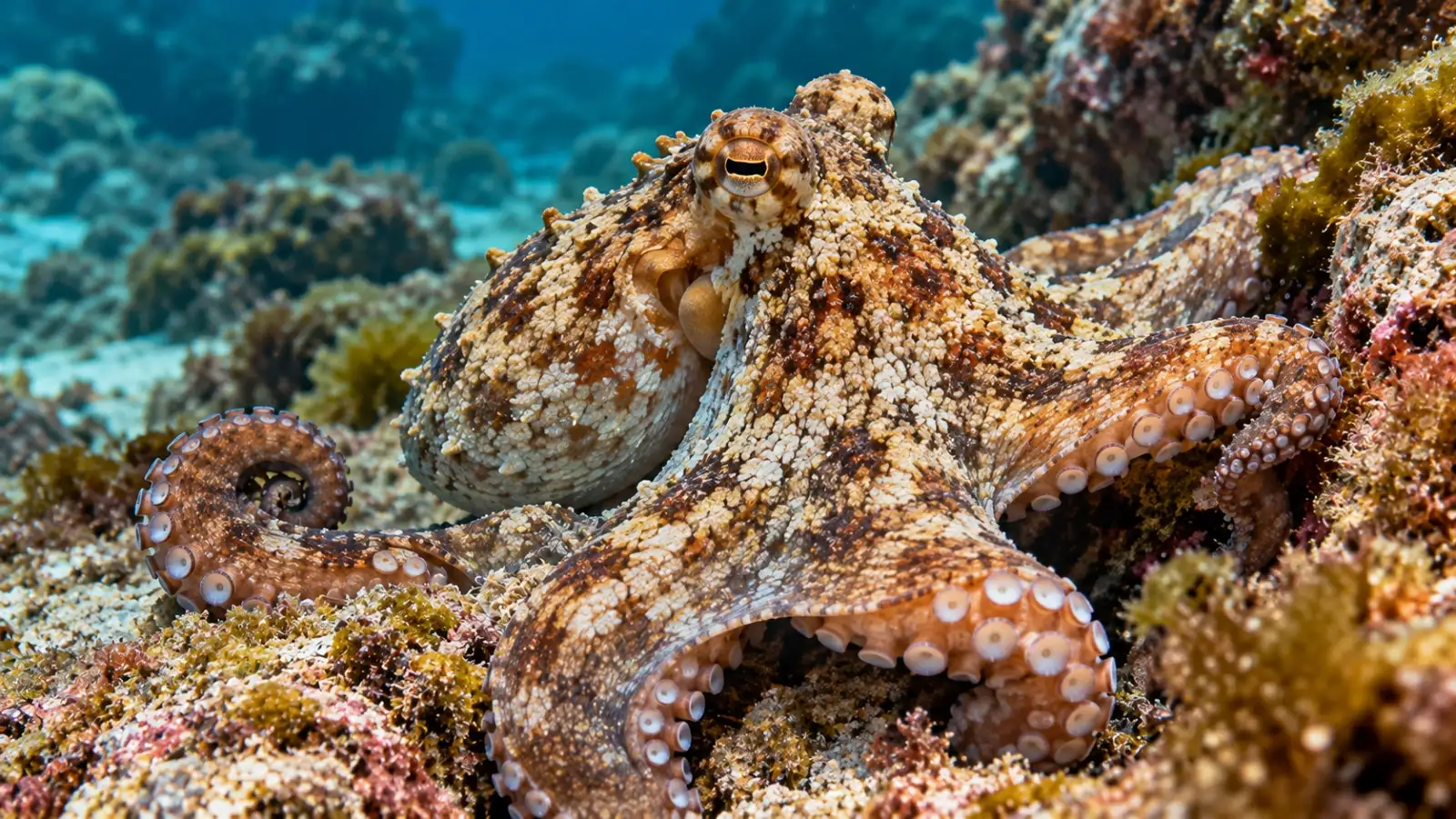
Unlike animals that rely mainly on fixed patterns or slow colour changes, octopuses have specialised skin structures controlled by their nervous system. These allow them to alter colour, patterns and even the physical texture of their skin. The result is a sophisticated disguise that can make an octopus surprisingly difficult to spot.
Each chromatophore contains a small elastic sac filled with pigment. Muscles surrounding the sac respond to nerve signals from the octopus's brain. When these muscles contract, the sac expands, making its pigment more visible. When the muscles relax, the sac shrinks and the colour becomes less noticeable.
By expanding and contracting different combinations of chromatophores, an octopus can produce a variety of colours and patterns. Depending on the species, these may include shades of yellow, red, orange and brown, as well as darker markings.
The process happens extremely quickly. This allows an octopus to adjust its appearance as it moves across sand, rocks, coral reefs and other underwater surfaces.
Iridophores contain structures that reflect particular wavelengths of light. They can produce shimmering or iridescent effects, including blue, green, silver and other reflective tones.
Leucophores scatter light more broadly and can appear pale or white. Their effect depends partly on the surrounding light and the way other skin structures interact with them.
Together, these structures expand the range of visual effects an octopus can produce. They help create contrasting shades, reflective highlights and patterns that make the animal less conspicuous against its surroundings.
To overcome this problem, many octopuses can alter the texture of their skin using small projections called papillae. These can be raised or flattened through muscular control.
When the papillae are relaxed, the skin may appear relatively smooth. When they rise, the surface can become bumpy, rough or spiky. This helps the animal imitate the appearance of rocks, coral, algae and other textured objects.
The degree of texture change varies by species. Some octopuses can create prominent projections, while others produce subtler changes.
By combining colour adjustments with changes in skin texture, an octopus can disguise not just its shade but also the outline and surface appearance of its body.
Visual information helps the animal assess its surroundings. Signals from its nervous system then activate the muscles responsible for expanding chromatophores and raising papillae.
This close connection between sensing and movement allows an octopus to respond quickly when its background changes or a potential threat approaches.
Octopuses also have an unusually extensive nervous system, with a large proportion of their neurons distributed through their arms. However, colour and pattern control involves neural pathways connected to the brain and specialised nerve centres, rather than simply being a result of independent decisions made by each arm.
The exact mechanisms behind some aspects of octopus camouflage are still being investigated. Scientists continue to study how these animals select appropriate patterns and coordinate the different elements of their disguise.
Camouflage helps reduce this risk. By matching the brightness, pattern and texture of the background, an octopus can make it harder for predators to recognise its body.
It may flatten itself against a rock, settle among seaweed or remain motionless on the seabed. In some situations, changing its appearance is more effective than immediately swimming away.
If camouflage fails, an octopus has other defensive options. Depending on the species and circumstances, it may release ink, jet away using water propulsion or squeeze into a narrow hiding place.
Camouflage is therefore one part of a broader set of survival strategies.
Octopuses feed on a range of animals, including crabs, prawns, molluscs and fish, depending on the species. Approaching prey without attracting attention can improve their chances of making a successful attack.
An octopus may use the colour and texture of nearby rocks or coral to remain hidden as it moves towards a target. Its flexible body allows it to explore crevices and reach prey hiding in tight spaces.
Some species also change their appearance during interactions with other animals. Certain patterns can be associated with aggression, threat displays or other forms of signalling rather than camouflage.
This shows that colour change is a versatile tool. Its purpose depends on the situation, whether the octopus needs to hide, hunt or respond to another animal.
Most octopuses studied have only one main type of visual pigment in their eyes, suggesting that they have limited conventional colour vision. This creates an intriguing scientific question: how can an animal with apparently limited colour discrimination produce such convincing colour matches?
One possibility is that octopuses rely heavily on brightness, contrast, edges, patterns and texture when assessing their surroundings. The relationship between these visual features and the colours of familiar objects may help them produce effective disguises.
Researchers have also investigated whether the structure of the eye or other sensory mechanisms could contribute to colour-related responses. No single explanation has resolved the question completely.
It is also important to remember that camouflage does not always require an exact colour match. An animal can become much harder to detect by matching the background's overall brightness, pattern and texture.
The mimic octopus , found in parts of the Indo-Pacific, is well known for its ability to imitate the appearance and behaviour of different creatures. Depending on the circumstances, it can adopt movements and body postures resembling animals such as flatfish or sea snakes.
This behaviour differs from ordinary background matching. Rather than simply blending into sand or rocks, the octopus may resemble another animal to confuse potential predators or discourage an attack.
Not every octopus performs this kind of mimicry. Many species rely primarily on background matching, disruptive patterns and changes in texture.
Nevertheless, these varied strategies demonstrate how flexible octopus behaviour can be in response to different threats and habitats.
These abilities help octopuses hide from predators, approach prey and interact with their surroundings. Although scientists have explained many of the biological mechanisms involved, questions remain about how octopuses interpret colour and select the right camouflage pattern.
Their remarkable skin is a reminder that survival in the ocean often depends on more than speed or strength. Sometimes, the ability to become almost invisible is the most effective defence of all.
Unlike animals that rely mainly on fixed patterns or slow colour changes, octopuses have specialised skin structures controlled by their nervous system. These allow them to alter colour, patterns and even the physical texture of their skin. The result is a sophisticated disguise that can make an octopus surprisingly difficult to spot.
1. Chromatophores Allow Octopuses to Change Colour
The secret behind an octopus's rapid colour changes lies in specialised structures called chromatophores. These are tiny pigment-containing organs found throughout the skin.Each chromatophore contains a small elastic sac filled with pigment. Muscles surrounding the sac respond to nerve signals from the octopus's brain. When these muscles contract, the sac expands, making its pigment more visible. When the muscles relax, the sac shrinks and the colour becomes less noticeable.
By expanding and contracting different combinations of chromatophores, an octopus can produce a variety of colours and patterns. Depending on the species, these may include shades of yellow, red, orange and brown, as well as darker markings.
The process happens extremely quickly. This allows an octopus to adjust its appearance as it moves across sand, rocks, coral reefs and other underwater surfaces.
2. Special Skin Structures Help Create Shimmering Colours
Chromatophores are not the only structures responsible for an octopus's appearance. Some species also have iridophores and leucophores, which influence how light interacts with their skin.Iridophores contain structures that reflect particular wavelengths of light. They can produce shimmering or iridescent effects, including blue, green, silver and other reflective tones.
Leucophores scatter light more broadly and can appear pale or white. Their effect depends partly on the surrounding light and the way other skin structures interact with them.
Together, these structures expand the range of visual effects an octopus can produce. They help create contrasting shades, reflective highlights and patterns that make the animal less conspicuous against its surroundings.
3. Papillae Let Octopuses Change Their Skin Texture
Colour alone is not enough to imitate many underwater surfaces. A smooth, brown octopus may still stand out against a rough, uneven rock.To overcome this problem, many octopuses can alter the texture of their skin using small projections called papillae. These can be raised or flattened through muscular control.
When the papillae are relaxed, the skin may appear relatively smooth. When they rise, the surface can become bumpy, rough or spiky. This helps the animal imitate the appearance of rocks, coral, algae and other textured objects.
The degree of texture change varies by species. Some octopuses can create prominent projections, while others produce subtler changes.
By combining colour adjustments with changes in skin texture, an octopus can disguise not just its shade but also the outline and surface appearance of its body.
4. Their Nervous System Controls the Transformation
An octopus does not need to wait for its skin to grow new pigments or develop a different pattern. Its nervous system can rapidly control the structures already present.Visual information helps the animal assess its surroundings. Signals from its nervous system then activate the muscles responsible for expanding chromatophores and raising papillae.
This close connection between sensing and movement allows an octopus to respond quickly when its background changes or a potential threat approaches.
Octopuses also have an unusually extensive nervous system, with a large proportion of their neurons distributed through their arms. However, colour and pattern control involves neural pathways connected to the brain and specialised nerve centres, rather than simply being a result of independent decisions made by each arm.
The exact mechanisms behind some aspects of octopus camouflage are still being investigated. Scientists continue to study how these animals select appropriate patterns and coordinate the different elements of their disguise.
5. Camouflage Helps Octopuses Avoid Predators
Many marine animals prey on octopuses, including larger fish, sharks and marine mammals. An octopus that remains clearly visible against the seabed may become an easy target.Camouflage helps reduce this risk. By matching the brightness, pattern and texture of the background, an octopus can make it harder for predators to recognise its body.
It may flatten itself against a rock, settle among seaweed or remain motionless on the seabed. In some situations, changing its appearance is more effective than immediately swimming away.
If camouflage fails, an octopus has other defensive options. Depending on the species and circumstances, it may release ink, jet away using water propulsion or squeeze into a narrow hiding place.
Camouflage is therefore one part of a broader set of survival strategies.
6. Colour Changes Also Help Octopuses Hunt
Blending into the environment is useful not only for defence but also for hunting.Octopuses feed on a range of animals, including crabs, prawns, molluscs and fish, depending on the species. Approaching prey without attracting attention can improve their chances of making a successful attack.
An octopus may use the colour and texture of nearby rocks or coral to remain hidden as it moves towards a target. Its flexible body allows it to explore crevices and reach prey hiding in tight spaces.
Some species also change their appearance during interactions with other animals. Certain patterns can be associated with aggression, threat displays or other forms of signalling rather than camouflage.
This shows that colour change is a versatile tool. Its purpose depends on the situation, whether the octopus needs to hide, hunt or respond to another animal.
7. Can Octopuses Match Every Colour Around Them?
Octopus camouflage can look almost perfect to human observers, but scientists are still investigating how these animals select colours and patterns so effectively.Most octopuses studied have only one main type of visual pigment in their eyes, suggesting that they have limited conventional colour vision. This creates an intriguing scientific question: how can an animal with apparently limited colour discrimination produce such convincing colour matches?
One possibility is that octopuses rely heavily on brightness, contrast, edges, patterns and texture when assessing their surroundings. The relationship between these visual features and the colours of familiar objects may help them produce effective disguises.
Researchers have also investigated whether the structure of the eye or other sensory mechanisms could contribute to colour-related responses. No single explanation has resolved the question completely.
It is also important to remember that camouflage does not always require an exact colour match. An animal can become much harder to detect by matching the background's overall brightness, pattern and texture.
8. Some Octopuses Use Mimicry to Fool Other Animals
Certain species take camouflage a step further by changing their body shape and movement to resemble other marine animals.The mimic octopus , found in parts of the Indo-Pacific, is well known for its ability to imitate the appearance and behaviour of different creatures. Depending on the circumstances, it can adopt movements and body postures resembling animals such as flatfish or sea snakes.
This behaviour differs from ordinary background matching. Rather than simply blending into sand or rocks, the octopus may resemble another animal to confuse potential predators or discourage an attack.
Not every octopus performs this kind of mimicry. Many species rely primarily on background matching, disruptive patterns and changes in texture.
Nevertheless, these varied strategies demonstrate how flexible octopus behaviour can be in response to different threats and habitats.
Why Octopus Camouflage Is So Remarkable
An octopus can transform its appearance because its skin contains specialised pigment organs, light-reflecting structures and flexible projections. Its nervous system coordinates these features, allowing it to adjust colour, patterns and texture rapidly.These abilities help octopuses hide from predators, approach prey and interact with their surroundings. Although scientists have explained many of the biological mechanisms involved, questions remain about how octopuses interpret colour and select the right camouflage pattern.
Their remarkable skin is a reminder that survival in the ocean often depends on more than speed or strength. Sometimes, the ability to become almost invisible is the most effective defence of all.
Next Story