
How One Indian Dish Became Hundreds of Different Recipes

Ask for a curry in India and there is no guarantee you will get the same kind of dish twice. In fact, the word “curry” itself covers an enormous range of preparations that differ in ingredients, texture, cooking techniques and even the meaning of the dish. From thick gravies in northern kitchens to coconut-based preparations along the western and southern coasts, Indian curry has developed hundreds of regional interpretations. Some are fiery, others surprisingly mild. Some use dairy, while others rely on coconut, tamarind or ground nuts for richness. What looks like one category of food is actually a map of India's geography and history.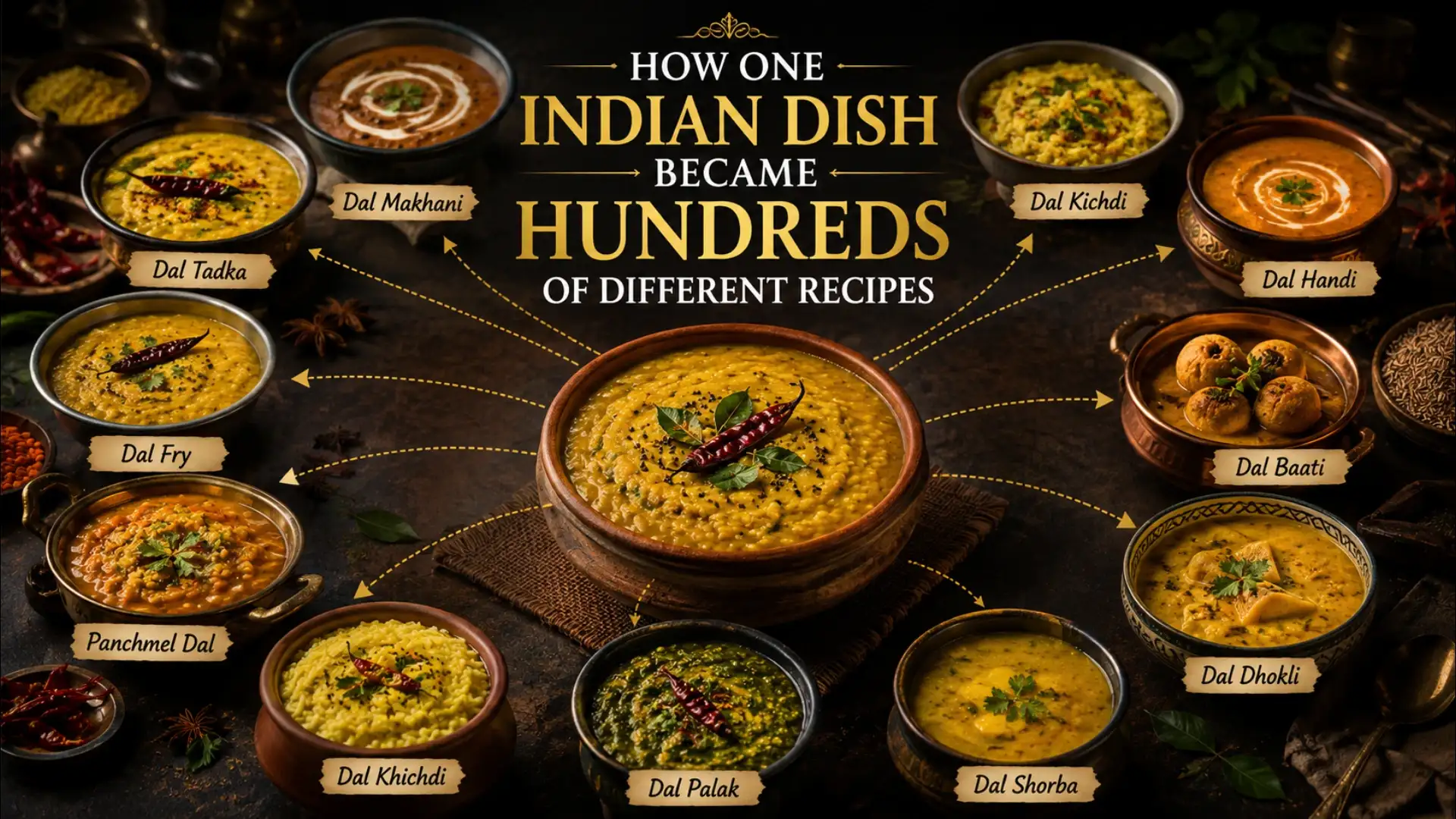
The term became widely used in English to describe a broad group of spiced preparations. Within India, however, people generally identify dishes by their specific names, ingredients and regional traditions.
A Punjabi kadhi, Bengali machher jhol, Kerala fish curry and Goan vindaloo can all be described internationally as curries, yet they are remarkably different foods.
The diversity comes partly from the ingredients available in each region and partly from generations of culinary traditions.
In northern India, dairy products such as yoghurt, paneer, cream and ghee have traditionally played a larger role in many dishes.
Eastern cuisines often make extensive use of freshwater fish, mustard and rice, reflecting the region's rivers, wetlands and agricultural landscape.
Even within a single state, recipes can change significantly between communities and districts.
They may be cooked with mustard seeds, simmered in a tomato-based gravy, combined with peas, mashed into spiced fillings or incorporated into festive dishes.
Likewise, lentils can become a simple everyday dal, a thick festive preparation or part of a complex curry depending on the region.
The cooking method can matter just as much as the ingredients. Tempering spices in hot oil or ghee, roasting them before grinding, or adding them at different stages can completely alter the final flavour.
Ingredients such as chillies, tomatoes and potatoes arrived in India after the Columbian Exchange and were gradually absorbed into local cuisines. Today, they feel so fundamental to Indian cooking that their relatively recent arrival can be easy to forget.
Migration created further variations as communities adapted familiar recipes to new environments and available ingredients.
The hundreds of regional curry variations demonstrate how food evolves when geography, agriculture, migration and family traditions interact over generations.
A curry recipe is therefore more than a list of ingredients. It can reveal where people lived, what they grew, what they traded and how they cooked for their families.
That may be the real reason Indian curry never seems to run out of surprises: there was never just one recipe to begin with.
There Is No Single Indian Curry
The first surprise is that “curry” is not a single traditional Indian dish.The term became widely used in English to describe a broad group of spiced preparations. Within India, however, people generally identify dishes by their specific names, ingredients and regional traditions.
A Punjabi kadhi, Bengali machher jhol, Kerala fish curry and Goan vindaloo can all be described internationally as curries, yet they are remarkably different foods.
The diversity comes partly from the ingredients available in each region and partly from generations of culinary traditions.
Geography Changes the Recipe
Coastal regions have historically had access to abundant seafood and coconuts, which explains the importance of coconut milk, grated coconut and fish in many southern and western preparations.In northern India, dairy products such as yoghurt, paneer, cream and ghee have traditionally played a larger role in many dishes.
Eastern cuisines often make extensive use of freshwater fish, mustard and rice, reflecting the region's rivers, wetlands and agricultural landscape.
Even within a single state, recipes can change significantly between communities and districts.
The Same Ingredient Can Produce Different Dishes
Potatoes offer a good example. They appear in countless Indian preparations, but their treatment varies enormously.They may be cooked with mustard seeds, simmered in a tomato-based gravy, combined with peas, mashed into spiced fillings or incorporated into festive dishes.
Likewise, lentils can become a simple everyday dal, a thick festive preparation or part of a complex curry depending on the region.
The cooking method can matter just as much as the ingredients. Tempering spices in hot oil or ghee, roasting them before grinding, or adding them at different stages can completely alter the final flavour.
Trade and Migration Added New Layers
Indian curry traditions also carry traces of centuries of contact with other parts of the world.You may also like
- Festive skin prep: Why your last-minute glow plan fails, and what actually works
- In this Assam school, children pay their fees with plastic waste: How Akshar School is turning trash into a tool for education
- Raksha Bandhan 2026: Why August 28 Matters More Than August 27 2026
- AI is changing more than technology: Why the TOI AI Quotient Awards 2026 are also about the leaders behind the change
- The fire that witnessed Shiva and Parvati's wedding still burns in Uttarakhand: Couples are now choosing this sacred temple for getting married in place of fancy hotels
Ingredients such as chillies, tomatoes and potatoes arrived in India after the Columbian Exchange and were gradually absorbed into local cuisines. Today, they feel so fundamental to Indian cooking that their relatively recent arrival can be easy to forget.
Migration created further variations as communities adapted familiar recipes to new environments and available ingredients.
Why Curry Diversity Still Matters
Indian food is often presented abroad as a handful of familiar dishes, but that barely scratches the surface.The hundreds of regional curry variations demonstrate how food evolves when geography, agriculture, migration and family traditions interact over generations.
A curry recipe is therefore more than a list of ingredients. It can reveal where people lived, what they grew, what they traded and how they cooked for their families.
That may be the real reason Indian curry never seems to run out of surprises: there was never just one recipe to begin with.






Loving Newspoint? Download the app now
