
How Penguins Keep Their Eggs Warm When Temperatures Drop Below Freezing

Antarctica is one of the coldest places on Earth, where powerful winds and freezing temperatures can make survival difficult. Yet, emperor penguins manage to raise their young in this harsh environment, even during the Antarctic winter . One of the most remarkable parts of their parenting is keeping their eggs warm enough to develop when the surrounding temperature can fall far below freezing. They do not build nests from branches or leaves. Instead, they rely on their bodies, specialised feet and close cooperation to protect their eggs from the extreme cold.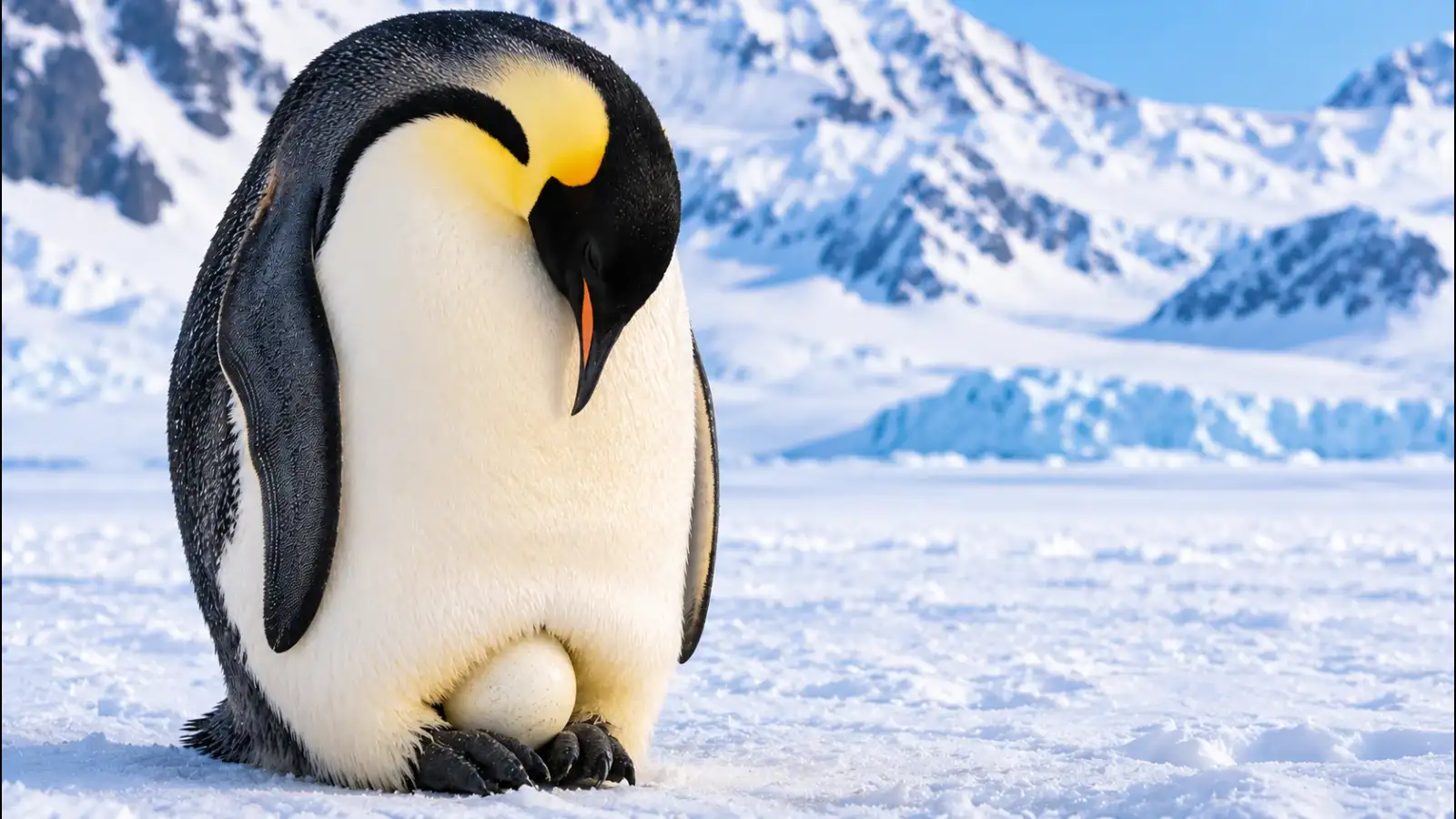
This pouch acts like a natural blanket, protecting the egg from icy air and direct contact with the frozen ground. The male keeps the egg tucked close to his warm body, maintaining the conditions needed for the developing chick.
Even a brief drop of the egg onto the ice can be dangerous, which is why the transfer between parents requires considerable care.
The brood pouch is particularly important during incubation. It creates a warm space between the parent's body and the egg, helping maintain a stable temperature despite the freezing conditions outside.
The penguins on the outside of the group face harsher conditions, while those in the centre benefit from shared body heat. They regularly shift positions, allowing different individuals to move between the warmer centre and colder outer edges.
This collective behaviour helps conserve energy during the long incubation period.
During this time, the male can go without food for an extended period, relying on stored body fat to survive. Once the female returns, the parents carefully transfer responsibility for the chick, allowing the male to head towards the sea to feed.
The male's ability to keep the egg warm, combined with the colony's huddling behaviour and cooperation between parents, gives the developing chick a chance to survive.
Penguins demonstrate how remarkable animal adaptations can make life possible in extreme environments. Their combination of body insulation, careful egg positioning and teamwork is essential to raising the next generation in one of the world's harshest habitats.
The Male Penguin Carries the Egg on His Feet
In emperor penguins, the male takes responsibility for keeping the egg warm after the female lays it. He carefully balances the egg on top of his feet and covers it with a loose fold of feathered skin called the brood pouch.This pouch acts like a natural blanket, protecting the egg from icy air and direct contact with the frozen ground. The male keeps the egg tucked close to his warm body, maintaining the conditions needed for the developing chick.
Even a brief drop of the egg onto the ice can be dangerous, which is why the transfer between parents requires considerable care.
A Special Adaptation Helps Protect the Egg
Emperor penguins have evolved physical features that help them survive extreme cold. Their feet and legs are adapted to limit heat loss, while their thick feathers and layer of body fat provide insulation.The brood pouch is particularly important during incubation. It creates a warm space between the parent's body and the egg, helping maintain a stable temperature despite the freezing conditions outside.
Penguins Huddle Together for Warmth
Male emperor penguins do not face the Antarctic winter alone. They gather in large groups called huddles, standing close together to reduce exposure to freezing winds.The penguins on the outside of the group face harsher conditions, while those in the centre benefit from shared body heat. They regularly shift positions, allowing different individuals to move between the warmer centre and colder outer edges.
This collective behaviour helps conserve energy during the long incubation period.
The Female Returns With Food
While the male incubates the egg, the female travels to the ocean to feed. She spends several weeks hunting fish, squid and krill before returning with food for the newly hatched chick.During this time, the male can go without food for an extended period, relying on stored body fat to survive. Once the female returns, the parents carefully transfer responsibility for the chick, allowing the male to head towards the sea to feed.
Why Timing Is So Important
Emperor penguins follow a carefully timed breeding cycle. They lay their eggs during the Antarctic autumn so that the chicks hatch as conditions begin to improve and food becomes more accessible.The male's ability to keep the egg warm, combined with the colony's huddling behaviour and cooperation between parents, gives the developing chick a chance to survive.
Penguins demonstrate how remarkable animal adaptations can make life possible in extreme environments. Their combination of body insulation, careful egg positioning and teamwork is essential to raising the next generation in one of the world's harshest habitats.
Next Story