
No Bones, No Problem: How Sea Stars Crawl Along the Ocean Floor

Sea stars, commonly known as starfish, are among the most fascinating animals found in the ocean. Despite having no bones, they can crawl across rocks, move along sandy seabeds and even climb underwater surfaces. Their unusual movement system relies on a specialised water-based mechanism rather than a conventional skeleton and limbs. Instead of walking with legs, sea stars use hundreds of tiny structures called tube feet, which work together to help them travel. Their flexible bodies and hydraulic system allow them to move in a controlled manner. Understanding this process reveals how marine animals have evolved different ways of moving.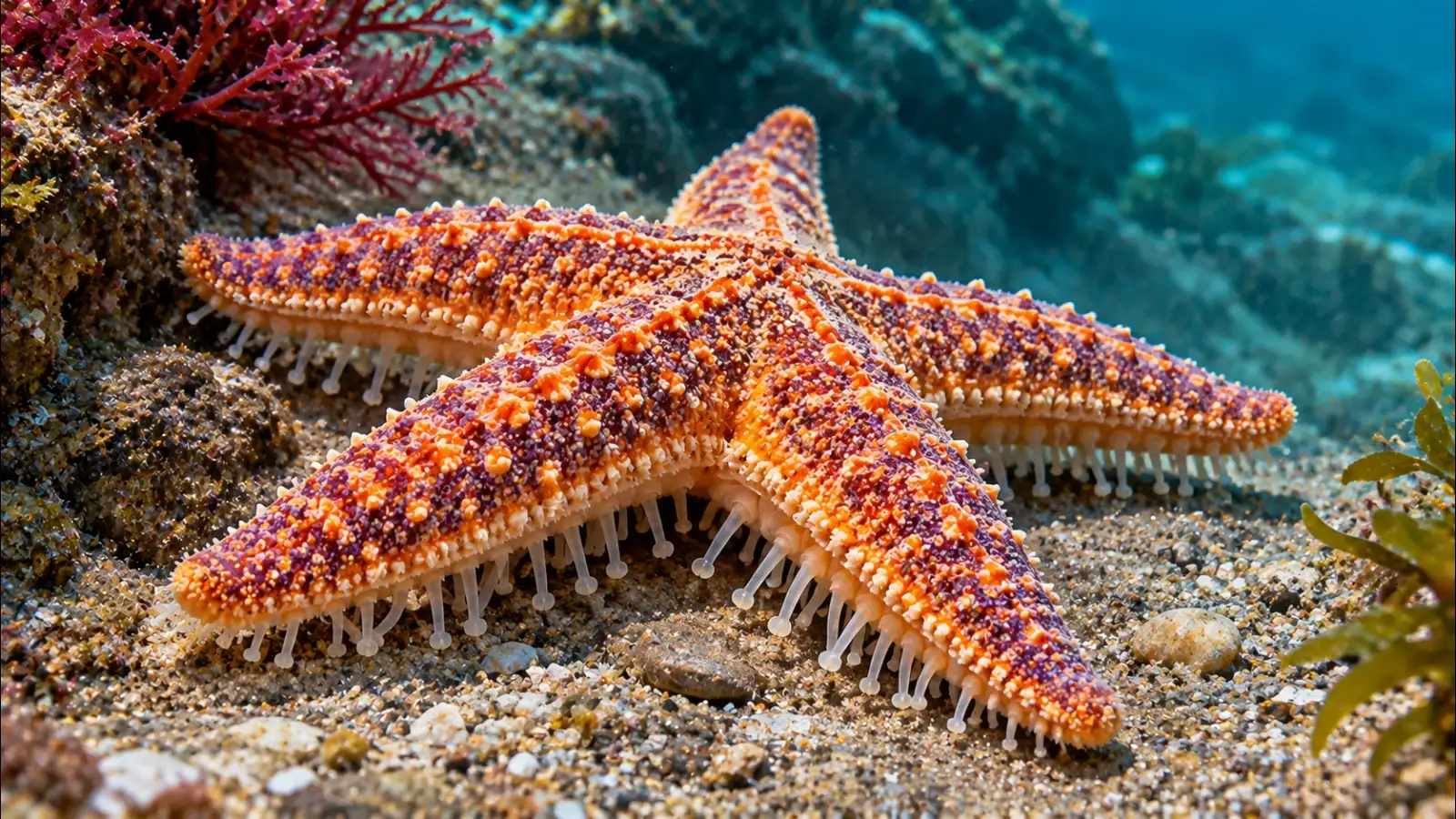
Their bodies are supported by a structure known as an endoskeleton, made up of small calcium carbonate plates called ossicles. These plates are connected by flexible tissues, allowing the animal to maintain its shape while bending and moving.
This arrangement provides support without making the body rigid. It also helps sea stars move across uneven underwater surfaces.
These soft, flexible structures extend from the body and help the animal grip surfaces. Each tube foot can attach to a surface and release its grip as the sea star moves forward.
Although an individual tube foot produces only a small amount of force, thousands of coordinated movements can help the animal travel steadily across the seabed.
Water enters through a small, porous structure called the madreporite, usually located on the upper surface of the animal. It then travels through a series of canals before reaching the tube feet.
Changes in fluid pressure allow the tube feet to extend and retract. This hydraulic mechanism helps sea stars move without relying on conventional legs or a muscular pumping system like that of many other animals.
When fluid enters a tube foot, it extends outwards. Small muscles then help control its shape and movement. The tip can attach to a surface, allowing the sea star to gain traction.
To move forward, some tube feet attach while others release their grip. This repeated process creates a slow but coordinated crawling motion.
The arms can coordinate their activity, allowing the sea star to travel across rocks, coral surfaces and sandy areas. Their flexible body structure also helps them adjust to uneven terrain.
Some species can move more quickly than others, depending on their size, habitat and body structure.
Their adhesive abilities are particularly useful in areas affected by waves and strong water movement. By gripping surfaces securely, sea stars can reduce the risk of being swept away.
Some species also use their tube feet to hold prey, including mussels and other shellfish, while feeding.
This slower movement suits their lifestyle because many sea stars spend considerable time searching for food, exploring surfaces and interacting with their surroundings.
Their ability to move gradually across difficult surfaces is more important than travelling at high speed.
Some species can pull the two shell valves apart slightly by applying continuous force with their tube feet. They then extend part of their stomach through the opening to begin digesting the prey externally.
This unusual feeding method demonstrates how the same hydraulic structures support several essential activities.
Sea stars demonstrate that movement does not always require bones, legs or a conventional muscular system. Their flexible internal skeleton, water vascular system and hundreds of tube feet work together to help them crawl, grip surfaces and capture food. This specialised arrangement allows them to survive in different marine habitats while moving across challenging underwater terrain. Their slow but coordinated movement is an impressive example of how evolution has produced different solutions to the basic challenge of locomotion.
1. Sea Stars Do Not Have a Conventional Skeleton
Unlike humans and many other animals, sea stars do not possess an internal skeleton made of bones. They belong to a group of marine animals called echinoderms, which also includes sea urchins, brittle stars and sea cucumbers.Their bodies are supported by a structure known as an endoskeleton, made up of small calcium carbonate plates called ossicles. These plates are connected by flexible tissues, allowing the animal to maintain its shape while bending and moving.
This arrangement provides support without making the body rigid. It also helps sea stars move across uneven underwater surfaces.
2. Their Tube Feet Act Like Tiny Walking Structures
One of the most important features responsible for sea star movement is the presence of hundreds of small tube feet on the underside of their arms.These soft, flexible structures extend from the body and help the animal grip surfaces. Each tube foot can attach to a surface and release its grip as the sea star moves forward.
Although an individual tube foot produces only a small amount of force, thousands of coordinated movements can help the animal travel steadily across the seabed.
3. A Water Vascular System Powers Their Movement
Sea stars use a specialised hydraulic network called the water vascular system to operate their tube feet. This system is filled with seawater and contains connected canals that distribute fluid throughout the body.Water enters through a small, porous structure called the madreporite, usually located on the upper surface of the animal. It then travels through a series of canals before reaching the tube feet.
Changes in fluid pressure allow the tube feet to extend and retract. This hydraulic mechanism helps sea stars move without relying on conventional legs or a muscular pumping system like that of many other animals.
4. Each Tube Foot Works Through Hydraulic Pressure
A sea star's tube feet generally consist of a flexible stem and a small sucker-like tip. Their movement depends on changes in water pressure within these structures.When fluid enters a tube foot, it extends outwards. Small muscles then help control its shape and movement. The tip can attach to a surface, allowing the sea star to gain traction.
To move forward, some tube feet attach while others release their grip. This repeated process creates a slow but coordinated crawling motion.
5. Their Arms Help Distribute Movement Across the Body
Most sea stars have five arms, although some species have many more. These arms contain rows of tube feet that help the animal move in different directions.The arms can coordinate their activity, allowing the sea star to travel across rocks, coral surfaces and sandy areas. Their flexible body structure also helps them adjust to uneven terrain.
Some species can move more quickly than others, depending on their size, habitat and body structure.
6. Sea Stars Can Climb and Grip Different Surfaces
The tube feet do more than help sea stars crawl across the seabed. They also allow many species to attach themselves to rocks, shells and other underwater surfaces.Their adhesive abilities are particularly useful in areas affected by waves and strong water movement. By gripping surfaces securely, sea stars can reduce the risk of being swept away.
Some species also use their tube feet to hold prey, including mussels and other shellfish, while feeding.
You may also like
- Gondhal Director Santosh Davakhar Says His Film and Ranbir Kapoor's Ramayana Represent Different Sides of Indian Cinema
- Visa guide for Winter Intake 2027: Documents, application timelines and key requirements students planning to study abroad should know
- Why Is Shani Pradosha Considered So Powerful?
- Astrological Insights: December 2026 Brings Major Planetary Changes Affecting Five Zodiac Signs
- Advika Kasliwal began 'Planting Hopes' as a home-gardening effort during lockdown; it has reached more than 5,000 people, supported 800 low-income families, run 50 workshops and taken nutrition education into 25 schools
7. Their Movement Is Usually Slow but Highly Controlled
Sea stars are generally slow-moving animals, although their speed varies between species. Their tube feet work in coordinated patterns rather than producing sudden, powerful movements.This slower movement suits their lifestyle because many sea stars spend considerable time searching for food, exploring surfaces and interacting with their surroundings.
Their ability to move gradually across difficult surfaces is more important than travelling at high speed.
8. Their Movement System Also Helps With Feeding
The tube feet are important for feeding as well as locomotion. Many sea stars use them to grip the shells of bivalves, such as mussels and clams.Some species can pull the two shell valves apart slightly by applying continuous force with their tube feet. They then extend part of their stomach through the opening to begin digesting the prey externally.
This unusual feeding method demonstrates how the same hydraulic structures support several essential activities.
Sea stars demonstrate that movement does not always require bones, legs or a conventional muscular system. Their flexible internal skeleton, water vascular system and hundreds of tube feet work together to help them crawl, grip surfaces and capture food. This specialised arrangement allows them to survive in different marine habitats while moving across challenging underwater terrain. Their slow but coordinated movement is an impressive example of how evolution has produced different solutions to the basic challenge of locomotion.






Loving Newspoint? Download the app now
