
How Snow Leopards Survive in Freezing, High-Altitude Mountain Habitats

Snow leopards are among the most specialised mountain predators in the world. They inhabit rugged landscapes across the Himalayas and other Central Asian mountain ranges, often living at elevations between 2,700 and 5,000 metres. At these heights, temperatures can plunge below freezing, snow can cover the ground for months, and the air contains less oxygen than at sea level.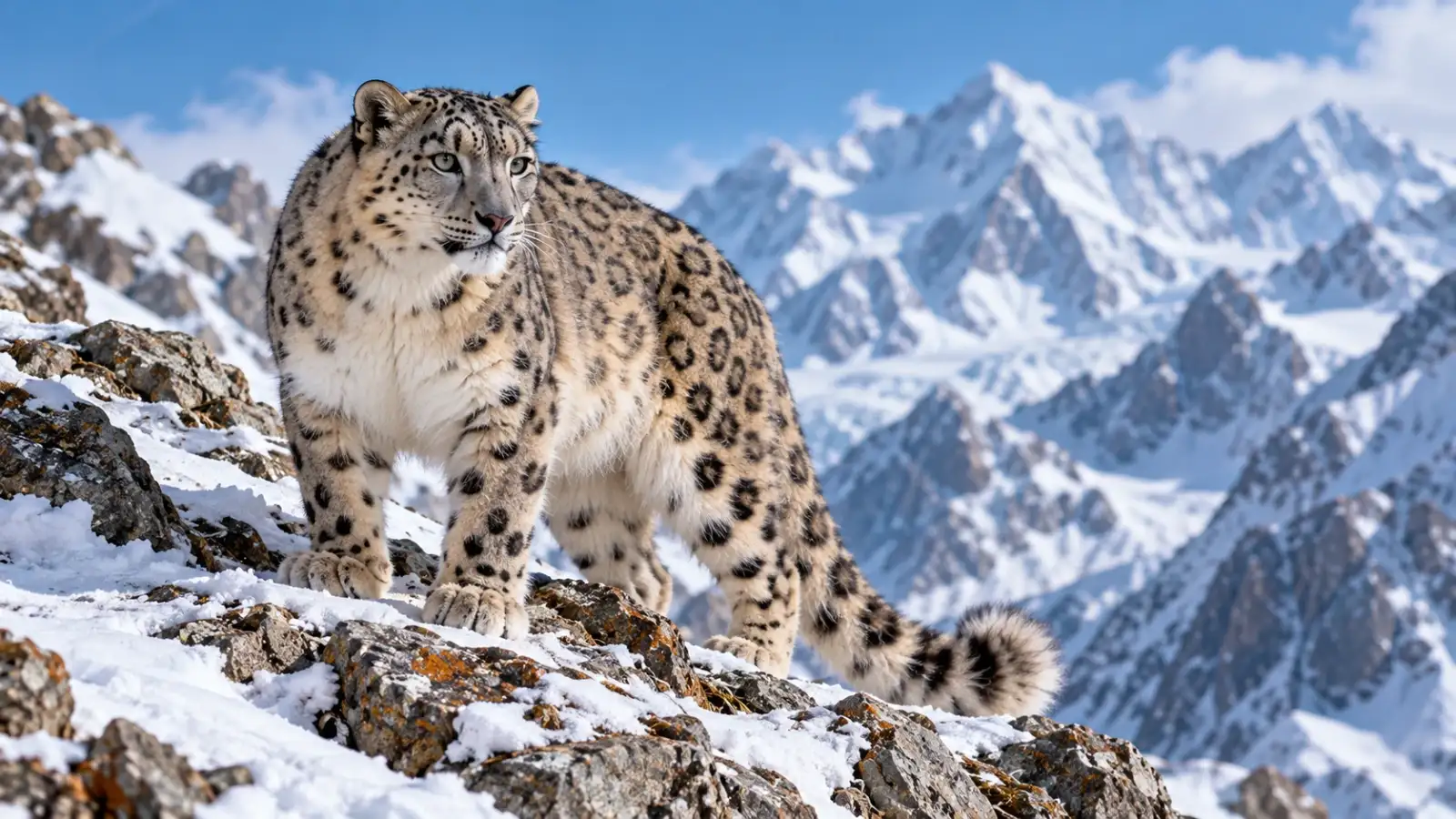
Yet these elusive cats can move across rocky slopes, hunt agile mountain animals and withstand severe winter conditions. Their survival is made possible by a combination of thick fur, broad paws, powerful limbs, remarkable camouflage and behaviours that help them conserve energy.
The fur is particularly long around the belly, where it can reach approximately 12 centimetres. This extra insulation is useful when a snow leopard lies on cold rocks or rests on snow. Its coat also changes with the seasons, becoming thicker during winter and lighter during warmer months.
Unlike animals that rely on sheltered dens throughout winter, snow leopards spend much of their lives moving through exposed mountain terrain. Their insulating fur allows them to remain active even when temperatures fall sharply.
Covered in thick fur, the tail can measure around 80 to 100 centimetres long. When resting, a snow leopard may curl it around its body or bring it over its nose and face. This helps protect exposed areas from cold air and wind.
The tail also plays a vital role when the animal navigates steep slopes. It acts as a counterbalance during sharp turns, sudden changes in direction and long leaps across rocky gaps.
This combination of warmth and stability makes the tail one of the species' most useful adaptations.
The thick fur provides insulation against freezing ground and adds protection when the cats walk over rough or uneven surfaces. Their paws also help them maintain traction while climbing rocky slopes.
In mountainous habitats, where a single misstep can lead to injury, secure footing is essential. Broad paws give snow leopards the stability they need to travel through challenging terrain while searching for prey.
These features allow them to negotiate steep slopes, narrow ledges and rocky outcrops where many other large predators would struggle to move efficiently. Snow leopards can make impressive leaps, sometimes covering distances of around 15 metres in suitable conditions.
Their front and hind limbs work together to provide balance, propulsion and control. This agility is especially important when chasing mountain prey across difficult terrain.
However, moving through deep snow and climbing steep slopes still requires energy. Snow leopards must use their strength carefully rather than waste energy on unnecessary movement.
Camouflage helps them remain difficult to spot, both for prey and for potential threats. It also supports their hunting strategy, which often depends on approaching an animal without being detected.
Rather than relying only on speed over long distances, snow leopards use rocks, ridges and natural cover to get close to their targets. Their coat makes it easier to disappear into the landscape while waiting for the right opportunity to strike.
This is particularly useful in open alpine environments, where hiding places can be limited.
As cold air passes through the nasal passages, it can be warmed and humidified before reaching the lungs. This reduces the direct impact of cold, dry air on the respiratory system and helps limit moisture loss during breathing.
These features are useful when the animal is moving through cold environments or exerting itself while climbing and hunting.
High-altitude survival is more complicated than simply having large lungs or special blood. Research has found that snow leopards do not have the distinctive high-oxygen-affinity haemoglobin adaptation that might be expected in a high-altitude specialist. Their ability to tolerate low-oxygen conditions appears to involve other parts of the oxygen-transport system, although the precise mechanisms require further study.
Their diet includes wild mountain animals such as blue sheep, also known as bharal, and Himalayan ibex. Depending on the region and prey availability, they may also hunt smaller mammals and birds.
Snow leopards use stealth, camouflage and their ability to navigate steep slopes to approach prey. They often take advantage of rocky terrain to get close before launching an attack.
Because chasing prey over long distances can be costly, a successful ambush is an effective way to obtain a substantial meal without prolonged pursuit. Their hunting ability is therefore closely connected to their survival in a cold environment where food can be difficult to find.
In some regions, they may move to lower elevations during winter and return to higher mountain areas during summer. The exact pattern varies across their range and depends on the local landscape.
Following prey helps them avoid spending too much energy searching for food in areas where animals have become scarce. Their ability to use different elevations also gives them access to a wider range of feeding opportunities.
This flexibility is important because snow leopard habitats are not uniform. Some areas contain steep cliffs and alpine meadows, while others include open plateaus, rocky valleys and sparse vegetation.
Living and hunting alone can help an individual make use of a large territory without regularly competing with other snow leopards for the same prey. Their wide-ranging movements allow them to search for food across extensive mountain landscapes.
They also tend to favour rugged and relatively remote areas, where steep terrain offers cover and reduces encounters with people.
Solitary living does not remove the challenges of finding food or a mate. It is simply one part of their broader survival strategy in habitats where resources may be spread over large distances.
Habitat degradation, declining prey populations, poaching, human-wildlife conflict and climate change all place pressure on their survival. As mountain environments change, the distribution of suitable habitat and prey can also shift, potentially increasing contact between snow leopards and livestock.
Conservation programmes focus on protecting mountain ecosystems, reducing illegal hunting and supporting communities that share landscapes with these predators. Measures such as livestock protection, compensation schemes and community-led wildlife monitoring can help reduce conflict.
Protecting snow leopards also benefits other species that depend on the same mountain ecosystems. Healthy habitats support wild prey, vegetation and the wider network of life found across high-altitude landscapes.
Their seasonal movements and ability to use rugged terrain further improve their chances of survival. However, these adaptations do not make them immune to environmental change or human pressure. Protecting their habitat and prey remains essential if these elusive mountain cats are to continue thriving in the wild.
Yet these elusive cats can move across rocky slopes, hunt agile mountain animals and withstand severe winter conditions. Their survival is made possible by a combination of thick fur, broad paws, powerful limbs, remarkable camouflage and behaviours that help them conserve energy.
1. Thick Fur Provides Protection Against Extreme Cold
One of the most important snow leopard adaptations is its dense coat. Their long outer hairs and thick, woolly underfur trap a layer of air close to the body, helping to reduce heat loss in freezing conditions.The fur is particularly long around the belly, where it can reach approximately 12 centimetres. This extra insulation is useful when a snow leopard lies on cold rocks or rests on snow. Its coat also changes with the seasons, becoming thicker during winter and lighter during warmer months.
Unlike animals that rely on sheltered dens throughout winter, snow leopards spend much of their lives moving through exposed mountain terrain. Their insulating fur allows them to remain active even when temperatures fall sharply.
2. A Long, Bushy Tail Acts Like a Natural Blanket
The snow leopard's tail is more than a tool for maintaining balance. It is also an important source of protection against the cold.Covered in thick fur, the tail can measure around 80 to 100 centimetres long. When resting, a snow leopard may curl it around its body or bring it over its nose and face. This helps protect exposed areas from cold air and wind.
The tail also plays a vital role when the animal navigates steep slopes. It acts as a counterbalance during sharp turns, sudden changes in direction and long leaps across rocky gaps.
This combination of warmth and stability makes the tail one of the species' most useful adaptations.
3. Wide, Furry Paws Help Them Walk on Snow
Snow leopards have large, broad paws covered with fur underneath. These paws distribute their body weight over a wider surface, helping them move across soft snow without sinking as easily as they would with smaller feet.The thick fur provides insulation against freezing ground and adds protection when the cats walk over rough or uneven surfaces. Their paws also help them maintain traction while climbing rocky slopes.
In mountainous habitats, where a single misstep can lead to injury, secure footing is essential. Broad paws give snow leopards the stability they need to travel through challenging terrain while searching for prey.
4. Powerful Legs Make Steep Mountain Travel Easier
Snow leopards have a compact body, strong chest muscles and powerful hind legs. Their hind limbs are relatively long, giving them the strength needed for climbing, jumping and accelerating across uneven ground.These features allow them to negotiate steep slopes, narrow ledges and rocky outcrops where many other large predators would struggle to move efficiently. Snow leopards can make impressive leaps, sometimes covering distances of around 15 metres in suitable conditions.
Their front and hind limbs work together to provide balance, propulsion and control. This agility is especially important when chasing mountain prey across difficult terrain.
However, moving through deep snow and climbing steep slopes still requires energy. Snow leopards must use their strength carefully rather than waste energy on unnecessary movement.
5. Their Coat Provides Excellent Camouflage
Snow leopards have pale grey, cream or whitish fur marked with dark spots and rosettes. This pattern blends with the snow, exposed rock and muted colours of their mountain surroundings.Camouflage helps them remain difficult to spot, both for prey and for potential threats. It also supports their hunting strategy, which often depends on approaching an animal without being detected.
Rather than relying only on speed over long distances, snow leopards use rocks, ridges and natural cover to get close to their targets. Their coat makes it easier to disappear into the landscape while waiting for the right opportunity to strike.
This is particularly useful in open alpine environments, where hiding places can be limited.
6. Specialised Facial Features Help Warm Cold Air
Breathing in freezing mountain air presents another challenge. Snow leopards have a relatively short, broad muzzle and enlarged nasal structures that help condition the air they breathe.As cold air passes through the nasal passages, it can be warmed and humidified before reaching the lungs. This reduces the direct impact of cold, dry air on the respiratory system and helps limit moisture loss during breathing.
These features are useful when the animal is moving through cold environments or exerting itself while climbing and hunting.
High-altitude survival is more complicated than simply having large lungs or special blood. Research has found that snow leopards do not have the distinctive high-oxygen-affinity haemoglobin adaptation that might be expected in a high-altitude specialist. Their ability to tolerate low-oxygen conditions appears to involve other parts of the oxygen-transport system, although the precise mechanisms require further study.
7. Their Hunting Skills Help Them Obtain Enough Energy
Staying warm requires energy, and snow leopards must obtain enough food to maintain their body temperature and support movement through mountainous terrain.Their diet includes wild mountain animals such as blue sheep, also known as bharal, and Himalayan ibex. Depending on the region and prey availability, they may also hunt smaller mammals and birds.
Snow leopards use stealth, camouflage and their ability to navigate steep slopes to approach prey. They often take advantage of rocky terrain to get close before launching an attack.
Because chasing prey over long distances can be costly, a successful ambush is an effective way to obtain a substantial meal without prolonged pursuit. Their hunting ability is therefore closely connected to their survival in a cold environment where food can be difficult to find.
8. Seasonal Movement Helps Them Find Food
Snow leopards do not remain at exactly the same elevation throughout the year. Their movements can change with the seasons, local weather conditions and the availability of prey.In some regions, they may move to lower elevations during winter and return to higher mountain areas during summer. The exact pattern varies across their range and depends on the local landscape.
Following prey helps them avoid spending too much energy searching for food in areas where animals have become scarce. Their ability to use different elevations also gives them access to a wider range of feeding opportunities.
This flexibility is important because snow leopard habitats are not uniform. Some areas contain steep cliffs and alpine meadows, while others include open plateaus, rocky valleys and sparse vegetation.
9. Solitary Behaviour Helps Reduce Competition
Snow leopards are generally solitary animals, except during mating, when mothers are raising cubs and during occasional encounters around food.Living and hunting alone can help an individual make use of a large territory without regularly competing with other snow leopards for the same prey. Their wide-ranging movements allow them to search for food across extensive mountain landscapes.
They also tend to favour rugged and relatively remote areas, where steep terrain offers cover and reduces encounters with people.
Solitary living does not remove the challenges of finding food or a mate. It is simply one part of their broader survival strategy in habitats where resources may be spread over large distances.
10. Conservation Is Essential for Their Long-Term Survival
Although snow leopards are remarkably adapted to cold and high-altitude conditions, their physical features cannot protect them from every threat.Habitat degradation, declining prey populations, poaching, human-wildlife conflict and climate change all place pressure on their survival. As mountain environments change, the distribution of suitable habitat and prey can also shift, potentially increasing contact between snow leopards and livestock.
Conservation programmes focus on protecting mountain ecosystems, reducing illegal hunting and supporting communities that share landscapes with these predators. Measures such as livestock protection, compensation schemes and community-led wildlife monitoring can help reduce conflict.
Protecting snow leopards also benefits other species that depend on the same mountain ecosystems. Healthy habitats support wild prey, vegetation and the wider network of life found across high-altitude landscapes.
Why Snow Leopards Are So Well Adapted to Mountain Life
Snow leopards survive in cold, high-altitude habitats because several adaptations work together. Dense fur reduces heat loss, broad paws improve movement over snow, powerful legs support climbing and jumping, and long tails provide both balance and warmth. Their camouflage and hunting skills help them find food while avoiding detection.Their seasonal movements and ability to use rugged terrain further improve their chances of survival. However, these adaptations do not make them immune to environmental change or human pressure. Protecting their habitat and prey remains essential if these elusive mountain cats are to continue thriving in the wild.
Next Story