
How To Balance Work And Travel Effectively Without Burning Out

Work and travel can seem like the perfect combination, particularly for professionals with flexible schedules or remote roles. Yet answering emails beside a pool does not automatically create a relaxing workation. Deadlines still matter, meetings can interrupt sightseeing and unfamiliar surroundings may make it harder to concentrate. Finding the right balance requires more than simply carrying a laptop on holiday. With thoughtful travel planning, realistic schedules and clear boundaries, it is possible to remain productive while still enjoying the destination. According to experts, the key is to treat work commitments and personal exploration as separate priorities rather than trying to manage both at once.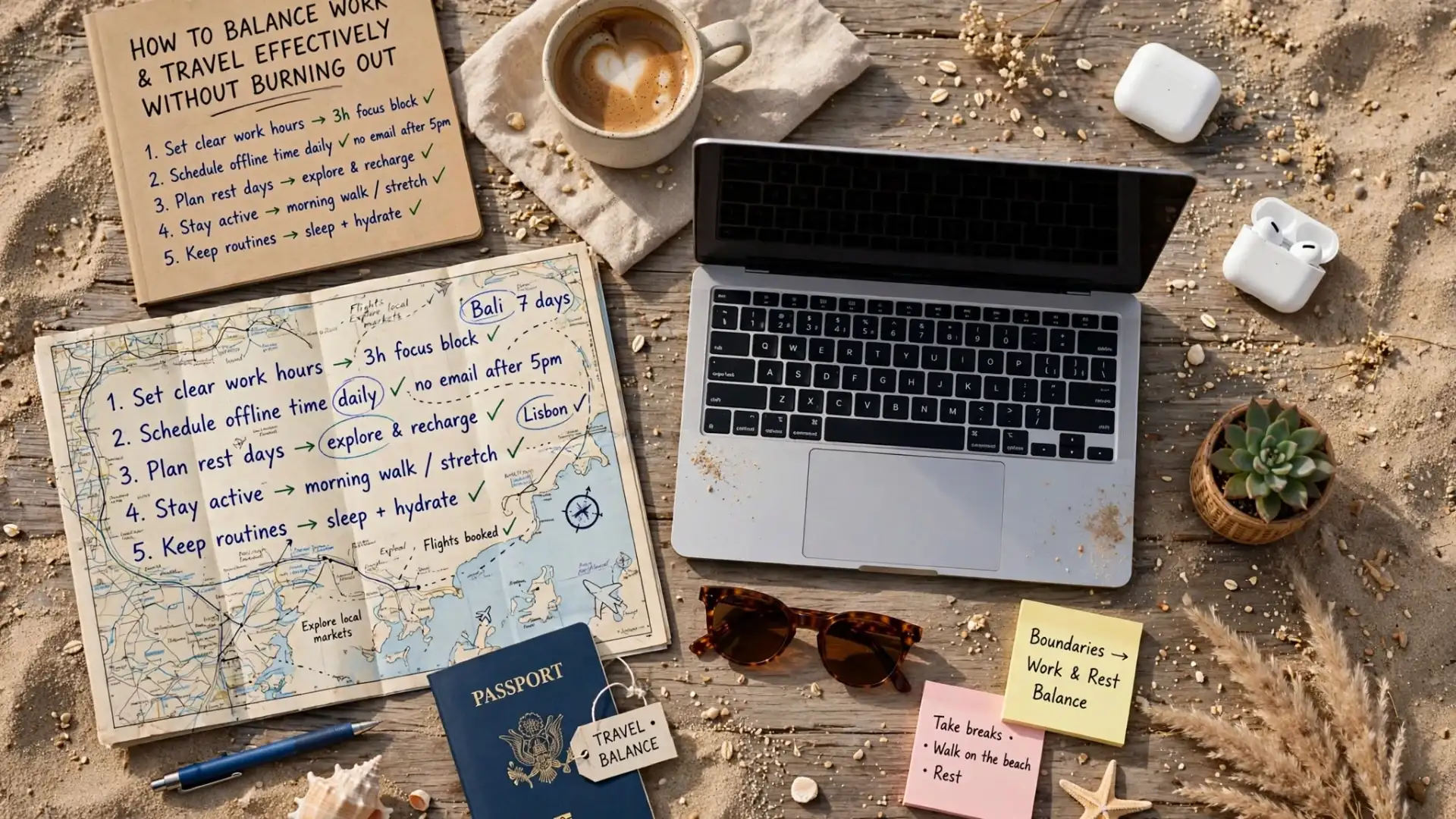
Time-zone differences also deserve attention. If your role involves regular meetings, check whether your working hours will overlap conveniently with your home office. A beautiful destination may not be practical if every important call happens in the middle of the night.
Avoid filling every free hour with activities. Industry watchers note that overly ambitious itineraries can leave travellers exhausted, particularly when they are also maintaining a normal workload.
During work periods, find a quiet space and minimise distractions. Similarly, once the workday ends, avoid checking messages constantly unless your role genuinely requires it. Separating professional and personal time can make both feel more manageable.
If possible, consider extending a business trip by a day or two for leisure. This can provide dedicated personal time without forcing work and sightseeing into the same hours.
Ultimately, learning how to balance work and travel effectively comes down to realistic expectations. You do not have to maximise productivity or sightseeing every day. A flexible approach can help you meet responsibilities while still making space to enjoy being somewhere new.
Image Courtesy: Meta AI
Choose The Right Destination
The destination can have a major impact on how smoothly a work and travel plan works. Reliable internet, comfortable workspaces and suitable accommodation should be considered before booking.Time-zone differences also deserve attention. If your role involves regular meetings, check whether your working hours will overlap conveniently with your home office. A beautiful destination may not be practical if every important call happens in the middle of the night.
Create A Realistic Schedule
One of the most useful work and travel tips is to decide your working hours before the trip begins. Block out specific periods for emails, meetings and focused tasks, then keep the remaining time for sightseeing and relaxation.Avoid filling every free hour with activities. Industry watchers note that overly ambitious itineraries can leave travellers exhausted, particularly when they are also maintaining a normal workload.
You may also like
- What happened to the family trapped inside Nepal's 'miracle' green house?
- Stop Thigh Chafing for Good: Effective Home Remedies, Prevention Tips, and Medical Care
- Does Donated Blood Expire, Understanding the Shelf Life and Storage of Life-Saving Blood Components
- Simple Lifestyle Changes to Significantly Lower Cancer Risk and Protect Your Long-Term Health
- Is Your Child Speaking Late and Avoiding Eye Contact, Critical Early Signs Parents Must Never Ignore
Set Clear Work Boundaries
Remote work travel becomes easier when colleagues know exactly when you are available. Share your working hours and communicate any temporary changes to your schedule in advance.During work periods, find a quiet space and minimise distractions. Similarly, once the workday ends, avoid checking messages constantly unless your role genuinely requires it. Separating professional and personal time can make both feel more manageable.
Plan Activities Around Work
Instead of squeezing sightseeing into every gap between meetings, choose activities that fit naturally around your schedule. A morning walk, evening food tour or weekend excursion can allow you to experience the destination without compromising deadlines.If possible, consider extending a business trip by a day or two for leisure. This can provide dedicated personal time without forcing work and sightseeing into the same hours.
Leave Room For Flexibility
Even the best travel planning cannot account for delayed transport, unexpected meetings or changes in workload. Keep some unscheduled time in your itinerary so that one disruption does not derail the entire trip.Ultimately, learning how to balance work and travel effectively comes down to realistic expectations. You do not have to maximise productivity or sightseeing every day. A flexible approach can help you meet responsibilities while still making space to enjoy being somewhere new.
Image Courtesy: Meta AI






Loving Newspoint? Download the app now
