
How to Care for Old Books in a Humid Climate: Simple Ways to Prevent Mould and Damage

Old books often hold more than printed words. They may contain family memories, handwritten notes, rare illustrations or stories that have been passed down through generations. However, preserving them becomes challenging in a humid climate, where excess moisture can encourage mould growth, weaken bindings and cause pages to warp. Warm weather, poor ventilation and damp storage spaces can make these problems worse, particularly during the monsoon season. The good news is that a few practical habits can help protect your collection. By controlling humidity, choosing the right storage location and handling fragile pages carefully, you can help your old books remain in better condition for years.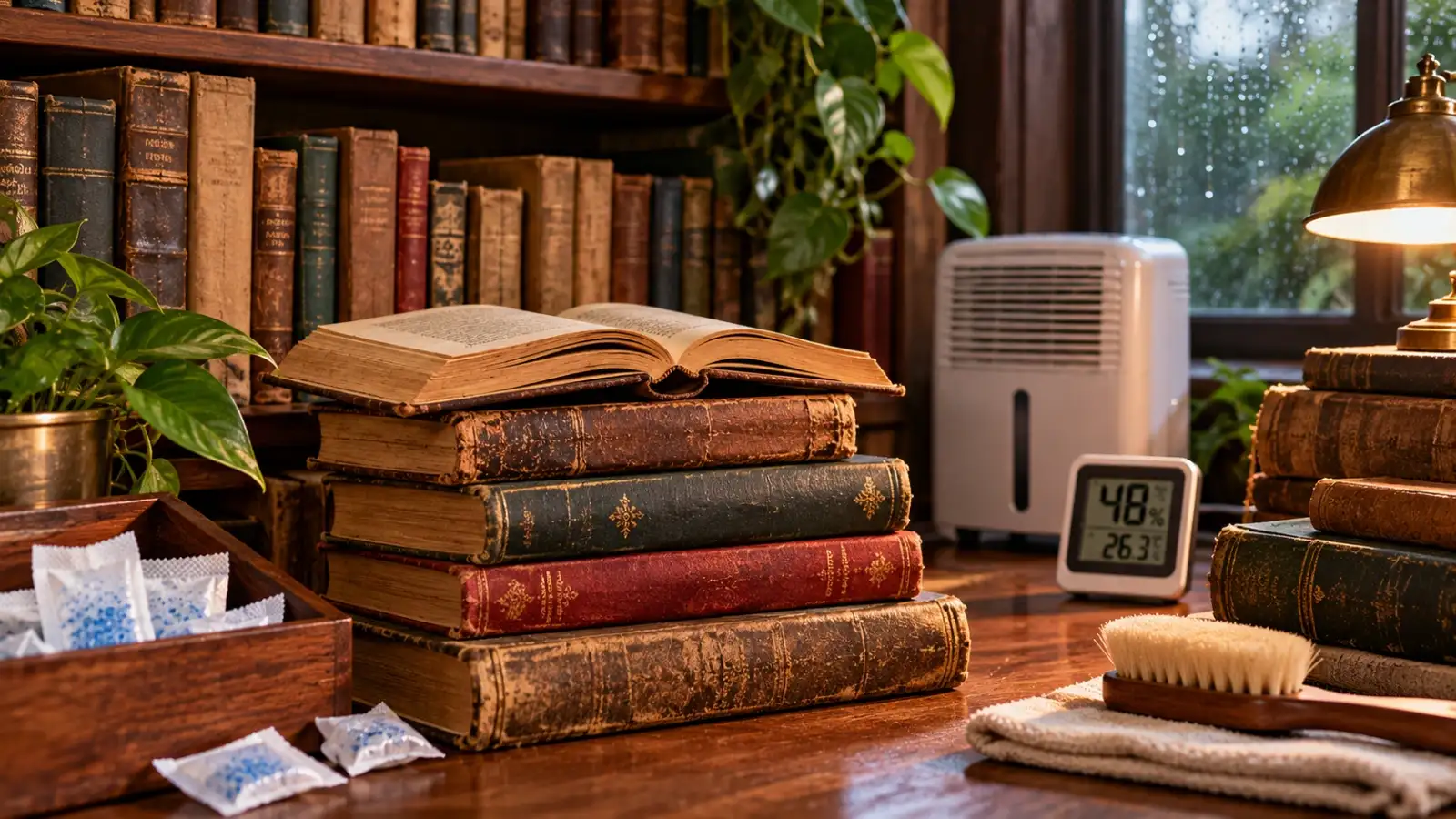
For most books, a stable relative humidity of around 30 to 55 per cent is a useful preservation target. Try to keep the environment consistent rather than allowing humidity to fluctuate sharply. Levels above 60 per cent increase the risk of mould and physical damage.
A digital hygrometer can help you monitor the moisture level in your room or book cabinet. If you live in an area with persistently humid weather, a dehumidifier or an air conditioner with a suitable dry setting can help manage indoor moisture.
Avoid directing cold air straight at fragile books, and do not assume that a room feels comfortable simply because the humidity is under control. Regular monitoring provides a clearer picture.
Choose a room with reasonably stable temperature and humidity. Keep books away from windows where rain can enter, exterior walls that develop damp patches and locations directly beneath air-conditioning units that might leak.
Good air circulation helps reduce stagnant, moisture-laden air. Leave a little space between bookcases and damp-prone walls, and avoid squeezing books tightly into overcrowded shelves.
During the monsoon, inspect the room more frequently for condensation, water stains and musty smells. Addressing a damp patch early can help prevent damage to an entire collection.
Choose a device appropriate for the size of your room and use a hygrometer to check whether it is maintaining the desired humidity range. Empty and clean the water reservoir according to the manufacturer's instructions.
If you use an air conditioner, remember that its ability to remove moisture depends on the model, settings and conditions. Monitor the actual humidity rather than relying solely on the cooling effect.
Silica gel packets may be useful inside a suitable enclosed storage space, but they are not a substitute for controlling room humidity. They also require appropriate quantities and monitoring, particularly in very damp conditions.
Never place a damp book in a sealed plastic bag or container and leave it there. Make sure books are dry before putting them into protective enclosures.
For long-term storage, stable plastics such as polyethylene or polypropylene can be suitable when used appropriately. Avoid PVC and unidentified plastics that may contain harmful additives.
If you use a closed storage box, inspect it periodically for condensation, musty odours and signs of mould. In a humid climate, the storage environment must be managed alongside the container itself.
Remove books carefully and clean the shelves with a soft, dry cloth. Make sure the shelves are completely dry before returning the books. A clean, soft brush can help remove loose dust from book covers and page edges.
For fragile or valuable books, avoid vigorous brushing or rubbing. Do not use household cleaning sprays, wet cloths, perfumes or chemical disinfectants directly on old pages and covers.
If you have wooden shelves, ensure they are in good condition and free from dampness or insect activity. For valuable collections, a suitable barrier between books and untreated wood may help reduce direct contact with acidic materials.
Keep most books upright, with enough support on either side to prevent them from leaning. Avoid packing them so tightly that removing one book requires pulling it forcefully by the top of its spine.
Large, heavy or fragile books may be better stored flat, with their weight supported evenly. Never store a book with its pages facing downwards and its spine pointing upwards, as this can put stress on the binding.
If a book has a loose cover, detached pages or a damaged spine, avoid forcing it into a crowded shelf. A suitable protective box or support can help keep its parts together while reducing further damage.
Place bookcases away from direct sunlight and use curtains or blinds where necessary. Artificial light can also contribute to deterioration over time, so avoid leaving valuable books under intense lighting for extended periods.
If you want to display a particularly special book, consider rotating it rather than leaving it exposed permanently. For rare or historically significant books, displaying a reproduction and storing the original safely may be the better option.
If you find a book with suspected mould, separate it from unaffected books without shaking or brushing it. Active mould can release spores into the surrounding air, and disturbing it may spread contamination.
Avoid cleaning mould from a valuable old book yourself. Wear suitable protective equipment if you must handle an affected item, keep children and people with respiratory sensitivities away from the area, and seek advice from a qualified book conservator if the book is important or the mould is extensive.
For minor insect concerns, inspect nearby shelves and remove food residues, dust and clutter. Avoid spraying insecticides directly onto books, as chemicals can damage paper, ink and bindings.
Support the book while reading, and avoid pressing the spine flat against a table. Turn pages gently from an area that can withstand handling rather than pulling on fragile corners.
Clean, dry hands are generally appropriate for handling ordinary books. Gloves are not automatically necessary for every old book and may reduce dexterity. Specialised handling requirements may apply to items with delicate surfaces, photographic materials or particular conservation concerns.
Avoid using adhesive tape to repair torn pages. Ordinary tape can leave stains and become difficult to remove. Valuable books should be repaired by a professional conservator using suitable materials.
For a slightly damp book, gentle air-drying in a cool, well-ventilated space may help. Do not place it on a radiator, use a hairdryer or leave it in direct sunlight, as rapid or uneven drying can cause further damage.
Do not force wet pages apart, because they can tear easily. If the book is saturated, valuable or affected by extensive mould, consult a conservation professional promptly.
If newly wet books cannot be dried within about two days, professional guidance on freezing and later drying may be appropriate. This is a specialist salvage method rather than a routine home treatment.
Check the storage area every week during particularly humid weather. Dust shelves periodically, inspect valuable books more closely and keep a record of any existing damage. If a book has sentimental or historical importance, take photographs of its condition so you can track changes over time.
For particularly rare books, consider acid-free protective enclosures and advice from a qualified conservator. Avoid attempting extensive repairs with household glue, tape or cleaning products.
The most effective preservation strategy is preventive care. Keeping books clean, dry, properly supported and away from environmental extremes is generally safer than trying to repair damage after it occurs.
Caring for old books in a humid climate requires attention to moisture, storage conditions and gentle handling. Excess humidity can encourage mould, while direct sunlight, dust, pests and poor shelving can gradually damage paper and bindings.
Start by monitoring humidity, choosing a dry storage area and keeping your shelves clean. Avoid sealing damp books in plastic, and isolate suspected mould rather than disturbing it. For rare or badly damaged books, professional conservation is the safest option.
With regular checks and a few practical precautions, you can protect your collection and help preserve the stories, knowledge and memories held within its pages.
1. Keep Humidity Under Control
Humidity is one of the biggest threats to old books. Paper absorbs moisture from the surrounding air, while damp conditions can encourage mould and mildew to develop on pages, covers and bindings.For most books, a stable relative humidity of around 30 to 55 per cent is a useful preservation target. Try to keep the environment consistent rather than allowing humidity to fluctuate sharply. Levels above 60 per cent increase the risk of mould and physical damage.
A digital hygrometer can help you monitor the moisture level in your room or book cabinet. If you live in an area with persistently humid weather, a dehumidifier or an air conditioner with a suitable dry setting can help manage indoor moisture.
Avoid directing cold air straight at fragile books, and do not assume that a room feels comfortable simply because the humidity is under control. Regular monitoring provides a clearer picture.
2. Choose a Dry, Well-Ventilated Storage Space
Where you store your books matters almost as much as how you handle them. Avoid damp basements, leaking cupboards, poorly ventilated storerooms and areas close to bathrooms or kitchen sinks.Choose a room with reasonably stable temperature and humidity. Keep books away from windows where rain can enter, exterior walls that develop damp patches and locations directly beneath air-conditioning units that might leak.
Good air circulation helps reduce stagnant, moisture-laden air. Leave a little space between bookcases and damp-prone walls, and avoid squeezing books tightly into overcrowded shelves.
During the monsoon, inspect the room more frequently for condensation, water stains and musty smells. Addressing a damp patch early can help prevent damage to an entire collection.
3. Use a Dehumidifier When Necessary
In regions where indoor humidity remains high for long periods, a dehumidifier can be a practical investment. It removes excess moisture from the air and helps create a more suitable environment for storing books.Choose a device appropriate for the size of your room and use a hygrometer to check whether it is maintaining the desired humidity range. Empty and clean the water reservoir according to the manufacturer's instructions.
If you use an air conditioner, remember that its ability to remove moisture depends on the model, settings and conditions. Monitor the actual humidity rather than relying solely on the cooling effect.
Silica gel packets may be useful inside a suitable enclosed storage space, but they are not a substitute for controlling room humidity. They also require appropriate quantities and monitoring, particularly in very damp conditions.
4. Avoid Sealing Damp Books in Plastic
Plastic bags and airtight containers may seem like an easy way to protect old books from humid air. However, sealing a book that already contains moisture can trap that moisture and encourage mould growth.Never place a damp book in a sealed plastic bag or container and leave it there. Make sure books are dry before putting them into protective enclosures.
For long-term storage, stable plastics such as polyethylene or polypropylene can be suitable when used appropriately. Avoid PVC and unidentified plastics that may contain harmful additives.
If you use a closed storage box, inspect it periodically for condensation, musty odours and signs of mould. In a humid climate, the storage environment must be managed alongside the container itself.
5. Clean Bookshelves and Remove Dust Regularly
Dust does more than make books look untidy. It can attract pests, hold moisture and collect on the surfaces where mould may develop.Remove books carefully and clean the shelves with a soft, dry cloth. Make sure the shelves are completely dry before returning the books. A clean, soft brush can help remove loose dust from book covers and page edges.
For fragile or valuable books, avoid vigorous brushing or rubbing. Do not use household cleaning sprays, wet cloths, perfumes or chemical disinfectants directly on old pages and covers.
If you have wooden shelves, ensure they are in good condition and free from dampness or insect activity. For valuable collections, a suitable barrier between books and untreated wood may help reduce direct contact with acidic materials.
6. Store Books in the Correct Position
Incorrect shelving can put unnecessary strain on an old book's spine and binding.Keep most books upright, with enough support on either side to prevent them from leaning. Avoid packing them so tightly that removing one book requires pulling it forcefully by the top of its spine.
Large, heavy or fragile books may be better stored flat, with their weight supported evenly. Never store a book with its pages facing downwards and its spine pointing upwards, as this can put stress on the binding.
If a book has a loose cover, detached pages or a damaged spine, avoid forcing it into a crowded shelf. A suitable protective box or support can help keep its parts together while reducing further damage.
7. Protect Old Books From Direct Sunlight
Sunlight can fade covers, discolour paper and gradually weaken some materials. A sunny windowsill may look attractive as a display spot, but it is not ideal for preserving old books.Place bookcases away from direct sunlight and use curtains or blinds where necessary. Artificial light can also contribute to deterioration over time, so avoid leaving valuable books under intense lighting for extended periods.
If you want to display a particularly special book, consider rotating it rather than leaving it exposed permanently. For rare or historically significant books, displaying a reproduction and storing the original safely may be the better option.
8. Watch for Mould, Mildew and Insects
Check your collection regularly for unusual spots, fuzzy growth, powdery deposits, insect activity and musty smells. Mould can appear as patches of different colours, but appearance alone cannot reliably identify the substance.If you find a book with suspected mould, separate it from unaffected books without shaking or brushing it. Active mould can release spores into the surrounding air, and disturbing it may spread contamination.
Avoid cleaning mould from a valuable old book yourself. Wear suitable protective equipment if you must handle an affected item, keep children and people with respiratory sensitivities away from the area, and seek advice from a qualified book conservator if the book is important or the mould is extensive.
For minor insect concerns, inspect nearby shelves and remove food residues, dust and clutter. Avoid spraying insecticides directly onto books, as chemicals can damage paper, ink and bindings.
9. Handle Fragile Pages With Care
Old paper can become brittle with age, especially when exposed to heat, light and unsuitable storage conditions. Turning pages too quickly or forcing a book open can cause tears and loose sections.Support the book while reading, and avoid pressing the spine flat against a table. Turn pages gently from an area that can withstand handling rather than pulling on fragile corners.
Clean, dry hands are generally appropriate for handling ordinary books. Gloves are not automatically necessary for every old book and may reduce dexterity. Specialised handling requirements may apply to items with delicate surfaces, photographic materials or particular conservation concerns.
Avoid using adhesive tape to repair torn pages. Ordinary tape can leave stains and become difficult to remove. Valuable books should be repaired by a professional conservator using suitable materials.
10. What to Do if a Book Gets Wet
A wet book needs prompt attention. Move it away from the source of moisture and assess the extent of the damage. If the water is contaminated, take appropriate safety precautions and avoid direct handling without suitable protection.For a slightly damp book, gentle air-drying in a cool, well-ventilated space may help. Do not place it on a radiator, use a hairdryer or leave it in direct sunlight, as rapid or uneven drying can cause further damage.
Do not force wet pages apart, because they can tear easily. If the book is saturated, valuable or affected by extensive mould, consult a conservation professional promptly.
If newly wet books cannot be dried within about two days, professional guidance on freezing and later drying may be appropriate. This is a specialist salvage method rather than a routine home treatment.
11. Take Extra Precautions During the Monsoon
The monsoon season can create difficult storage conditions because of persistent rain, higher outdoor humidity and damp walls. A simple seasonal routine can help you identify problems before they become serious.- Check indoor humidity regularly with a hygrometer.
- Inspect walls, ceilings and cupboards for leaks or damp patches.
- Keep books away from open windows during heavy rain.
- Clean shelves and remove accumulated dust.
- Check older books for new spots, unusual odours or signs of insects.
- Run a dehumidifier when needed and ensure the room has suitable air circulation.
- Avoid bringing damp bags, clothing or other moisture sources close to the book collection.
12. Create a Simple Book Preservation Routine
You do not need expensive equipment to begin caring for an old book collection. A few consistent habits can make a meaningful difference.Check the storage area every week during particularly humid weather. Dust shelves periodically, inspect valuable books more closely and keep a record of any existing damage. If a book has sentimental or historical importance, take photographs of its condition so you can track changes over time.
For particularly rare books, consider acid-free protective enclosures and advice from a qualified conservator. Avoid attempting extensive repairs with household glue, tape or cleaning products.
The most effective preservation strategy is preventive care. Keeping books clean, dry, properly supported and away from environmental extremes is generally safer than trying to repair damage after it occurs.
Caring for old books in a humid climate requires attention to moisture, storage conditions and gentle handling. Excess humidity can encourage mould, while direct sunlight, dust, pests and poor shelving can gradually damage paper and bindings.
Start by monitoring humidity, choosing a dry storage area and keeping your shelves clean. Avoid sealing damp books in plastic, and isolate suspected mould rather than disturbing it. For rare or badly damaged books, professional conservation is the safest option.
With regular checks and a few practical precautions, you can protect your collection and help preserve the stories, knowledge and memories held within its pages.
Next Story