
How to Choose Makeup Brushes Based on Their Shape and Purpose

Choosing the right makeup brush can make everyday makeup easier to apply and blend. However, with so many shapes, sizes and bristle types available, knowing which one to use can be confusing, especially for beginners. A flat brush, a fluffy brush and an angled brush may look similar at first, but each is designed to handle products differently.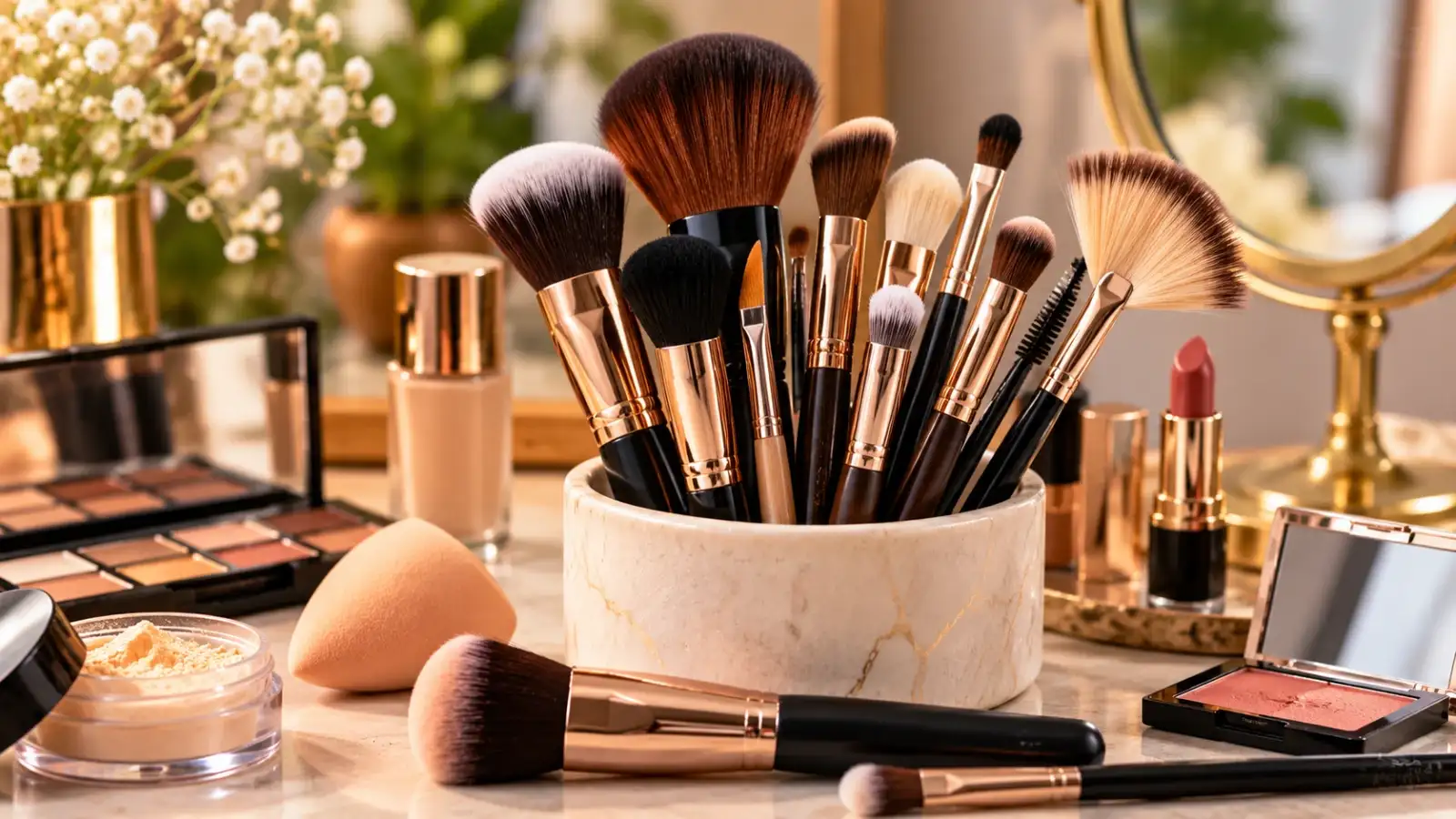
The secret to choosing makeup brushes is understanding how their shape, size and density affect application. Some brushes provide fuller coverage, while others help create soft edges or precise details. Once you understand their purpose, you can build a practical brush collection without spending money on tools you rarely use.
This brush is particularly useful for applying liquid and cream foundation. Its flat surface allows you to spread the product across the skin in controlled strokes, making it easier to build coverage where needed.
To use it, place small amounts of foundation on the face and blend outwards from the centre. Work in thin layers to avoid streaks and an overly heavy finish. If brush marks remain, gently buff the foundation or press it into the skin with a clean makeup sponge.
Choose a flat foundation brush if you prefer a more controlled application or want to build coverage gradually.
Its compact shape makes it suitable for blending liquid and cream foundation into the skin. Rather than relying entirely on long strokes, you can use gentle circular or stippling movements to create an even finish.
A dense buffing brush is a useful choice for people who want their foundation to look blended rather than visibly layered. It can also work with certain cream blushes and complexion products, provided the brush is cleaned between uses.
Avoid pressing too hard while blending. Light, controlled movements help distribute the product without disturbing the layers underneath.
This brush is useful for setting foundation, reducing excess shine and applying finishing powder. The fluffy bristles create a lighter finish than a small, dense brush, making them suitable when you do not want your makeup to look overly powdered.
Dip the brush lightly into the powder, tap off the excess and sweep it gently across the skin. If you need more control around the nose or under the eyes, use a smaller brush instead.
For everyday makeup, a soft powder brush is one of the most versatile tools to keep in your collection.
A medium-sized angled brush is useful for applying blush along the cheeks or blending bronzer around the cheekbones. A firmer, more compact version can also work with contour products, depending on its design.
For blush, pick up a small amount of colour and apply it to the cheeks, blending towards the temples. For contour, use a shade suited to your skin tone and blend carefully to avoid visible stripes.
The key is to choose the right density. A softer angled brush creates a diffused finish, while a denser one provides more concentrated placement.
Some concealer brushes are flat, while others have a rounded or pointed head. A flat brush is useful for placing product, whereas a small tapered brush can help blend it into areas that require greater control.
Apply a small amount of concealer directly where coverage is needed. Use gentle tapping movements to blend the edges while keeping enough product over the area you want to conceal.
For the delicate under-eye area, choose a soft brush that does not pull at the skin. A brush that is too large may spread the product too widely, while one that is too firm can leave the finish looking uneven.
It is commonly used to apply powder highlighter along the cheekbones, the bridge of the nose and other high points of the face. It can also help remove loose eyeshadow fallout, although a clean, soft brush should be used for that purpose.
If you prefer a subtle glow, a fan brush can help prevent excessive product application. Sweep it lightly over the highlighter and build the intensity gradually.
However, a fan brush is not essential for everyone. A small tapered brush or a soft, compact highlighting brush can offer more control, particularly when applying highlighter to smaller areas.
Unlike a fluffy blending brush, which diffuses eyeshadow, a flat brush deposits colour more directly. This makes it easier to build intensity without spreading the shade too far across the eye.
For best results, pick up a small amount of eyeshadow and gently press it onto the eyelid. Repeat with light layers until you reach the desired intensity.
A smaller flat brush can also be useful when working near the inner corner of the eye or applying colour close to the lash line.
This brush is especially useful for blending colour through the crease of the eyelid and creating gradual transitions between light and dark shades.
Use a clean or lightly loaded brush and move it gently back and forth across the edges of the eyeshadow. Small circular movements can help soften concentrated colour without removing too much pigment.
A fluffy blending brush is particularly valuable for smoky eye looks and multi-shade eye makeup. Beginners may find it easier to blend a small amount of product at a time rather than applying a heavy layer and trying to soften it afterwards.
Depending on the brush's firmness and size, it can be used with gel eyeliner, brow pomade or certain powder products. A fine, firm brush is suitable for creating short eyeliner strokes, while a slightly wider version can help fill sparse areas of the brows.
Use short, light strokes rather than drawing one thick line immediately. This gives you more control and makes it easier to correct small mistakes.
For a natural eyebrow finish, choose a shade close to your brow colour and concentrate the product where extra definition is needed.
It works well for adding depth to the outer corner of the eyes, blending colour along the lower lash line and applying a small amount of eyeshadow to the inner corners.
Because the brush is compact, it can place darker shades precisely. However, using too much pigment can create a harsh patch, so begin with a small amount and blend gradually.
A pencil brush is especially useful for detailed eye looks, but it is not essential for a simple everyday makeup routine.
It is useful when working with bold shades, defining the edges of the lips or blending different lipstick colours. The narrow tip allows you to apply colour around the cupid's bow and corners of the mouth with greater control than a broad applicator.
To use it, pick up a small amount of lipstick and outline the lips before filling in the centre. Build the colour in thin layers for a more even result.
A lip brush is particularly helpful for detailed application, although many everyday lip products can be applied directly from the tube.
They can also work well with powder makeup. For most beginners, a good-quality synthetic brush set is a practical starting point.
However, performance varies with the hair type, brush construction and product formula. Natural bristles also require appropriate care, and they may not suit people who prefer animal-free products.
Neither material guarantees a better result. Softness, construction, durability and suitability for your makeup products matter more than the label alone.
Avoid choosing a brush based only on its appearance or price. Consider its shape, density, softness and intended use. A very dense brush may deposit too much powder, while an overly fluffy brush may not provide enough control for precise foundation or concealer application.
Another common mistake is using the same uncleaned brush for several different products. Residual foundation, blush and eyeshadow can affect colour and blending. Clean brushes regularly, particularly those used with liquid and cream formulas, and allow them to dry completely before use.
Finally, do not press too hard. Gentle movements usually provide better control and help create a smoother finish.
A practical starter kit can include:
Choosing makeup brushes becomes much easier when you understand the relationship between shape and purpose. Flat brushes help place product, dense brushes provide more concentrated coverage, fluffy brushes create softer finishes, and angled or tapered brushes offer greater precision.
Rather than buying every brush available, focus on a small collection that suits your makeup routine. With the right tools, a light hand and regular cleaning, you can achieve a more controlled and comfortable application without making your beauty routine unnecessarily complicated.
The secret to choosing makeup brushes is understanding how their shape, size and density affect application. Some brushes provide fuller coverage, while others help create soft edges or precise details. Once you understand their purpose, you can build a practical brush collection without spending money on tools you rarely use.
1. Flat Foundation Brush for Even Base Coverage
A flat foundation brush usually has closely packed bristles arranged in a broad, paddle-like shape. Some versions have a slightly tapered tip that helps reach smaller areas around the nose and mouth.This brush is particularly useful for applying liquid and cream foundation. Its flat surface allows you to spread the product across the skin in controlled strokes, making it easier to build coverage where needed.
To use it, place small amounts of foundation on the face and blend outwards from the centre. Work in thin layers to avoid streaks and an overly heavy finish. If brush marks remain, gently buff the foundation or press it into the skin with a clean makeup sponge.
Choose a flat foundation brush if you prefer a more controlled application or want to build coverage gradually.
2. Dense Buffing Brush for a Blended Finish
A buffing brush typically has a rounded head and densely packed bristles. Some designs have a flat top, while others feature a rounded dome.Its compact shape makes it suitable for blending liquid and cream foundation into the skin. Rather than relying entirely on long strokes, you can use gentle circular or stippling movements to create an even finish.
A dense buffing brush is a useful choice for people who want their foundation to look blended rather than visibly layered. It can also work with certain cream blushes and complexion products, provided the brush is cleaned between uses.
Avoid pressing too hard while blending. Light, controlled movements help distribute the product without disturbing the layers underneath.
3. Large Fluffy Brush for Powder Application
A powder brush is usually large, soft and rounded, with loosely packed bristles. Its broad surface helps distribute loose or pressed powder over larger areas without depositing too much product in one spot.This brush is useful for setting foundation, reducing excess shine and applying finishing powder. The fluffy bristles create a lighter finish than a small, dense brush, making them suitable when you do not want your makeup to look overly powdered.
Dip the brush lightly into the powder, tap off the excess and sweep it gently across the skin. If you need more control around the nose or under the eyes, use a smaller brush instead.
For everyday makeup, a soft powder brush is one of the most versatile tools to keep in your collection.
4. Angled Brush for Blush and Contour
An angled makeup brush has bristles cut diagonally rather than in a straight line. This shape follows the contours of the face and helps direct product towards particular areas.A medium-sized angled brush is useful for applying blush along the cheeks or blending bronzer around the cheekbones. A firmer, more compact version can also work with contour products, depending on its design.
For blush, pick up a small amount of colour and apply it to the cheeks, blending towards the temples. For contour, use a shade suited to your skin tone and blend carefully to avoid visible stripes.
The key is to choose the right density. A softer angled brush creates a diffused finish, while a denser one provides more concentrated placement.
5. Small Tapered Brush for Concealer
A tapered concealer brush has a narrow tip that allows precise application around blemishes, the sides of the nose and other small areas.Some concealer brushes are flat, while others have a rounded or pointed head. A flat brush is useful for placing product, whereas a small tapered brush can help blend it into areas that require greater control.
Apply a small amount of concealer directly where coverage is needed. Use gentle tapping movements to blend the edges while keeping enough product over the area you want to conceal.
For the delicate under-eye area, choose a soft brush that does not pull at the skin. A brush that is too large may spread the product too widely, while one that is too firm can leave the finish looking uneven.
6. Fan Brush for a Light Touch of Highlighter
A fan brush has a thin, spread-out shape resembling an open fan. Its widely distributed bristles pick up and deposit a relatively light layer of product.It is commonly used to apply powder highlighter along the cheekbones, the bridge of the nose and other high points of the face. It can also help remove loose eyeshadow fallout, although a clean, soft brush should be used for that purpose.
If you prefer a subtle glow, a fan brush can help prevent excessive product application. Sweep it lightly over the highlighter and build the intensity gradually.
However, a fan brush is not essential for everyone. A small tapered brush or a soft, compact highlighting brush can offer more control, particularly when applying highlighter to smaller areas.
7. Flat Eyeshadow Brush for Stronger Colour
A flat eyeshadow brush has a compact, paddle-like head that picks up pigment and presses it onto the eyelid. Its shape is particularly useful for applying shimmer, metallic shades and concentrated colour.Unlike a fluffy blending brush, which diffuses eyeshadow, a flat brush deposits colour more directly. This makes it easier to build intensity without spreading the shade too far across the eye.
For best results, pick up a small amount of eyeshadow and gently press it onto the eyelid. Repeat with light layers until you reach the desired intensity.
A smaller flat brush can also be useful when working near the inner corner of the eye or applying colour close to the lash line.
8. Fluffy Blending Brush for Seamless Eyeshadow
A blending brush generally has soft, flexible bristles arranged in a rounded or tapered shape. It helps soften the edges between eyeshadow shades, reducing harsh lines.This brush is especially useful for blending colour through the crease of the eyelid and creating gradual transitions between light and dark shades.
Use a clean or lightly loaded brush and move it gently back and forth across the edges of the eyeshadow. Small circular movements can help soften concentrated colour without removing too much pigment.
A fluffy blending brush is particularly valuable for smoky eye looks and multi-shade eye makeup. Beginners may find it easier to blend a small amount of product at a time rather than applying a heavy layer and trying to soften it afterwards.
9. Small Angled Brush for Eyeliner and Eyebrows
An angled detail brush has a narrow head with diagonally cut bristles. Its shape allows controlled application along the lash line and around the natural outline of the eyebrows.Depending on the brush's firmness and size, it can be used with gel eyeliner, brow pomade or certain powder products. A fine, firm brush is suitable for creating short eyeliner strokes, while a slightly wider version can help fill sparse areas of the brows.
Use short, light strokes rather than drawing one thick line immediately. This gives you more control and makes it easier to correct small mistakes.
For a natural eyebrow finish, choose a shade close to your brow colour and concentrate the product where extra definition is needed.
10. Small Pencil Brush for Detailed Eye Makeup
A pencil brush has a small, rounded or pointed tip that resembles the end of a pencil. It is designed for concentrated application in areas where larger brushes are difficult to control.It works well for adding depth to the outer corner of the eyes, blending colour along the lower lash line and applying a small amount of eyeshadow to the inner corners.
Because the brush is compact, it can place darker shades precisely. However, using too much pigment can create a harsh patch, so begin with a small amount and blend gradually.
A pencil brush is especially useful for detailed eye looks, but it is not essential for a simple everyday makeup routine.
11. Lip Brush for Precise Lip Colour
A lip brush usually has a small, flat or tapered head designed to apply lipstick and lip colour accurately.It is useful when working with bold shades, defining the edges of the lips or blending different lipstick colours. The narrow tip allows you to apply colour around the cupid's bow and corners of the mouth with greater control than a broad applicator.
To use it, pick up a small amount of lipstick and outline the lips before filling in the centre. Build the colour in thin layers for a more even result.
A lip brush is particularly helpful for detailed application, although many everyday lip products can be applied directly from the tube.
How to Choose the Right Brush Material
The shape of a brush is important, but its bristles also affect how it performs.Synthetic Bristles
Synthetic brushes are made from manufactured fibres. They are widely used for liquid and cream products because they generally absorb less product than many natural fibres and are easy to clean.They can also work well with powder makeup. For most beginners, a good-quality synthetic brush set is a practical starting point.
Natural Bristles
Natural-hair brushes are made using animal hair and are traditionally associated with powder application. Some makeup users prefer their softness and the way they pick up and distribute certain powders.However, performance varies with the hair type, brush construction and product formula. Natural bristles also require appropriate care, and they may not suit people who prefer animal-free products.
Neither material guarantees a better result. Softness, construction, durability and suitability for your makeup products matter more than the label alone.
Common Mistakes to Avoid When Choosing Makeup Brushes
Buying a large brush set is not always the best starting point. Many sets contain several similar brushes that may not suit your routine.Avoid choosing a brush based only on its appearance or price. Consider its shape, density, softness and intended use. A very dense brush may deposit too much powder, while an overly fluffy brush may not provide enough control for precise foundation or concealer application.
You may also like
- Loud DJ Music During Dussehra Can Harm More Than Your Ears! Heart Patients, Children and Elderly People Need to Be Extra Careful
- Osteoporosis in Children: Can Kids Develop This Bone Disease Too? Experts Reveal the Warning Signs Parents Should Never Ignore
- Reels Addiction Is Silently Hurting Your Spine! Experts Reveal the Hidden Dangers of Hours Spent on Your Phone
- Some people can't stop talking about others behind their backs; psychologists found the most frequent gossipers tend to score high on one dark trait, and it isn't narcissism, as many might assume
- Merchants to Moguls by Sarojesh Mukerjee: The forgotten business pioneers who shaped Bengal's economic legacy
Another common mistake is using the same uncleaned brush for several different products. Residual foundation, blush and eyeshadow can affect colour and blending. Clean brushes regularly, particularly those used with liquid and cream formulas, and allow them to dry completely before use.
Finally, do not press too hard. Gentle movements usually provide better control and help create a smoother finish.
How Many Makeup Brushes Do Beginners Really Need?
You do not need a large collection to create a complete everyday makeup look. Start with a few tools that match the products you use most often.A practical starter kit can include:
- One dense foundation or buffing brush.
- One fluffy powder brush.
- One medium blush brush.
- One flat eyeshadow brush.
- One fluffy eyeshadow blending brush.
- One small detail brush for concealer or eyeliner.
Choosing makeup brushes becomes much easier when you understand the relationship between shape and purpose. Flat brushes help place product, dense brushes provide more concentrated coverage, fluffy brushes create softer finishes, and angled or tapered brushes offer greater precision.
Rather than buying every brush available, focus on a small collection that suits your makeup routine. With the right tools, a light hand and regular cleaning, you can achieve a more controlled and comfortable application without making your beauty routine unnecessarily complicated.






Loving Newspoint? Download the app now
