
How to Create a Personal Spending Diary Without Tracking Every Rupee

Have you ever reached the end of the month and wondered where your salary went, even though you did not make any particularly expensive purchases? Small expenses, including takeaway coffee, online subscriptions, quick shopping trips and food deliveries, can quietly add up. Tracking every single rupee may sound like a sensible solution, but maintaining a detailed spreadsheet every day can quickly become tiring. A personal spending diary offers a simpler alternative. By recording broad spending categories and reviewing them regularly, you can understand your financial habits , identify unnecessary expenses and make better decisions without turning money management into another daily chore.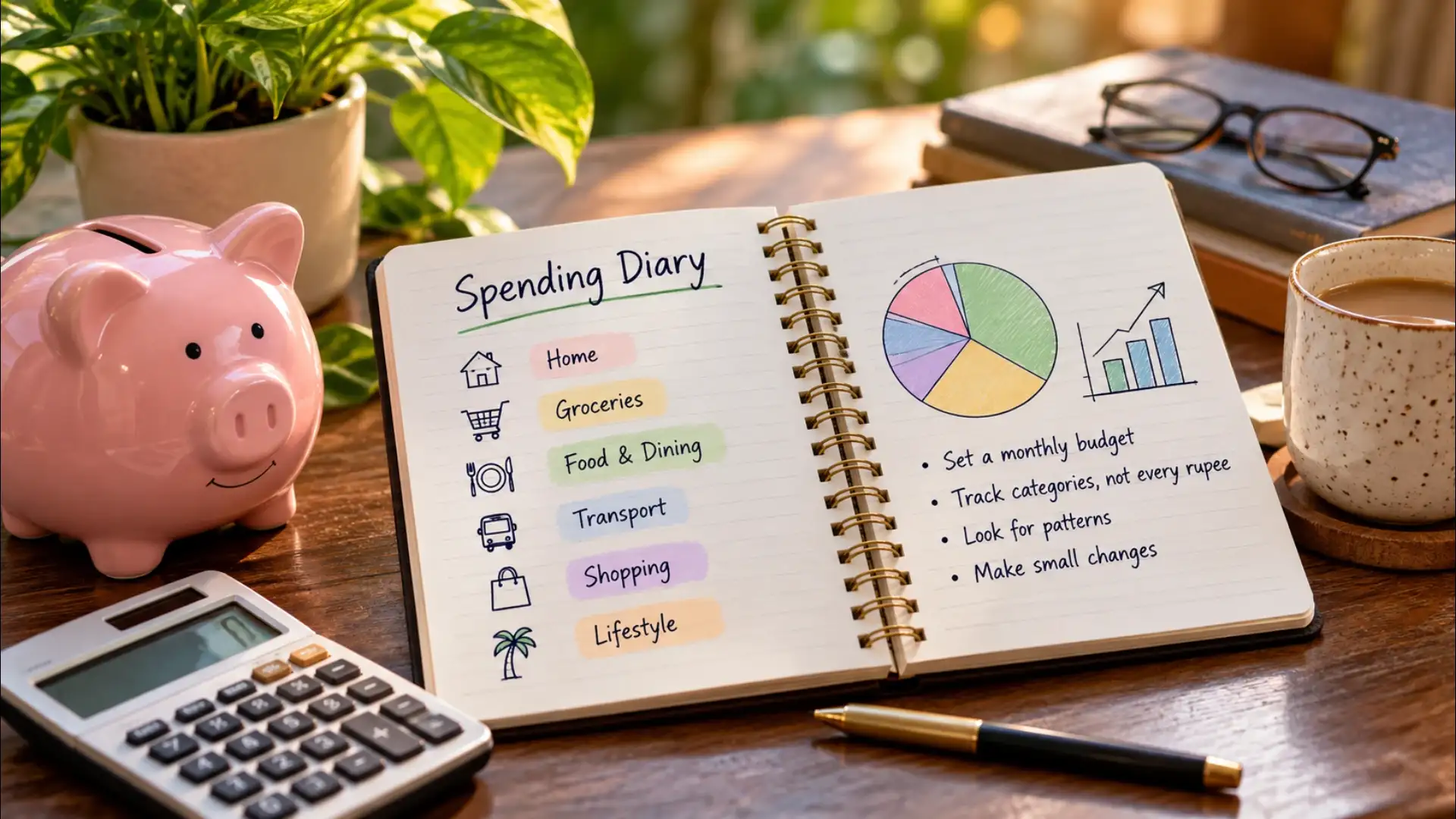
Begin by recording the date, the general category and an approximate amount. For example, instead of documenting every item purchased during a supermarket visit, simply record ₹850 under groceries. Similarly, several small purchases made during a shopping trip can be grouped under personal spending.
The objective is to understand where your money goes, rather than create a perfect record of every transaction.
You can also create a category for occasional expenses, including gifts, vehicle servicing and festival shopping. These costs may not appear every month, but they can significantly affect your finances when they arise.
Instead of manually recording every transaction, review these records and note the totals for your main categories. Cash purchases can be recorded approximately, particularly when the amounts are small.
This approach makes the process easier to maintain while reducing the risk of overlooking digital payments.
For instance, you might discover that ordering dinner three times a week costs considerably more than you expected. You could then decide to prepare a few simple meals at home while keeping food delivery as a convenient option on busy days.
Start With a Simple Spending Record
A personal spending diary does not need to be an elaborate spreadsheet or a dedicated budgeting application. A notebook, a notes app on your phone or a basic digital document can work just as well.Begin by recording the date, the general category and an approximate amount. For example, instead of documenting every item purchased during a supermarket visit, simply record ₹850 under groceries. Similarly, several small purchases made during a shopping trip can be grouped under personal spending.
The objective is to understand where your money goes, rather than create a perfect record of every transaction.
Focus on Spending Categories
Divide your expenses into a few practical categories, such as groceries, transport, household bills, eating out, shopping and entertainment. Keep essential expenses separate from discretionary purchases so you can identify where adjustments might be possible.You may also like
- A proposal is more about power than love. Rashmika Mandanna proposing to Vijay Deverakonda 100 times doesn't make her a doormat.
- 'I died for six minutes in 2003. Heaven isn't what we think it is': Man shares near death experience and why he could never thank God thereafter
- From driving a rented e-rickshaw and Rs 15,000 a month to Rs 6 lakh in dairy sales: How an Amritsar couple built a business with 17 buffaloes, one cow and a roadside stall
- Jio IPO Listing: What should investors do if they didn't receive an allotment in the Jio IPO? Market experts offer this advice..
- Attention passengers! Major changes to travel insurance rules at railway counters—find out about the Railway Board's new directive..
You can also create a category for occasional expenses, including gifts, vehicle servicing and festival shopping. These costs may not appear every month, but they can significantly affect your finances when they arise.
Use Your Bank Statement to Save Time
You do not have to remember every payment. Your bank statement, UPI transaction history and card statements can help you reconstruct your spending at the end of the day or week.Instead of manually recording every transaction, review these records and note the totals for your main categories. Cash purchases can be recorded approximately, particularly when the amounts are small.
This approach makes the process easier to maintain while reducing the risk of overlooking digital payments.
Review Patterns Instead of Individual Purchases
Set aside ten minutes each week to review your diary. Look for repeated patterns rather than criticising yourself for individual purchases.For instance, you might discover that ordering dinner three times a week costs considerably more than you expected. You could then decide to prepare a few simple meals at home while keeping food delivery as a convenient option on busy days.
Make the Diary Work for You
The most useful spending diary is one you can maintain consistently. Review your records at the end of each month and choose one realistic adjustment, such as reducing unused subscriptions or setting a limit for online shopping.





Loving Newspoint? Download the app now
