
How to Descale an Electric Kettle Without Damaging It

An electric kettle can develop a chalky layer or small pale flakes inside after repeated use. These deposits are usually associated with minerals in the water, which become more noticeable as water is heated and evaporates. The build-up is often harmless in itself, but it can make the kettle look dirty and may affect how efficiently it operates over time.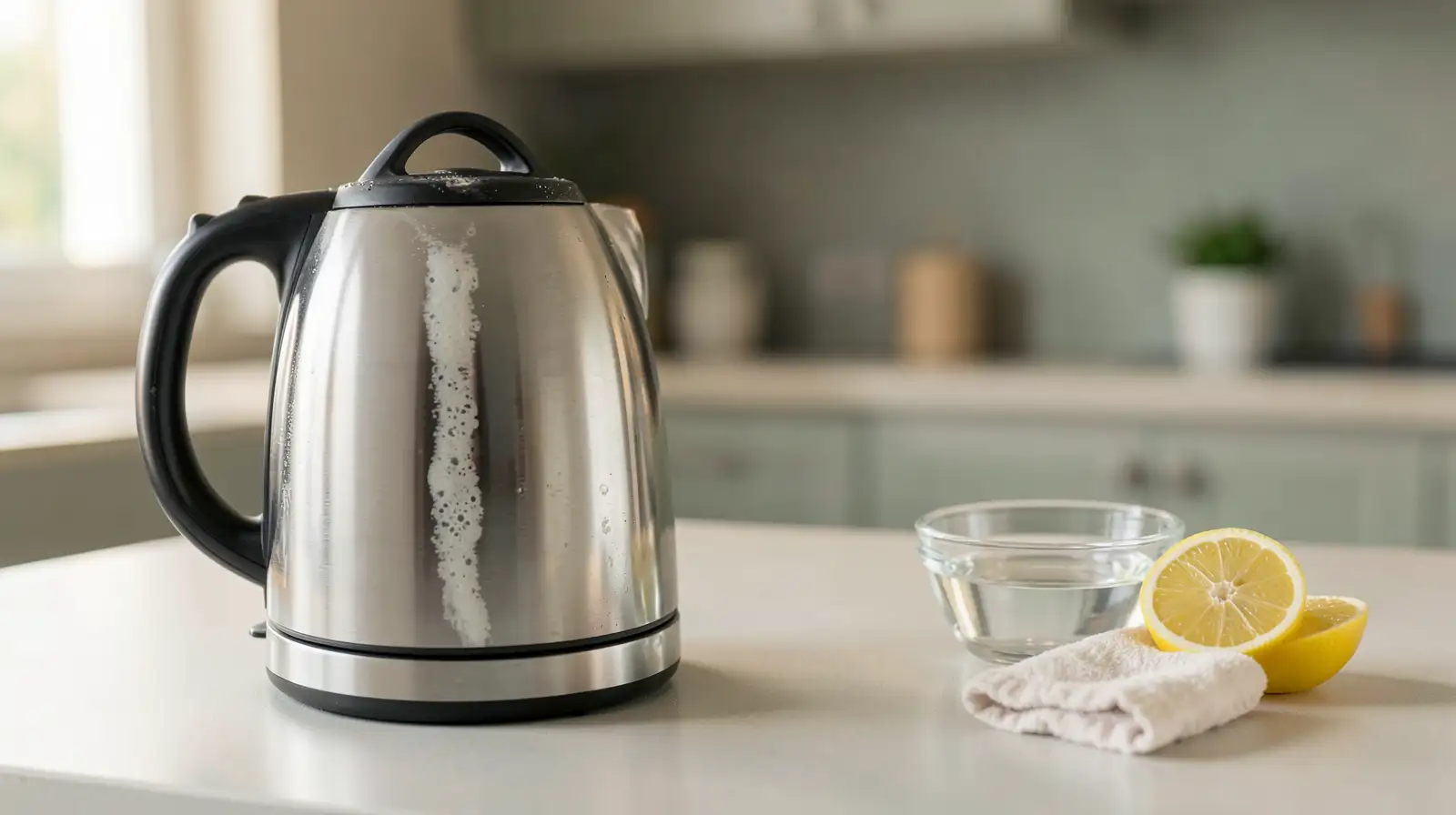
Descaling does not need to be complicated. The key is to use a method approved for the appliance, avoid abrasive cleaning tools and rinse the kettle thoroughly before making another drink. How often the task is needed depends on local water hardness and how frequently the kettle is used.
Do not immerse an electric kettle, its base or its electrical connections in water. Keep liquid away from the power connector and follow the instructions for cleaning the exterior separately.
Never combine cleaning chemicals, and do not mix descaler with bleach or other household cleaners. Such combinations can produce dangerous reactions.
After treatment, empty the kettle and rinse it thoroughly. If the instructions recommend boiling and discarding fresh water after descaling, complete that step before using the appliance for drinks.
Avoid scraping the interior with knives, metal utensils or rough scouring pads. These tools may damage the surface or protective finish.
The lid, spout and removable filter may collect deposits as well. Clean removable parts according to the manufacturer's instructions and make sure they are properly reinstalled before use.
Do not force a filter out if it is not designed to be removed by the user.
Use fresh water for drinks and avoid filling beyond the maximum mark. If the appliance begins leaking, shows electrical damage or behaves unusually, stop using it and seek appropriate repair or replacement advice.
Descaling does not need to be complicated. The key is to use a method approved for the appliance, avoid abrasive cleaning tools and rinse the kettle thoroughly before making another drink. How often the task is needed depends on local water hardness and how frequently the kettle is used.
Check the manufacturer's instructions
Before cleaning, switch off the kettle, unplug it and allow it to cool. Read the care instructions to find out which descaling products or household methods are permitted. Some manufacturers recommend a commercial descaler, while others allow a diluted food-grade acid solution.Do not immerse an electric kettle, its base or its electrical connections in water. Keep liquid away from the power connector and follow the instructions for cleaning the exterior separately.
Remove mineral deposits
If the manufacturer permits it, fill the kettle with the recommended amount of water and descaling solution. Use only the stated concentration and follow the product's directions for how long the mixture should remain inside.You may also like
- Looking forward to global exposure, says model Anuradha Viswanathan after NY and London runway appearances
- Benefits of using hair masks in humid weather
- Fake Weight Loss Injections: The Dangerous Shortcut to a Slim Body That Everyone Should Know About
- Karwa Chauth 2026: Easy DIY Puja Thali Decoration Ideas Using Velvet Paper, Lace and Mirrors
- Jennifer Lopez's twin boys Max and Emme, are moving into college while mom shares a parenting tip on how children silently pick up 'your good traits': “What they see you do; if you work hard, they become more hard workers"
Never combine cleaning chemicals, and do not mix descaler with bleach or other household cleaners. Such combinations can produce dangerous reactions.
After treatment, empty the kettle and rinse it thoroughly. If the instructions recommend boiling and discarding fresh water after descaling, complete that step before using the appliance for drinks.
Avoid scraping the interior with knives, metal utensils or rough scouring pads. These tools may damage the surface or protective finish.
Clean the outside and lid
Wipe the exterior with a soft, slightly damp cloth once the kettle is unplugged and cool. Dry it afterwards, keeping water away from the electrical base and connector.The lid, spout and removable filter may collect deposits as well. Clean removable parts according to the manufacturer's instructions and make sure they are properly reinstalled before use.
Do not force a filter out if it is not designed to be removed by the user.
Reduce future build-up
If limescale develops quickly, consider descaling more frequently rather than waiting until a thick layer forms. Emptying unused water after the kettle cools can reduce standing deposits, although it will not prevent limescale entirely.Use fresh water for drinks and avoid filling beyond the maximum mark. If the appliance begins leaking, shows electrical damage or behaves unusually, stop using it and seek appropriate repair or replacement advice.






Loving Newspoint? Download the app now
