
How to Grow Anthurium at Home: A Beginner's Gardening Guide

Anthurium is an attractive ornamental plant that can bring colour to indoor spaces. Known for its glossy green leaves and distinctive flower-like structures, it is popular among people who enjoy maintaining flowering plants at home.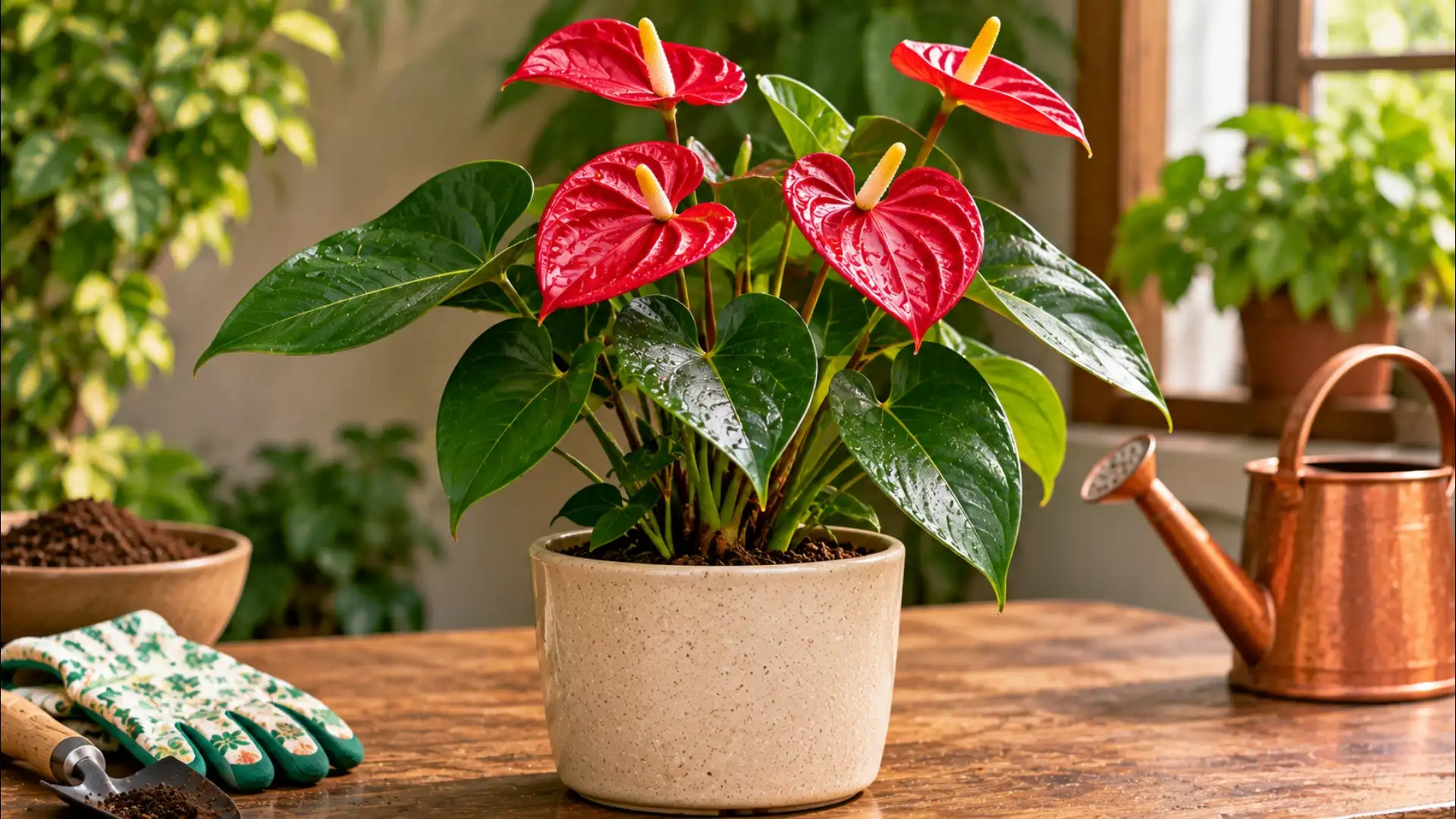
Commonly called the flamingo flower , anthurium belongs to a tropical plant group. Its colourful display comes from a modified leaf called a spathe, which surrounds a central structure known as the spadix.
Red, pink and white varieties are commonly grown as decorative plants. With suitable growing conditions, anthuriums can remain attractive for extended periods.
Avoid placing the plant where strong direct sunlight falls on its leaves for long periods. Excessive exposure can affect the appearance of the foliage.
At the same time, a very dark corner may not provide enough light to support regular flowering.
For Indian homes, a bright room with filtered natural light can be a practical location.
A compact mixture of ordinary garden soil may not provide the right conditions.
The Kerala Agricultural University recommends loose growing media for anthurium cultivation, including combinations involving coconut husk, brick pieces and charcoal.
For container growing, use a suitable potting mixture that allows air to circulate around the roots. Choose a pot with adequate drainage holes at the bottom.
Check the upper layer of the growing medium before watering. If it feels slightly dry, water the plant thoroughly and allow the excess to drain.
Avoid following a rigid daily watering schedule. The requirement changes with temperature, humidity, pot size and the type of growing medium.
During hotter periods, the plant may need more frequent watering than it does during cooler weather.
Homes with dry indoor air may require additional attention to humidity. Grouping plants together or using a humidity tray can help create a more suitable environment.
Ensure that the pot itself does not remain standing in collected water.
Good air circulation is also useful when placing several plants close together.
Use a balanced fertiliser suitable for flowering indoor plants, following the manufacturer's dilution and application instructions.
Avoid applying concentrated fertiliser directly to the growing medium. Follow the recommended frequency rather than adding extra feed in an attempt to encourage more flowers.
The Royal Horticultural Society recommends repotting established plants approximately every two or three years, depending on their growth and container conditions.
Choose a slightly larger pot rather than one that is excessively big. A suitable growing medium and proper drainage should remain the priority.
Their glossy foliage and colourful spathes make them visually appealing even when grown individually in a decorative pot.
With filtered light, appropriate watering and a well-aerated growing medium, anthuriums can become an attractive addition to a home garden.
Commonly called the flamingo flower , anthurium belongs to a tropical plant group. Its colourful display comes from a modified leaf called a spathe, which surrounds a central structure known as the spadix.
Red, pink and white varieties are commonly grown as decorative plants. With suitable growing conditions, anthuriums can remain attractive for extended periods.
Choose the right location
Anthuriums prefer bright, indirect light. A location near a window that receives filtered daylight can be suitable.Avoid placing the plant where strong direct sunlight falls on its leaves for long periods. Excessive exposure can affect the appearance of the foliage.
At the same time, a very dark corner may not provide enough light to support regular flowering.
For Indian homes, a bright room with filtered natural light can be a practical location.
Select a suitable potting mixture
Anthuriums need a growing medium that retains some moisture while allowing excess water to drain.A compact mixture of ordinary garden soil may not provide the right conditions.
The Kerala Agricultural University recommends loose growing media for anthurium cultivation, including combinations involving coconut husk, brick pieces and charcoal.
For container growing, use a suitable potting mixture that allows air to circulate around the roots. Choose a pot with adequate drainage holes at the bottom.
Understand its watering needs
Anthuriums prefer evenly moist growing conditions but should not be left sitting in water.Check the upper layer of the growing medium before watering. If it feels slightly dry, water the plant thoroughly and allow the excess to drain.
Avoid following a rigid daily watering schedule. The requirement changes with temperature, humidity, pot size and the type of growing medium.
During hotter periods, the plant may need more frequent watering than it does during cooler weather.
Maintain suitable humidity
As tropical plants, anthuriums appreciate humid surroundings.Homes with dry indoor air may require additional attention to humidity. Grouping plants together or using a humidity tray can help create a more suitable environment.
Ensure that the pot itself does not remain standing in collected water.
Good air circulation is also useful when placing several plants close together.
Feed the plant carefully
Anthuriums can benefit from regular feeding during active growth.Use a balanced fertiliser suitable for flowering indoor plants, following the manufacturer's dilution and application instructions.
Avoid applying concentrated fertiliser directly to the growing medium. Follow the recommended frequency rather than adding extra feed in an attempt to encourage more flowers.
When should you repot an anthurium?
Anthuriums do not require frequent repotting.The Royal Horticultural Society recommends repotting established plants approximately every two or three years, depending on their growth and container conditions.
Choose a slightly larger pot rather than one that is excessively big. A suitable growing medium and proper drainage should remain the priority.
Make it part of your indoor garden
Anthuriums work well as decorative plants in bright living rooms, balconies and sheltered indoor spaces.Their glossy foliage and colourful spathes make them visually appealing even when grown individually in a decorative pot.
With filtered light, appropriate watering and a well-aerated growing medium, anthuriums can become an attractive addition to a home garden.
Next Story