
How to Grow Ginger at Home: A Simple Guide to Container Gardening

Ginger is a familiar ingredient in Indian kitchens, but it can also be grown at home in a container. The plant develops underground rhizomes, which are harvested and used in cooking.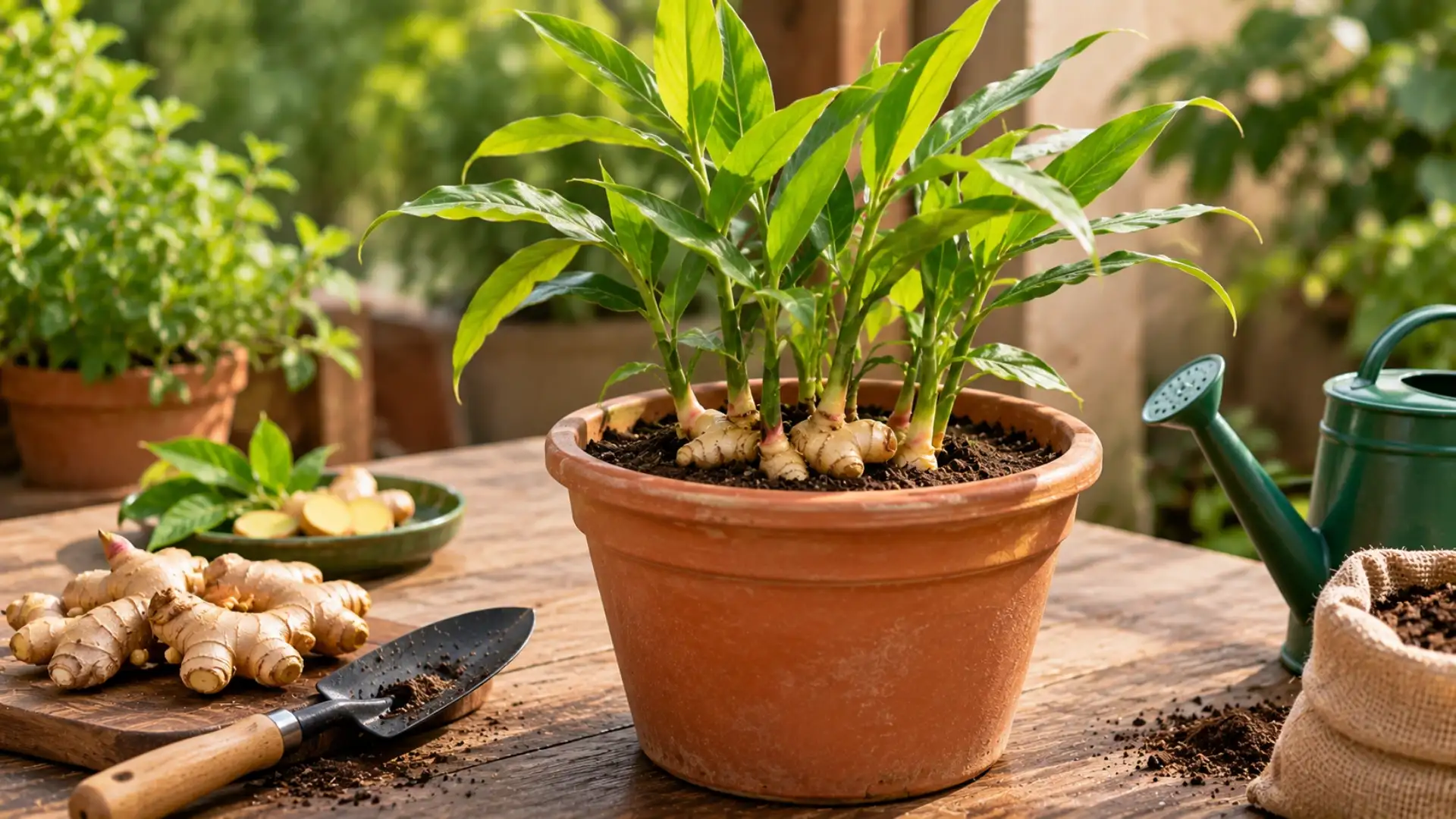
Unlike plants that need deep containers, ginger spreads horizontally as it grows. This makes a wide pot or grow bag a practical choice for balcony and terrace gardening.
Growing ginger requires patience, suitable growing conditions and regular attention to moisture. With a little planning, even a small home garden can accommodate this useful plant.
Look for a piece with visible growth buds, commonly called eyes. These are the small raised points from which new shoots can develop.
Avoid selecting pieces that are excessively dry, shrivelled or damaged.
A larger rhizome can be divided into smaller sections, provided each section has at least one or two healthy growth buds.
If you cut a rhizome into pieces, allow the cut surfaces to dry before planting.
Ginger grows sideways underground, so horizontal space is particularly important.
A container approximately 30–40 cm wide and at least 25–30 cm deep is a reasonable starting point for a small home planting.
If you want to grow several plants, use a larger container rather than crowding too many rhizome pieces into a small pot.
A home potting mixture can be prepared using:
The growing medium should hold sufficient moisture without becoming waterlogged.
Cover them with approximately 3–5 cm of soil.
Leave sufficient space between the pieces so that the developing plants have room to grow.
Water gently after planting. The soil should remain lightly moist while the shoots are developing.
Avoid flooding the container.
A balcony receiving gentle morning sunlight can be suitable. Avoid placing newly planted rhizomes in an area exposed to intense afternoon sunlight throughout the day.
The plant develops long green shoots and broad leaves as it grows.
During warmer periods, check the moisture level regularly because containers can dry faster than garden beds.
Check the upper layer of the growing medium before watering. If it begins to dry, water gently until the soil is evenly moist.
Remove unwanted weeds and occasionally loosen the upper layer of the growing medium without disturbing the developing rhizomes.
Adding a small amount of mature compost during active growth can help replenish nutrients.
Young ginger can be harvested earlier, while mature ginger generally needs a longer growing period.
As the plant approaches maturity, its leaves gradually begin to turn yellow and dry.
You can carefully move aside some soil to check the rhizome development. Harvest only the amount required if you want the remaining plant to continue growing.
It requires a suitable wide container, patience and attention to watering, but does not demand a large garden.
A small balcony or terrace can provide enough room to grow this familiar kitchen ingredient at home.
Unlike plants that need deep containers, ginger spreads horizontally as it grows. This makes a wide pot or grow bag a practical choice for balcony and terrace gardening.
Growing ginger requires patience, suitable growing conditions and regular attention to moisture. With a little planning, even a small home garden can accommodate this useful plant.
Choose fresh ginger for planting
Begin with a fresh, firm ginger rhizome.Look for a piece with visible growth buds, commonly called eyes. These are the small raised points from which new shoots can develop.
Avoid selecting pieces that are excessively dry, shrivelled or damaged.
A larger rhizome can be divided into smaller sections, provided each section has at least one or two healthy growth buds.
If you cut a rhizome into pieces, allow the cut surfaces to dry before planting.
Select a wide container
Choose a wide pot or grow bag with adequate drainage holes.Ginger grows sideways underground, so horizontal space is particularly important.
A container approximately 30–40 cm wide and at least 25–30 cm deep is a reasonable starting point for a small home planting.
If you want to grow several plants, use a larger container rather than crowding too many rhizome pieces into a small pot.
Prepare the growing medium
Ginger prefers loose, fertile growing conditions.A home potting mixture can be prepared using:
- 40 per cent good-quality garden soil
- 30 per cent mature compost
- 20 per cent cocopeat
- 10 per cent coarse sand or another drainage-supporting material
The growing medium should hold sufficient moisture without becoming waterlogged.
Plant the ginger rhizome
Place the rhizome pieces horizontally in the growing medium, with the buds facing upwards.Cover them with approximately 3–5 cm of soil.
Leave sufficient space between the pieces so that the developing plants have room to grow.
Water gently after planting. The soil should remain lightly moist while the shoots are developing.
Avoid flooding the container.
Choose the right location
Ginger grows well in warm conditions with filtered sunlight or partial shade.A balcony receiving gentle morning sunlight can be suitable. Avoid placing newly planted rhizomes in an area exposed to intense afternoon sunlight throughout the day.
The plant develops long green shoots and broad leaves as it grows.
During warmer periods, check the moisture level regularly because containers can dry faster than garden beds.
Watering and everyday maintenance
Ginger needs consistent moisture during active growth.Check the upper layer of the growing medium before watering. If it begins to dry, water gently until the soil is evenly moist.
Remove unwanted weeds and occasionally loosen the upper layer of the growing medium without disturbing the developing rhizomes.
Adding a small amount of mature compost during active growth can help replenish nutrients.
When can you harvest ginger?
Ginger takes several months to develop harvestable rhizomes.Young ginger can be harvested earlier, while mature ginger generally needs a longer growing period.
As the plant approaches maturity, its leaves gradually begin to turn yellow and dry.
You can carefully move aside some soil to check the rhizome development. Harvest only the amount required if you want the remaining plant to continue growing.
Make ginger part of your kitchen garden
Growing ginger in a container is a useful way to explore kitchen gardening beyond conventional leafy plants.It requires a suitable wide container, patience and attention to watering, but does not demand a large garden.
A small balcony or terrace can provide enough room to grow this familiar kitchen ingredient at home.
Next Story