
How to Grow Green Onions in Water at Home

Growing green onions in water is one of the easiest ways to start a small kitchen garden. You do not need soil, a large pot or specialised gardening equipment. With a glass, some clean water and the leftover roots from green onions, you can encourage fresh green shoots to grow again.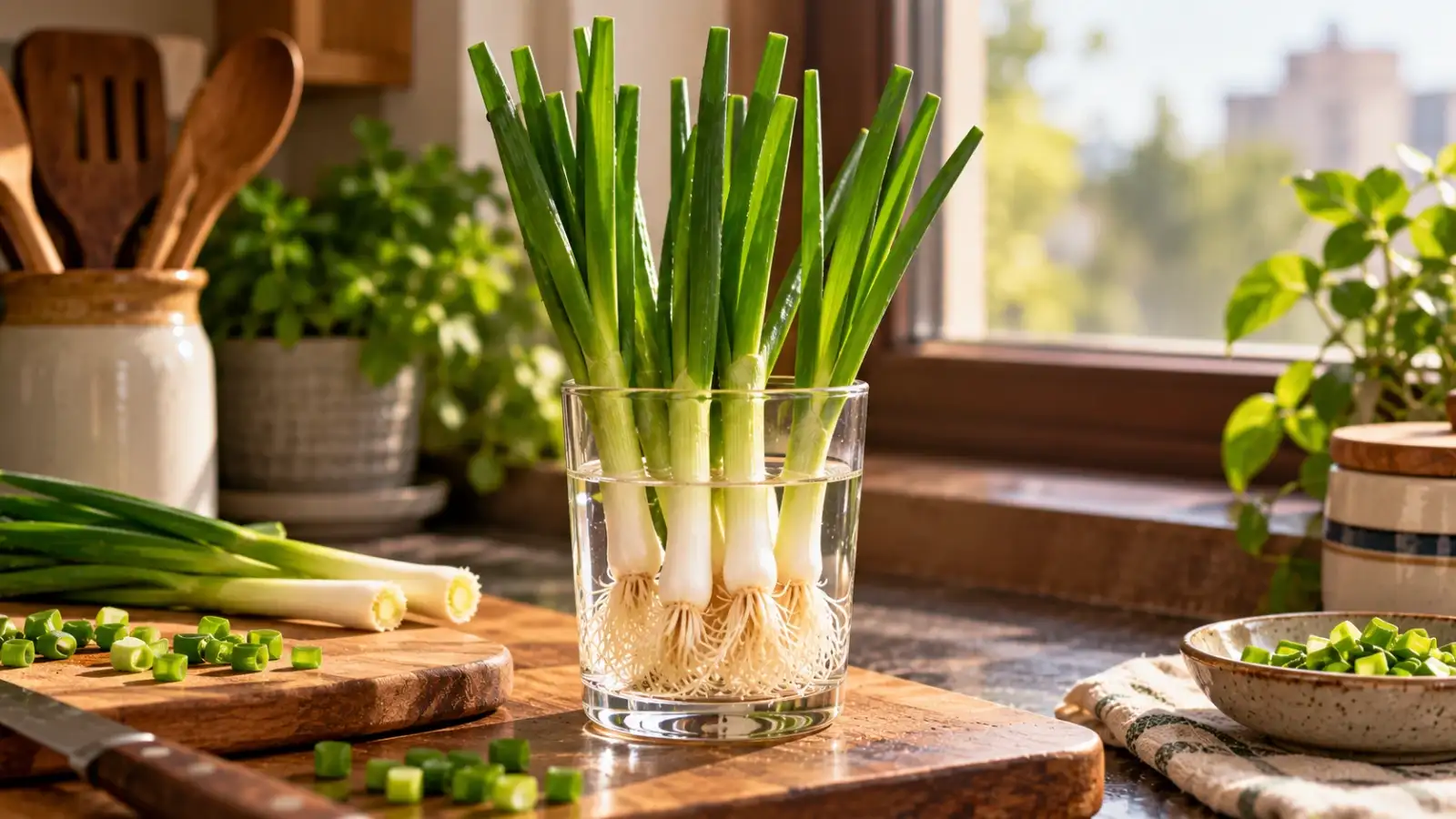
The method works particularly well in a bright kitchen window or balcony where the plants can receive sufficient indirect sunlight.
Try to keep around 2 to 3 centimetres of the white portion attached to the roots. Avoid cutting into the root area because damaged roots may make regrowth more difficult.
You can use the green portion immediately in salads, noodles, fried rice, soups or other dishes.
Do not completely submerge the white bulb. Keeping the upper part above the water helps reduce the chances of rotting.
Arrange the onions upright with the roots facing down. If the onions are difficult to balance, a narrow glass can help hold them in place.
A windowsill can work well, provided the plants are not exposed to harsh heat for long periods. Good light encourages healthy green growth and helps the new shoots develop.
If the growth becomes pale or weak, the plant may need a brighter location.
Change the water every 2 to 3 days, or sooner if it becomes cloudy or develops an unpleasant smell. Rinse the container occasionally to keep the growing environment clean.
Keeping the roots submerged while avoiding unnecessary soaking of the bulb can help prevent mould and rot.
The roots can also continue developing in the water. Growth speed depends on factors such as light, temperature, onion variety and the condition of the original roots.
Once the shoots become tall enough, you can harvest them for cooking.
Leave the white base and roots in the container so the plant can continue producing new growth.
You can repeat this process several times, although the quality and speed of regrowth may gradually decline. If the plant becomes weak or the roots start deteriorating, replace it with fresh rooted onions.
The initial regrowth uses nutrients already stored in the bulb. Over time, growth may become slower and thinner if the plant does not receive additional nutrients.
For repeated and longer-term growth, you can eventually transfer the rooted onions into a pot containing good-quality soil. This gives the plants access to a broader supply of nutrients and allows the roots to develop more extensively.
Avoid placing the container in complete darkness because the new shoots need light for healthy growth. At the same time, extremely hot direct sunlight through a window can cause the water to heat up and stress the plant.
Another mistake is leaving cloudy or stagnant water unchanged for long periods. Clean water and a clean container are simple but important parts of the process.
With rooted green onions, clean water and a bright location, you can watch new shoots develop within days. While the method is not a replacement for growing onions commercially or in soil, it is an easy way to keep a small supply of fresh green leaves available for everyday cooking.
The method works particularly well in a bright kitchen window or balcony where the plants can receive sufficient indirect sunlight.
What You Need
You only need a few simple things to get started.- Green onions with their roots still attached
- A small glass or shallow container
- Clean water
- A bright spot with indirect sunlight
- Kitchen scissors for harvesting
Cut the Green Onions Correctly
Start by cutting the green tops for cooking, while leaving the white bulb and roots intact.Try to keep around 2 to 3 centimetres of the white portion attached to the roots. Avoid cutting into the root area because damaged roots may make regrowth more difficult.
You can use the green portion immediately in salads, noodles, fried rice, soups or other dishes.
Place the Roots in Water
Take a clean glass or small container and add enough water to cover the roots.Do not completely submerge the white bulb. Keeping the upper part above the water helps reduce the chances of rotting.
Arrange the onions upright with the roots facing down. If the onions are difficult to balance, a narrow glass can help hold them in place.
Keep Them Near Light
Place the container in a bright location where the onions can receive plenty of natural light.A windowsill can work well, provided the plants are not exposed to harsh heat for long periods. Good light encourages healthy green growth and helps the new shoots develop.
If the growth becomes pale or weak, the plant may need a brighter location.
Change the Water Regularly
Fresh water is important when growing green onions hydroponically at home.Change the water every 2 to 3 days, or sooner if it becomes cloudy or develops an unpleasant smell. Rinse the container occasionally to keep the growing environment clean.
Keeping the roots submerged while avoiding unnecessary soaking of the bulb can help prevent mould and rot.
Watch the New Growth Appear
Within a few days, you may notice fresh green shoots emerging from the centre of the onion.The roots can also continue developing in the water. Growth speed depends on factors such as light, temperature, onion variety and the condition of the original roots.
Once the shoots become tall enough, you can harvest them for cooking.
How to Harvest Green Onions
Avoid pulling the entire plant out when you want to use the leaves. Instead, use clean scissors to cut the green shoots from the top.Leave the white base and roots in the container so the plant can continue producing new growth.
You can repeat this process several times, although the quality and speed of regrowth may gradually decline. If the plant becomes weak or the roots start deteriorating, replace it with fresh rooted onions.
Can Green Onions Grow Permanently in Water?
Green onions can regrow in water, but water alone may not provide everything the plant needs indefinitely.The initial regrowth uses nutrients already stored in the bulb. Over time, growth may become slower and thinner if the plant does not receive additional nutrients.
You may also like
- Travel Trend: Want to avoid the crowds in Shimla and Manali? Try 'reverse travel' for the long weekend..
- Religious Journey: It's not just Banke Bihari and Radharaman—Thakur Ji has seven forms; find out where to see them..
- Theatre bonds students together: Bharati Vidyapeeth wins Purushottam Karandak for 'Lajalu'; students celebrate newfound camaraderie and talents
- “Ek shot ka kitna legi, pooch”: Israeli female tourist recalls 2022 Rajasthan incident after video resurfaces; “I thought they were asking for selfies”
- 8th Pay Commission: Fitment Factor 2.57 vs. 2.86 – What Will Be the Difference in Thousands?
For repeated and longer-term growth, you can eventually transfer the rooted onions into a pot containing good-quality soil. This gives the plants access to a broader supply of nutrients and allows the roots to develop more extensively.
Common Mistakes to Avoid
One of the biggest mistakes is covering the entire bulb with water. This can encourage rot, particularly when the water is not changed regularly.Avoid placing the container in complete darkness because the new shoots need light for healthy growth. At the same time, extremely hot direct sunlight through a window can cause the water to heat up and stress the plant.
Another mistake is leaving cloudy or stagnant water unchanged for long periods. Clean water and a clean container are simple but important parts of the process.
A Simple Kitchen Gardening Project
Growing green onions in water is a useful introduction to growing food at home. It takes very little space and allows you to reuse kitchen scraps that might otherwise be discarded.With rooted green onions, clean water and a bright location, you can watch new shoots develop within days. While the method is not a replacement for growing onions commercially or in soil, it is an easy way to keep a small supply of fresh green leaves available for everyday cooking.






Loving Newspoint? Download the app now
