
How to Grow Lemongrass in Pots on an Indian Balcony

Lemongrass is a useful addition to a home garden because it offers both greenery and a fresh citrus-like aroma. Its long, narrow leaves grow in clumps, making the plant suitable for a sunny balcony, terrace or outdoor corner.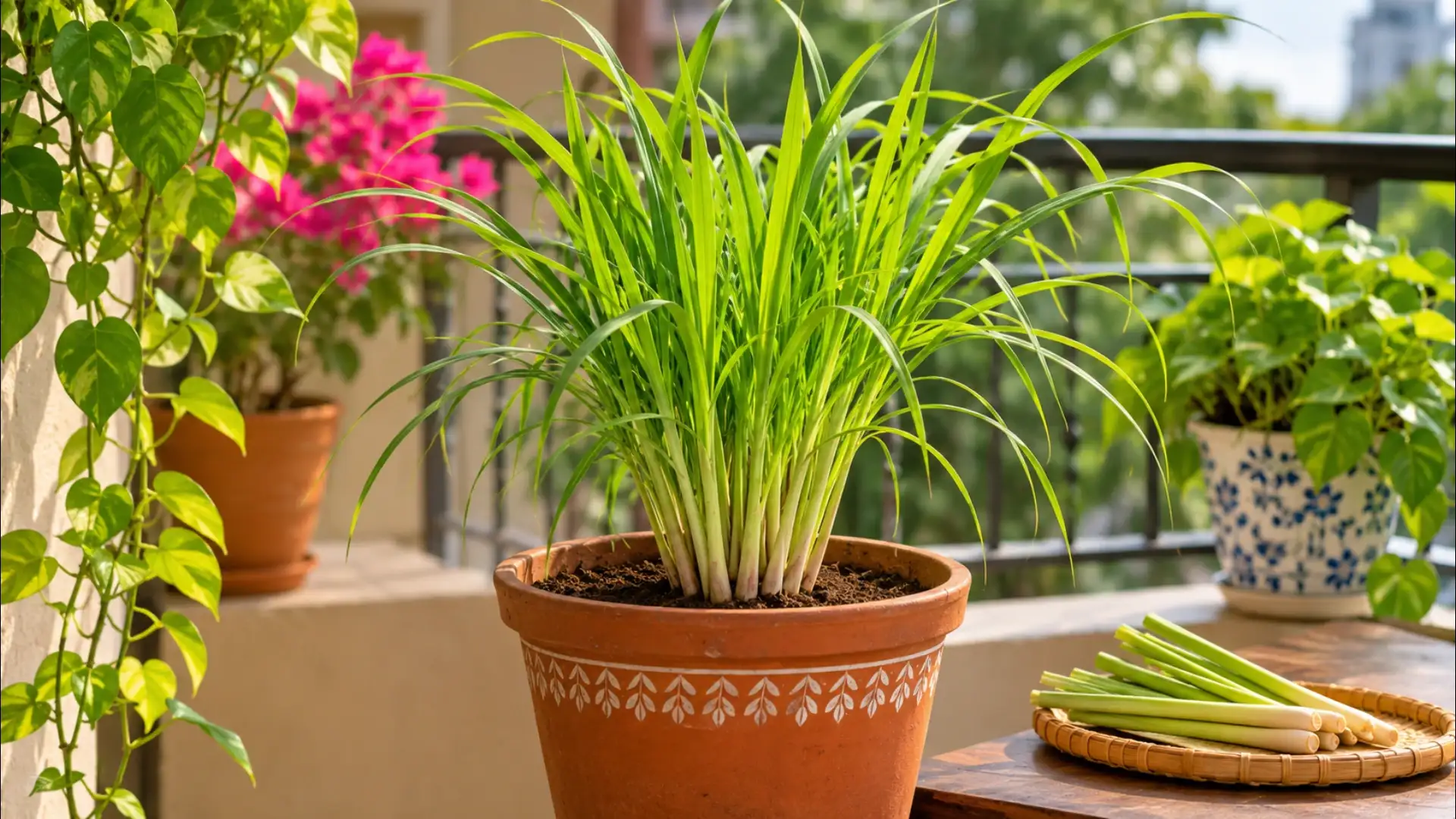
The leaves and tender lower portions of the stalk are used in several cuisines, including in teas, soups and flavourful rice preparations.
You do not need a large garden to grow it. A wide container, suitable planting material and regular care can help establish a healthy clump at home.
For a beginner, a healthy nursery-grown division is a convenient option. Look for firm stems, fresh leaves and a visible root system.
Some fresh market stalks may also develop roots when placed in water, but the results can vary depending on their freshness and condition. A nursery plant is generally a more predictable starting point.
Check that the plant is correctly identified as culinary lemongrass, rather than assuming every aromatic grass is suitable for cooking.
Choose a container with several drainage holes. A medium or large pot can work, depending on the size of the planting division.
Terracotta and sturdy plastic containers are both options. The important point is to prevent water from collecting around the roots.
If you are planting more than one division, leave sufficient space between them instead of crowding the container.
The mixture should retain some moisture without becoming heavy or waterlogged.
Fill the pot partly, position the division upright and spread its roots gently. Cover the roots with the mixture and press lightly around the base.
Water thoroughly after planting so that the soil settles around the roots.
Place the container where it can receive several hours of direct sun. A balcony with good light or an open terrace can be suitable.
If the plant has been kept in shade at the nursery, introduce it gradually to stronger sunlight. This helps it adjust to the new location.
Rotate the pot occasionally if the light falls mainly on one side.
Touch the top layer before watering. If it feels dry, water until the excess drains through the holes.
Hot, windy weather may dry the container more quickly than cooler conditions. Adjust the frequency accordingly rather than following a rigid daily schedule.
Never allow the pot to sit in a tray filled with water.
Remove dry leaves and trim damaged tips. If the clump becomes crowded, divide it and replant healthy sections in separate containers.
The tender lower stalk portions can also be used in cooking. Wash the harvested material thoroughly and use only the quantity needed.
With adequate light, drainage and careful watering, lemongrass can become a useful and attractive part of a small home garden.
The leaves and tender lower portions of the stalk are used in several cuisines, including in teas, soups and flavourful rice preparations.
You do not need a large garden to grow it. A wide container, suitable planting material and regular care can help establish a healthy clump at home.
Choose the right planting material
Lemongrass is commonly grown from divisions or slips taken from an established plant.For a beginner, a healthy nursery-grown division is a convenient option. Look for firm stems, fresh leaves and a visible root system.
Some fresh market stalks may also develop roots when placed in water, but the results can vary depending on their freshness and condition. A nursery plant is generally a more predictable starting point.
Check that the plant is correctly identified as culinary lemongrass, rather than assuming every aromatic grass is suitable for cooking.
Select a wide container
Lemongrass spreads into a clump, so a reasonably wide pot gives it room to develop.Choose a container with several drainage holes. A medium or large pot can work, depending on the size of the planting division.
Terracotta and sturdy plastic containers are both options. The important point is to prevent water from collecting around the roots.
If you are planting more than one division, leave sufficient space between them instead of crowding the container.
Prepare a suitable potting mix
Use a loose, well-draining potting mixture that contains garden soil, mature compost and a material that improves drainage.The mixture should retain some moisture without becoming heavy or waterlogged.
Fill the pot partly, position the division upright and spread its roots gently. Cover the roots with the mixture and press lightly around the base.
Water thoroughly after planting so that the soil settles around the roots.
Find a sunny location
Lemongrass grows well in a bright outdoor location with plenty of sunlight.Place the container where it can receive several hours of direct sun. A balcony with good light or an open terrace can be suitable.
If the plant has been kept in shade at the nursery, introduce it gradually to stronger sunlight. This helps it adjust to the new location.
Rotate the pot occasionally if the light falls mainly on one side.
You may also like
- Delay a file, lose 250 rupees a day: New law in Delhi.
- AI Healthcare: The Rise of AI Platforms in Indian Healthcare Sector
- Priyanka Chopra's Diwali gown took over 2,200 hours of embroidery, according to its designer, who blended Kashmiri aari and zardozi with Sindhi craft details in an outfit inspired by Indian architectural heritage
- Two New Vande Bharat Trains for the Nation: Which Routes Will They Serve and When Will They Begin?
- Know the Limits: How Much Cash Can You Withdraw from a Post Office ATM in a Day?
Follow a sensible watering routine
Keep the potting mixture lightly moist during active growth, but avoid watering without checking the soil.Touch the top layer before watering. If it feels dry, water until the excess drains through the holes.
Hot, windy weather may dry the container more quickly than cooler conditions. Adjust the frequency accordingly rather than following a rigid daily schedule.
Never allow the pot to sit in a tray filled with water.
Feed and maintain the clump
Add a little mature compost periodically during the growing season. A balanced liquid fertiliser can also be used according to its label instructions.Remove dry leaves and trim damaged tips. If the clump becomes crowded, divide it and replant healthy sections in separate containers.
Harvest without damaging the plant
Once the plant is established, cut a few outer leaves close to the base when required. Avoid removing too much foliage at once.The tender lower stalk portions can also be used in cooking. Wash the harvested material thoroughly and use only the quantity needed.
With adequate light, drainage and careful watering, lemongrass can become a useful and attractive part of a small home garden.






Loving Newspoint? Download the app now
