
How to Grow Petunias in Hanging Baskets for a Colourful and Beautiful Garden

Petunias are among the most popular flowering plants for balconies, patios and home gardens because of their colourful blooms and cascading growth. Their trumpet-shaped flowers come in shades of pink, purple, red, white and yellow, making them ideal for hanging baskets. When grown in the right conditions, petunias can create a beautiful display of flowers that spills over the edges of containers. They are also relatively easy to maintain, making them suitable for beginners. However, proper sunlight, watering, soil selection and regular pruning are important for healthy growth. Here is a simple guide to growing petunias successfully in hanging baskets.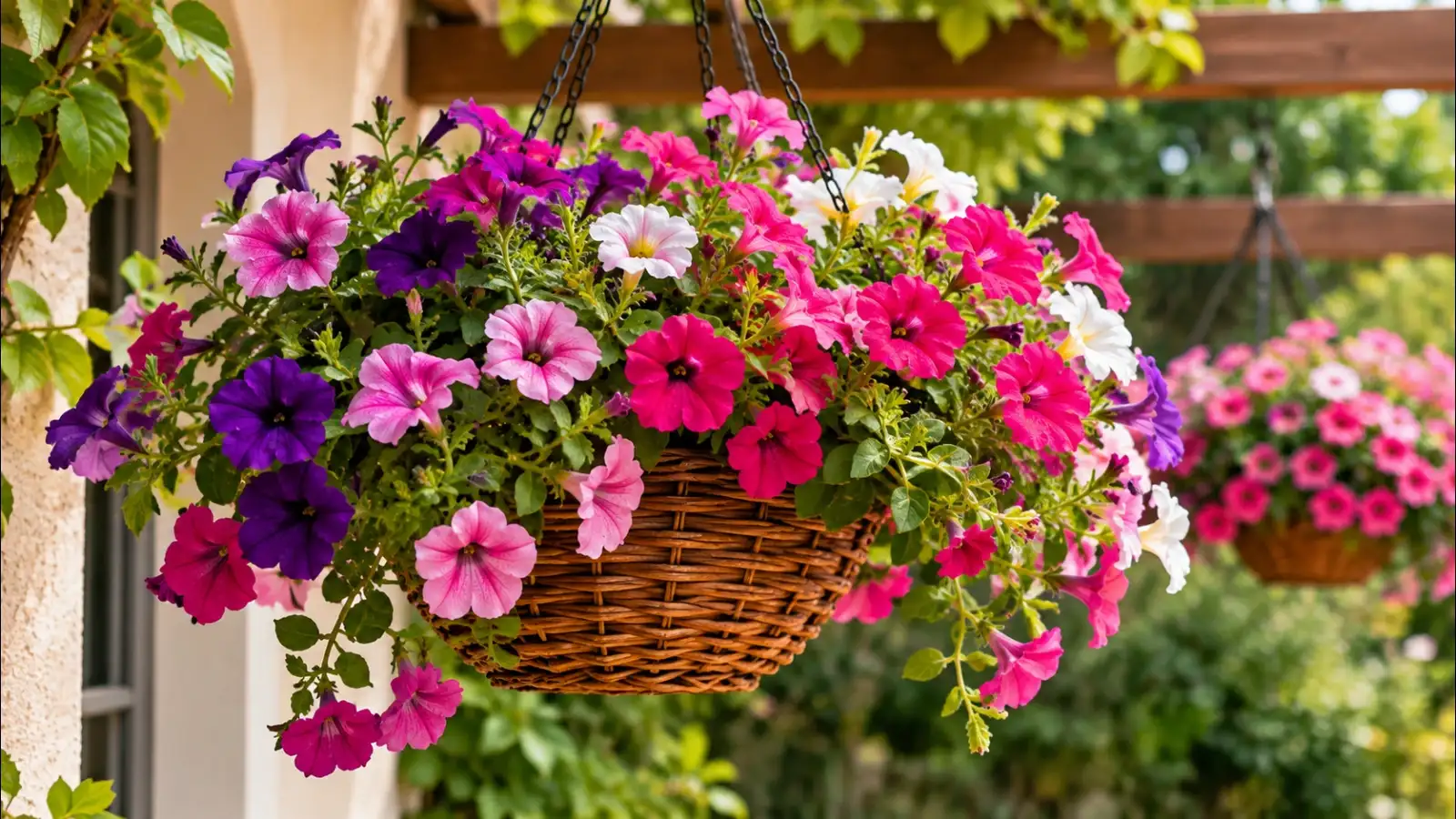
Popular options include Wave petunias, Supertunias and other spreading varieties. They can produce abundant flowers and create a fuller appearance as they grow. Compact varieties can also be used, but trailing types generally offer a more cascading effect.
Make sure the basket has adequate drainage holes so excess water can escape. Plastic, metal and lined wire baskets can all work well. If you choose a wire basket, use a suitable liner to hold the potting mix and retain some moisture.
You can improve the mix by adding compost or another suitable organic material. Avoid using heavy garden soil on its own because it may become compacted inside the basket and restrict root growth.
Fill the basket with potting mix, leaving enough space at the top for watering.
Add soil around the roots and press it lightly to secure the plant. If you are planting multiple petunias, leave enough space between them for air circulation and future growth.
Water thoroughly after planting to help the roots settle into their new container.
In extremely hot climates, intense afternoon sunlight may cause stress, particularly when baskets dry out quickly. In such conditions, a location with morning sun and some protection from harsh afternoon heat can help keep the plants healthy.
Rotate the basket occasionally if one side receives more sunlight than the other.
Check the top layer of soil with your finger. If it feels dry, water the basket until excess moisture drains through the bottom. Avoid watering on a fixed schedule without checking the soil, as the requirement changes with temperature and rainfall.
During hot weather, baskets may need daily watering, while cooler conditions may require less frequent attention.
Follow the manufacturer's instructions for dosage and frequency. Avoid applying more fertiliser than recommended, as excessive feeding can damage roots or encourage too much foliage.
Regular feeding is particularly useful for plants growing in hanging baskets because nutrients can gradually wash out through drainage holes.
If stems become excessively long, sparse or untidy, trim them back lightly. This can encourage fresh branching and help the plant develop a more balanced shape.
Some modern spreading varieties are self-cleaning and may need less deadheading, but occasional trimming can still improve their appearance.
Growing petunias in hanging baskets is a simple way to add colour and natural beauty to balconies, terraces and outdoor spaces. Choose a trailing variety, use a suitable container and provide enough sunlight, water and nutrients. Regular pruning and removal of faded flowers can also help maintain a fuller display. With consistent care and attention to changing weather conditions, petunias can reward you with an attractive cascade of colourful blooms.
1. Choose the Right Petunia Variety
Selecting a suitable variety is the first step towards creating an attractive hanging basket. Trailing and spreading petunias are particularly good choices because their stems naturally grow outwards and hang over the sides of containers.Popular options include Wave petunias, Supertunias and other spreading varieties. They can produce abundant flowers and create a fuller appearance as they grow. Compact varieties can also be used, but trailing types generally offer a more cascading effect.
2. Select a Suitable Hanging Basket
Choose a basket that provides enough room for the roots to develop. A container measuring around 25 to 30 centimetres in diameter is a practical starting point for one or two plants, depending on the variety.Make sure the basket has adequate drainage holes so excess water can escape. Plastic, metal and lined wire baskets can all work well. If you choose a wire basket, use a suitable liner to hold the potting mix and retain some moisture.
3. Use Well-Draining Potting Soil
Petunias grow best in a light, fertile potting mix that retains some moisture without becoming waterlogged. A good-quality commercial potting mix is suitable for hanging baskets.You can improve the mix by adding compost or another suitable organic material. Avoid using heavy garden soil on its own because it may become compacted inside the basket and restrict root growth.
Fill the basket with potting mix, leaving enough space at the top for watering.
4. Plant Petunias Carefully
Gently remove the young petunia plant from its nursery container without damaging the roots. Make a small hole in the potting mix and place the plant at approximately the same depth at which it was growing previously.Add soil around the roots and press it lightly to secure the plant. If you are planting multiple petunias, leave enough space between them for air circulation and future growth.
Water thoroughly after planting to help the roots settle into their new container.
5. Provide Plenty of Sunlight
Petunias generally need at least six hours of direct sunlight daily to produce abundant flowers. A balcony, terrace or garden area that receives good morning or afternoon sunlight can be suitable.In extremely hot climates, intense afternoon sunlight may cause stress, particularly when baskets dry out quickly. In such conditions, a location with morning sun and some protection from harsh afternoon heat can help keep the plants healthy.
Rotate the basket occasionally if one side receives more sunlight than the other.
6. Water Regularly Without Overwatering
Hanging baskets tend to dry out faster than plants growing in garden beds because they are exposed to air from several sides. Petunias need consistent moisture, especially during warm and windy weather.Check the top layer of soil with your finger. If it feels dry, water the basket until excess moisture drains through the bottom. Avoid watering on a fixed schedule without checking the soil, as the requirement changes with temperature and rainfall.
During hot weather, baskets may need daily watering, while cooler conditions may require less frequent attention.
7. Feed the Plants for Better Flowering
Petunias are relatively heavy feeders during their flowering season. A balanced liquid fertiliser or a fertiliser formulated for flowering plants can support healthy growth and regular blooms.Follow the manufacturer's instructions for dosage and frequency. Avoid applying more fertiliser than recommended, as excessive feeding can damage roots or encourage too much foliage.
You may also like
- Gondhal Director Santosh Davakhar Says His Film and Ranbir Kapoor's Ramayana Represent Different Sides of Indian Cinema
- Visa guide for Winter Intake 2027: Documents, application timelines and key requirements students planning to study abroad should know
- Why Is Shani Pradosha Considered So Powerful?
- Astrological Insights: December 2026 Brings Major Planetary Changes Affecting Five Zodiac Signs
- Advika Kasliwal began 'Planting Hopes' as a home-gardening effort during lockdown; it has reached more than 5,000 people, supported 800 low-income families, run 50 workshops and taken nutrition education into 25 schools
Regular feeding is particularly useful for plants growing in hanging baskets because nutrients can gradually wash out through drainage holes.
8. Prune and Remove Faded Flowers
Regular maintenance helps petunias maintain a fuller appearance. Remove faded flowers and their developing seed pods to encourage continued blooming, particularly in varieties that benefit from deadheading.If stems become excessively long, sparse or untidy, trim them back lightly. This can encourage fresh branching and help the plant develop a more balanced shape.
Some modern spreading varieties are self-cleaning and may need less deadheading, but occasional trimming can still improve their appearance.
Common Problems to Watch For
- Yellow leaves: This may result from overwatering, poor drainage or nutrient deficiencies.
- Fewer flowers: Insufficient sunlight or excessive nitrogen fertiliser can reduce flowering.
- Wilting: Hanging baskets may dry out quickly, especially during hot weather.
- Leggy growth: Lack of sunlight or inadequate pruning can cause stretched stems.
- Root problems: Constantly wet soil can encourage root rot and fungal issues.
Growing petunias in hanging baskets is a simple way to add colour and natural beauty to balconies, terraces and outdoor spaces. Choose a trailing variety, use a suitable container and provide enough sunlight, water and nutrients. Regular pruning and removal of faded flowers can also help maintain a fuller display. With consistent care and attention to changing weather conditions, petunias can reward you with an attractive cascade of colourful blooms.






Loving Newspoint? Download the app now
