
A Beginner's Guide to Growing Fresh and Juicy Strawberries in Pots at Home

Growing strawberries at home can be a rewarding experience, especially when you have limited outdoor space. These attractive fruit plants can grow successfully in pots, hanging baskets and balcony containers with the right care. Their green leaves, delicate white flowers and bright red fruits also make them a beautiful addition to a home garden. You do not need a large backyard or advanced gardening skills to get started. With suitable containers, well-draining soil, adequate sunlight and regular watering, you can enjoy fresh strawberries grown at home. Here is a simple guide to help beginners get started.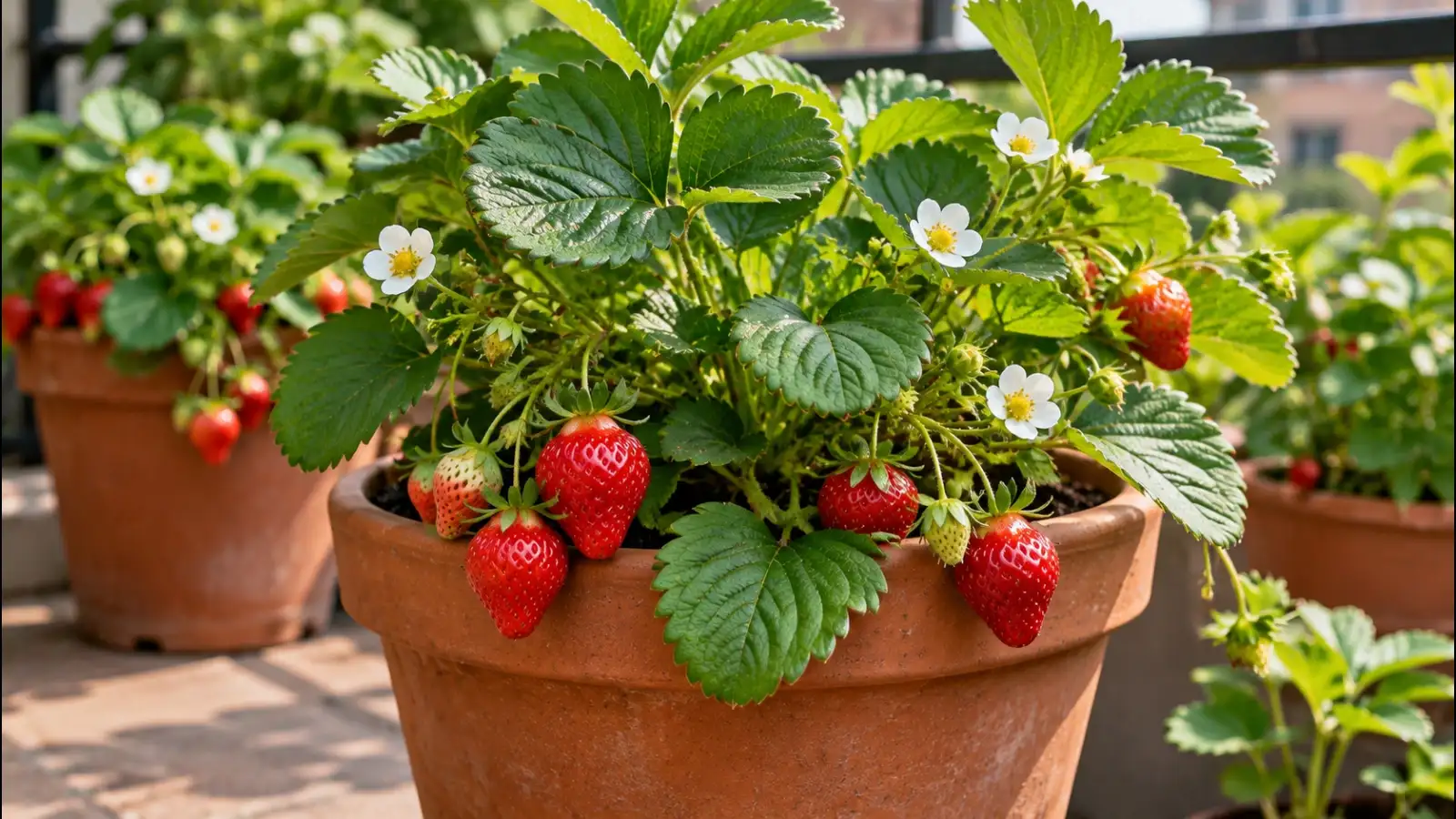
Make sure the container has drainage holes at the bottom. Terracotta pots, plastic containers, rectangular planters and hanging baskets can all work well. If you are planting multiple strawberry plants, leave around 20-30 cm of space between them to allow proper airflow and growth.
You can prepare a simple potting mixture using:
Fill the pot with the prepared soil mixture and make a small hole in the centre. Place the plant carefully, ensuring that its roots are covered while the crown, where the leaves emerge, remains above the soil surface. Cover the roots gently and water the plant.
Avoid burying the crown, as excessive moisture around this area can encourage rotting.
A sunny balcony, terrace or garden corner can be suitable. However, in regions with extremely hot summers, intense afternoon sunlight may stress the plants. Providing partial shade during the hottest hours can help protect the leaves and developing fruits.
Check the top layer of soil before watering. If it feels dry, water gently until excess moisture drains from the bottom of the pot. Avoid allowing water to collect in the tray beneath the container.
Watering requirements may change with the season, temperature and container size, so adjust your routine accordingly.
Avoid applying excessive nitrogen-rich fertilisers, as they can encourage leafy growth at the expense of flowers and fruits. Follow the instructions on packaged fertilisers and avoid applying them directly against the plant's crown.
Mature strawberry plants may also produce runners, which are long stems that develop new plantlets. If you want more fruits from the main plant, remove some unwanted runners. Alternatively, allow healthy runners to develop roots in separate pots to grow additional plants.
Inspect the leaves regularly and remove damaged plant parts. Keep enough space between plants, avoid watering the leaves unnecessarily and ensure that containers drain properly. If pest problems continue, use a suitable gardening treatment according to its label instructions.
Use clean scissors to cut the fruit with a small portion of its stem rather than pulling it forcefully. Harvest ripe strawberries regularly to encourage continued fruit production where the variety and growing conditions allow it.
1. Choose the Right Strawberry Variety
The first step is selecting a variety that suits your climate and available space. Strawberry plants generally fall into three broad groups:- June-bearing varieties: These produce a larger crop during a particular season.
- Everbearing varieties: These usually produce two main crops under suitable growing conditions.
- Day-neutral varieties: These can produce fruits over a longer period when temperatures are favourable.
2. Select a Suitable Pot
Strawberries do not need very deep containers, but they require enough space for their roots to spread. Choose a pot that is around 20-25 cm deep and wide enough to accommodate the number of plants you intend to grow.Make sure the container has drainage holes at the bottom. Terracotta pots, plastic containers, rectangular planters and hanging baskets can all work well. If you are planting multiple strawberry plants, leave around 20-30 cm of space between them to allow proper airflow and growth.
3. Prepare the Right Soil Mixture
Strawberries grow best in loose, fertile and well-draining soil. Heavy soil that retains too much water can cause root problems.You can prepare a simple potting mixture using:
- 40% good-quality garden soil
- 30% compost or well-rotted organic manure
- 20% cocopeat
- 10% perlite or coarse sand
4. Plant Strawberry Seeds or Saplings
Beginners may find it easier to grow strawberries from healthy nursery saplings or runners rather than seeds. Growing from seeds takes longer and requires more patience.Fill the pot with the prepared soil mixture and make a small hole in the centre. Place the plant carefully, ensuring that its roots are covered while the crown, where the leaves emerge, remains above the soil surface. Cover the roots gently and water the plant.
Avoid burying the crown, as excessive moisture around this area can encourage rotting.
5. Provide Adequate Sunlight
Strawberry plants need sufficient sunlight to grow and produce fruits. Ideally, place the pot in a location that receives around six to eight hours of sunlight daily.A sunny balcony, terrace or garden corner can be suitable. However, in regions with extremely hot summers, intense afternoon sunlight may stress the plants. Providing partial shade during the hottest hours can help protect the leaves and developing fruits.
6. Water the Plants Regularly
Strawberries need consistent moisture, particularly when they are flowering and producing fruits. However, overwatering can damage their roots.Check the top layer of soil before watering. If it feels dry, water gently until excess moisture drains from the bottom of the pot. Avoid allowing water to collect in the tray beneath the container.
Watering requirements may change with the season, temperature and container size, so adjust your routine accordingly.
7. Use Fertiliser Carefully
Strawberry plants benefit from nutrient-rich soil, especially during their growing and fruiting stages. Add a small amount of mature compost or suitable organic fertiliser to support healthy growth.Avoid applying excessive nitrogen-rich fertilisers, as they can encourage leafy growth at the expense of flowers and fruits. Follow the instructions on packaged fertilisers and avoid applying them directly against the plant's crown.
8. Remove Damaged Leaves and Unwanted Runners
Regular maintenance helps strawberry plants remain healthy. Remove yellow, dry or damaged leaves using clean gardening scissors.Mature strawberry plants may also produce runners, which are long stems that develop new plantlets. If you want more fruits from the main plant, remove some unwanted runners. Alternatively, allow healthy runners to develop roots in separate pots to grow additional plants.
9. Protect Strawberries From Pests and Diseases
Strawberry plants can attract pests such as aphids, spider mites, slugs and snails. Fungal problems may also develop when plants remain too wet or lack proper airflow.Inspect the leaves regularly and remove damaged plant parts. Keep enough space between plants, avoid watering the leaves unnecessarily and ensure that containers drain properly. If pest problems continue, use a suitable gardening treatment according to its label instructions.
10. Harvest Strawberries at the Right Time
Strawberries are generally ready to harvest when they develop their characteristic colour and are fully red, depending on the variety. The fruit should look plump and come away easily when gently picked.Use clean scissors to cut the fruit with a small portion of its stem rather than pulling it forcefully. Harvest ripe strawberries regularly to encourage continued fruit production where the variety and growing conditions allow it.
Common Mistakes to Avoid While Growing Strawberries
- Choosing pots without proper drainage holes.
- Planting strawberries too deeply and covering the crown.
- Keeping the soil constantly waterlogged.
- Placing plants in locations with insufficient sunlight.
- Using excessive nitrogen fertiliser.
- Ignoring damaged leaves and signs of pests.
- Allowing fruits to remain in contact with wet soil for long periods.
Next Story