
How to Grow Sweet Peas in a Home Garden for Beautiful, Fragrant Blooms

Sweet peas are among the most charming flowering plants for a home garden. Known for their delicate petals, attractive colours and pleasant fragrance, these climbing annuals can brighten balconies, terraces, patios and garden beds. Their flowers are available in shades of pink, purple, white, red and blue, making them a popular choice for decorative planting and cut-flower arrangements.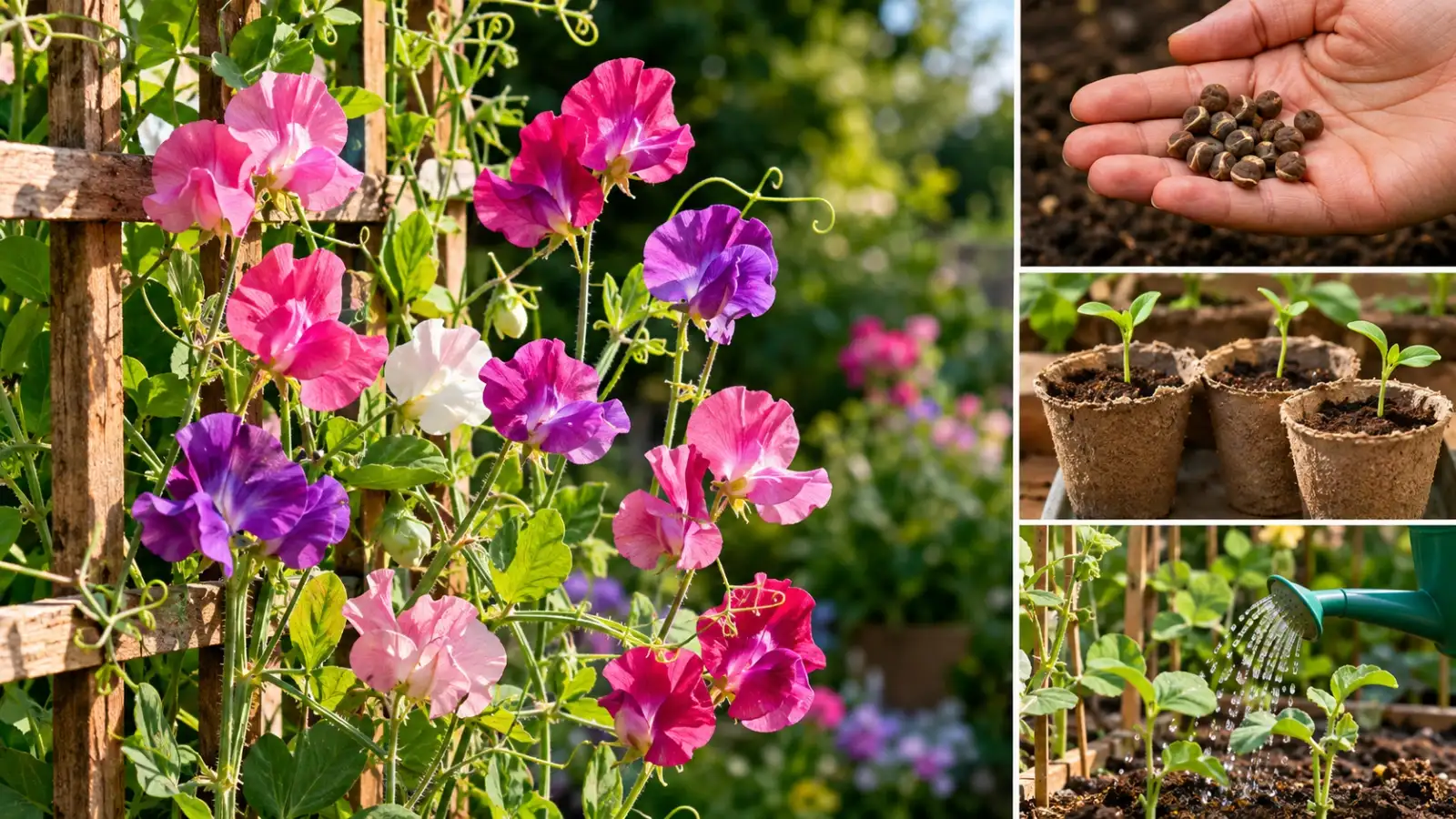
Although sweet peas need a little attention, they are not particularly difficult to grow. With suitable weather, well-drained soil, regular watering and a support structure, you can enjoy their beautiful blooms during the flowering season.
In warmer parts of India, October and November can be suitable sowing months, depending on local temperatures. Avoid planting during extreme summer heat, as high temperatures can affect germination and flowering.
However, in areas where winter afternoons become unusually warm, some protection from intense afternoon sunlight can help. A spot with good air circulation is also important because crowded, humid conditions can encourage fungal problems.
The ideal soil should not remain waterlogged. If you are growing sweet peas in pots , choose a container with drainage holes and use a good-quality potting mix enriched with compost.
Follow these steps:
As the stems grow, gently guide them towards the support. Their leaf tendrils will naturally attach themselves to suitable structures. Providing support early helps prevent stems from becoming tangled or damaged.
Avoid frequent shallow watering that leaves the deeper soil dry. At the same time, do not allow water to collect around the roots, as excessive moisture can cause root problems.
Watering near the base of the plant rather than directly over the leaves can also help reduce the risk of fungal diseases.
Avoid excessive nitrogen fertiliser because it can encourage leafy growth at the expense of flowers. Removing faded blooms regularly can also encourage many varieties to produce more flowers. If you want to collect seeds, leave a few flowers to develop into seed pods towards the end of the season.
Inspect the plants regularly and remove pests by hand where practical. Good spacing, proper watering and adequate air circulation can help reduce fungal problems such as powdery mildew.
One important precaution is that sweet pea seeds are poisonous if eaten. Keep seed packets and harvested seeds away from children and pets, and never consume them.
Growing sweet peas at home is a rewarding way to add colour, fragrance and vertical interest to your garden. These climbing flowers can thrive in garden beds as well as large containers when provided with cool growing conditions, fertile soil and suitable support. Sow the seeds at the right time, maintain consistent moisture and remove faded flowers regularly to enjoy a beautiful display throughout the flowering season.
Although sweet peas need a little attention, they are not particularly difficult to grow. With suitable weather, well-drained soil, regular watering and a support structure, you can enjoy their beautiful blooms during the flowering season.
1. Choose the Right Time to Plant Sweet Peas
Sweet peas generally prefer cool weather and grow best when their roots remain cool while their foliage receives adequate sunlight. In regions with mild winters, seeds can usually be sown during autumn for flowering in winter and spring.In warmer parts of India, October and November can be suitable sowing months, depending on local temperatures. Avoid planting during extreme summer heat, as high temperatures can affect germination and flowering.
2. Select a Suitable Location
Choose a location that receives around six hours of sunlight daily, particularly during the cooler months. Good sunlight encourages healthy growth and flower production.However, in areas where winter afternoons become unusually warm, some protection from intense afternoon sunlight can help. A spot with good air circulation is also important because crowded, humid conditions can encourage fungal problems.
3. Prepare Well-Drained Soil
Sweet peas grow well in fertile, moisture-retentive but well-drained soil. Before planting, loosen the soil and mix in well-rotted compost to improve its structure and provide organic nutrients.The ideal soil should not remain waterlogged. If you are growing sweet peas in pots , choose a container with drainage holes and use a good-quality potting mix enriched with compost.
4. Sow the Seeds Correctly
Sweet pea seeds have a relatively hard outer coating. Soaking them in room-temperature water for several hours before sowing may help soften the seed coat, although it is not essential for every variety.Follow these steps:
- Sow seeds approximately 2-3 cm deep.
- Keep around 5-8 cm between seeds in a garden bed.
- Water gently after sowing.
- Maintain consistent soil moisture without making it soggy.
- Thin out seedlings if they become overcrowded.
5. Provide Support for Climbing Growth
Most sweet pea varieties are climbing plants that need support as they develop. Install a trellis, garden net, bamboo frame or string support near the plant.As the stems grow, gently guide them towards the support. Their leaf tendrils will naturally attach themselves to suitable structures. Providing support early helps prevent stems from becoming tangled or damaged.
6. Water the Plants Regularly
Sweet peas need consistent moisture, especially during germination, active growth and flowering. Water the plants when the upper layer of soil begins to feel dry.Avoid frequent shallow watering that leaves the deeper soil dry. At the same time, do not allow water to collect around the roots, as excessive moisture can cause root problems.
Watering near the base of the plant rather than directly over the leaves can also help reduce the risk of fungal diseases.
7. Feed the Plants and Encourage More Flowers
Adding compost before planting provides a useful nutritional foundation. During active growth, a balanced fertiliser applied according to its label instructions can support healthy development.Avoid excessive nitrogen fertiliser because it can encourage leafy growth at the expense of flowers. Removing faded blooms regularly can also encourage many varieties to produce more flowers. If you want to collect seeds, leave a few flowers to develop into seed pods towards the end of the season.
8. Watch Out for Common Pests and Problems
Sweet peas can sometimes attract aphids, slugs and snails. Aphids may gather around young shoots, while slugs and snails can damage tender seedlings.Inspect the plants regularly and remove pests by hand where practical. Good spacing, proper watering and adequate air circulation can help reduce fungal problems such as powdery mildew.
One important precaution is that sweet pea seeds are poisonous if eaten. Keep seed packets and harvested seeds away from children and pets, and never consume them.
Growing sweet peas at home is a rewarding way to add colour, fragrance and vertical interest to your garden. These climbing flowers can thrive in garden beds as well as large containers when provided with cool growing conditions, fertile soil and suitable support. Sow the seeds at the right time, maintain consistent moisture and remove faded flowers regularly to enjoy a beautiful display throughout the flowering season.
Next Story