
Diwali 2026: How to Make a Rangoli Using Flower Petals and Leaves

Rangoli is an important part of festive decorations in many Indian homes, especially during Diwali. While coloured powders are commonly used to create intricate patterns, fresh flowers and green leaves offer a natural way to decorate floors, entrances and prayer areas. A floral rangoli can look vibrant without requiring expensive materials or advanced artistic skills. Marigold petals, rose petals and different types of leaves can be arranged into attractive designs using simple household items. Whether you prefer a traditional circular pattern or a creative floral arrangement, making a flower rangoli can be an enjoyable festive activity.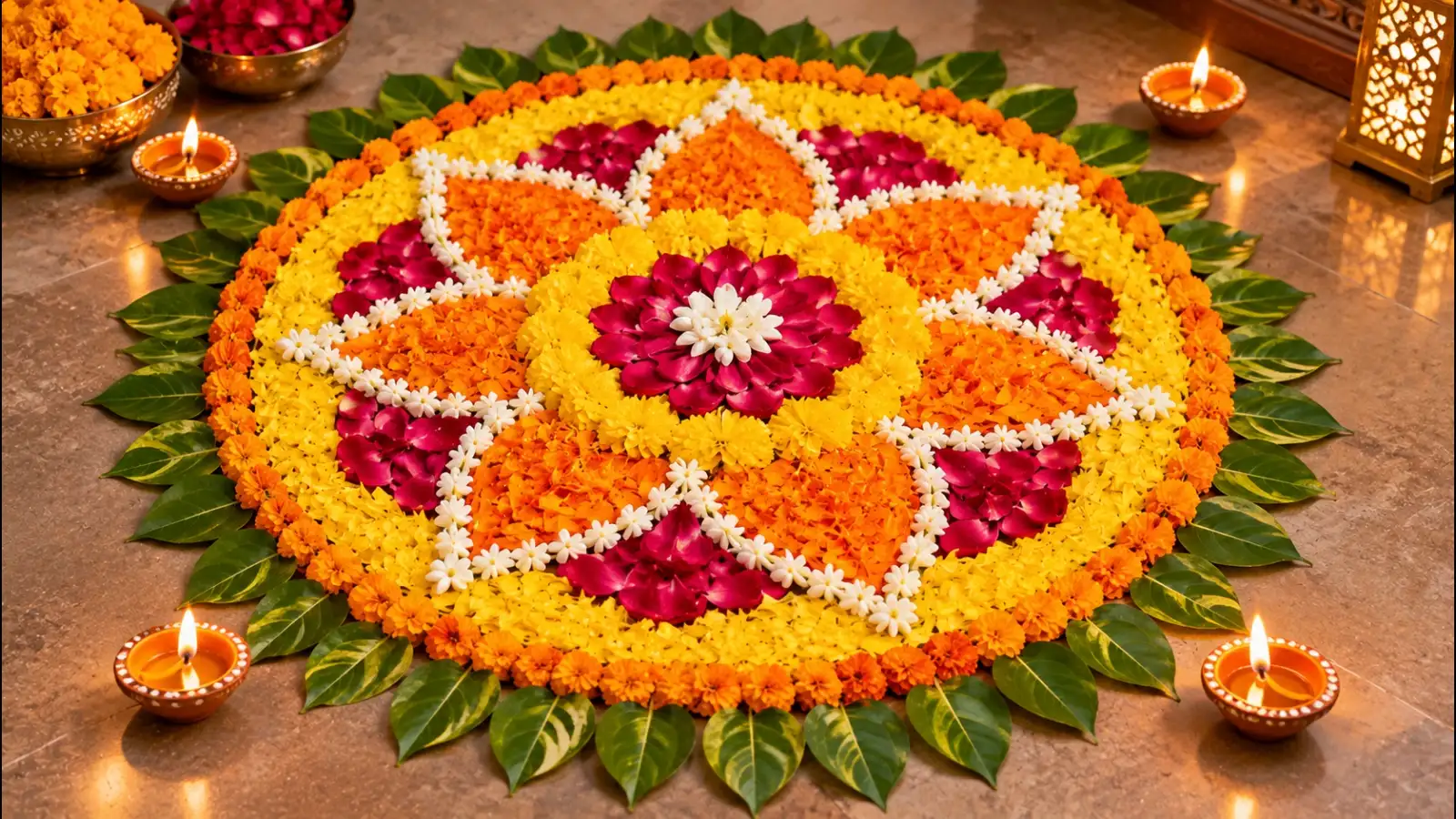
Materials Required for a Flower Rangoli
Before starting, collect the following materials:- Fresh marigold flowers in yellow and orange
- Rose petals in red or pink
- White jasmine flowers, if available
- Green leaves such as mango or other broad decorative leaves
- A piece of chalk or a small bowl for outlining
- A flat, clean surface
- Small diyas for decoration
- A newspaper or tray to separate the petals
How to Make a Rangoli Using Flower Petals and Leaves
Step 1: Choose the Right Location
Select a flat and clean area near your entrance, living room or prayer space. Sweep the floor and remove dust before beginning. Make sure the surface is dry so that the flower petals stay in place.Step 2: Decide on a Rangoli Design
Choose a pattern that matches your available space and the number of flowers you have. Beginners can start with a simple circular design, while those with more experience can try floral shapes, a lotus pattern or a traditional geometric arrangement.Step 3: Draw an Outline
Use chalk to draw a light outline of your chosen design. You can make concentric circles, flower petals or simple geometric shapes. An outline helps maintain symmetry and makes the arrangement easier.Step 4: Arrange Green Leaves First
Place green leaves around the outer boundary of the design. You can arrange them in a circular pattern or use them to create leaf-shaped sections. This creates a natural border and provides a contrast to the colourful petals.Step 5: Fill the Design With Marigold Petals
Separate the orange and yellow marigold petals. Use one colour for the outer sections and another for the inner pattern. Spread the petals gently and keep their arrangement even to create a neat appearance.Step 6: Add Rose and Jasmine Petals
Use red or pink rose petals to create smaller patterns inside the rangoli. Add white jasmine flowers between the coloured sections for contrast. Avoid mixing all the petals together, as separate colour sections make the design look more defined.Step 7: Create a Decorative Centre
Make the centre of the rangoli stand out by arranging rose petals in a circular pattern or creating a small lotus-inspired design. You can also use yellow marigold petals to form a bright central section.Step 8: Add Finishing Details
Fill small empty spaces with leftover petals or tiny leaves. Adjust uneven sections carefully to make the overall design look balanced. Remove any damaged petals that may affect the appearance.Step 9: Decorate With Diyas
Place a few unlit diyas around the outer edge of the rangoli to complete the festive look. If you plan to light them, keep them at a safe distance from loose petals, leaves and other decorations. Never leave burning diyas unattended.Step 10: Keep the Rangoli Fresh
Flower rangolis look best when made shortly before guests arrive or celebrations begin. Keep the arrangement away from strong wind and direct heat. Lightly misting the surrounding leaves may help them stay fresh, but avoid spraying water directly onto the petals.Tips to Make Your Floral Rangoli Look Beautiful
- Use flowers of different colours to create clear patterns.
- Choose petals of similar sizes for a more even finish.
- Do not use wet flowers, as they may become difficult to arrange.
- Keep the design simple if you are making a rangoli for the first time.
- Use leftover petals to decorate small trays or festive corners.
- Avoid placing the rangoli where people are likely to step on it.
Next Story