How To Meal Prep Indian Dishes Without Sacrificing Freshness

Meal prepping can be particularly useful for Indian households, where a single cooking session can involve several dishes, accompaniments and staples. However, making everything days in advance does not always produce the best results. Rice can dry out, rotis may become chewy and vegetables can lose their texture, while creamy gravies sometimes change consistency after refrigeration. The solution is to think beyond simply cooking in bulk. According to culinary experts, timing, portioning and keeping certain ingredients separate can make a significant difference. With a few practical adjustments, Indian meal prep can remain convenient while still tasting fresh when it is time to eat.
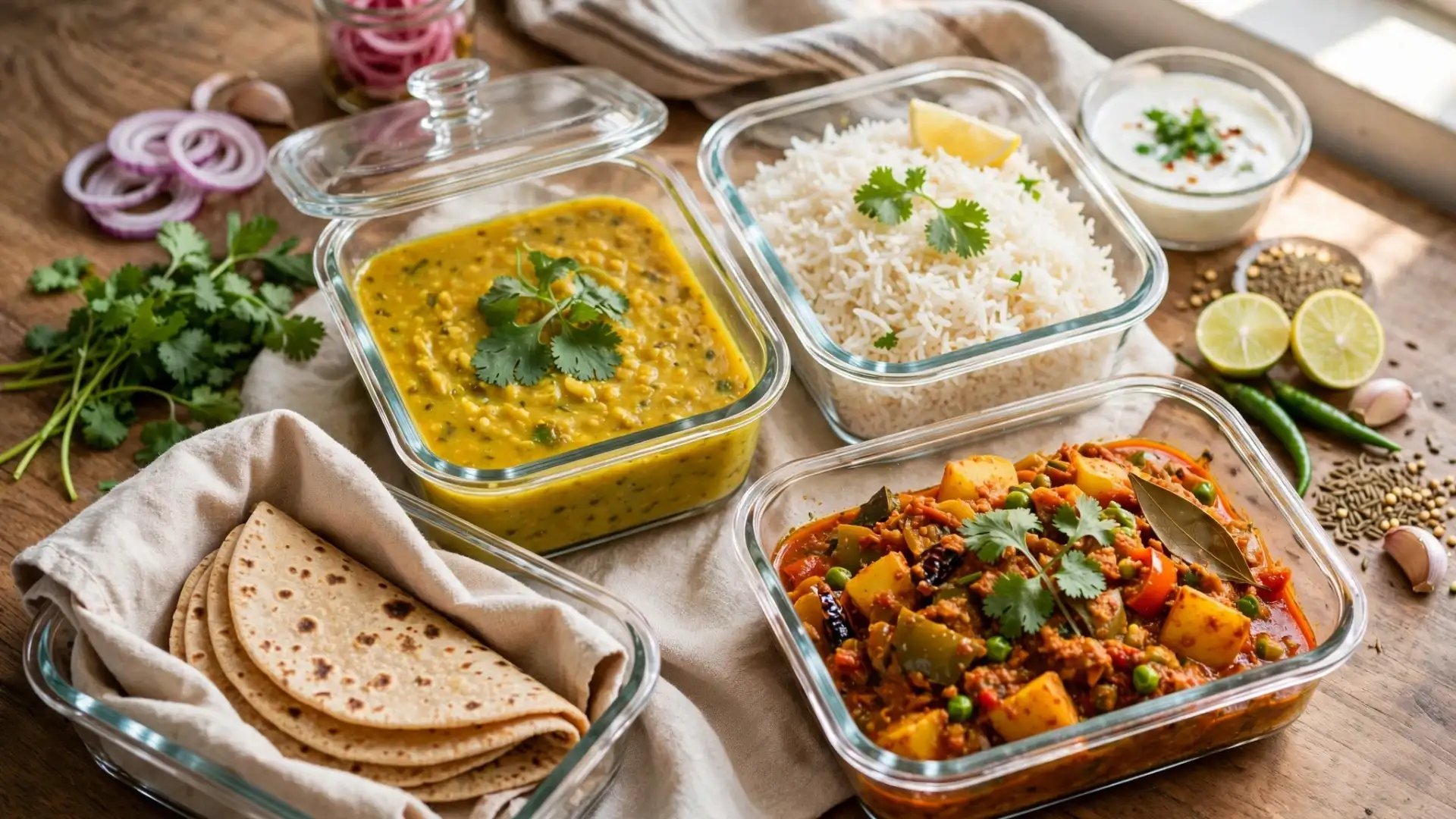
Hero Image


Cook In Batches, But Not Everything

A good Indian meal prep routine starts with deciding what should be prepared ahead and what is better made fresh. Dals, rajma, chole and many tomato-based gravies generally cope well with refrigeration and reheating. These can form the foundation of several weekday meals.

Vegetables need more care. Bhindi, cabbage, beans and similar dishes can become limp if cooked too far in advance. Cooking them slightly less than usual can help retain their texture when reheated.


Rotis and parathas are another consideration. Rather than refrigerating them for several days, prepare a manageable batch and store them properly, or make the dough in advance and cook fresh portions when needed.

Keep Fresh Ingredients Separate

One of the easiest meal prep tips is to avoid assembling the entire meal too early. Chopped coriander, onions, lemon, mint, yoghurt and chutneys should generally be stored separately.


This is particularly useful for dishes where freshness comes from contrast. A reheated curry topped with freshly chopped coriander and a squeeze of lemon can taste far more vibrant than one stored with all its accompaniments.

The same principle applies to crunchy elements. Keep papad, fried toppings and roasted nuts away from moist foods until serving.

Use The Freezer Strategically

Freezing can extend the life of suitable dishes, but not everything belongs in the freezer. According to food experts, dals, beans and many cooked gravies tend to freeze better than dishes containing high-water vegetables or delicate dairy-based ingredients.

Divide food into meal-sized portions before freezing. This prevents repeated thawing and reheating of the same batch and makes weekday meals easier to manage.


For Indian food storage , airtight containers or suitable freezer bags can also help reduce moisture loss and protect food from absorbing other freezer odours.

Reheat For Better Texture

Gentle reheating is just as important as storage. Thick curries can be loosened with a small splash of water, while rice can be reheated with a little moisture to prevent it from becoming dry.

Industry watchers also recommend reheating only the portion you intend to eat rather than repeatedly warming the whole batch.

The most effective approach is therefore a combination of batch cooking and fresh finishing. Prepare the time-consuming components ahead, then add the elements that provide aroma, crunch and brightness just before serving. This keeps homemade Indian food practical without making it feel like leftovers every day.

Image Courtesy: Meta AI