
Easy Indoor Activities to Keep Your Dog Mentally Stimulated

Dogs need more than physical exercise to stay healthy and content. Mental stimulation gives them opportunities to use their senses, solve simple problems, make choices and interact with their surroundings.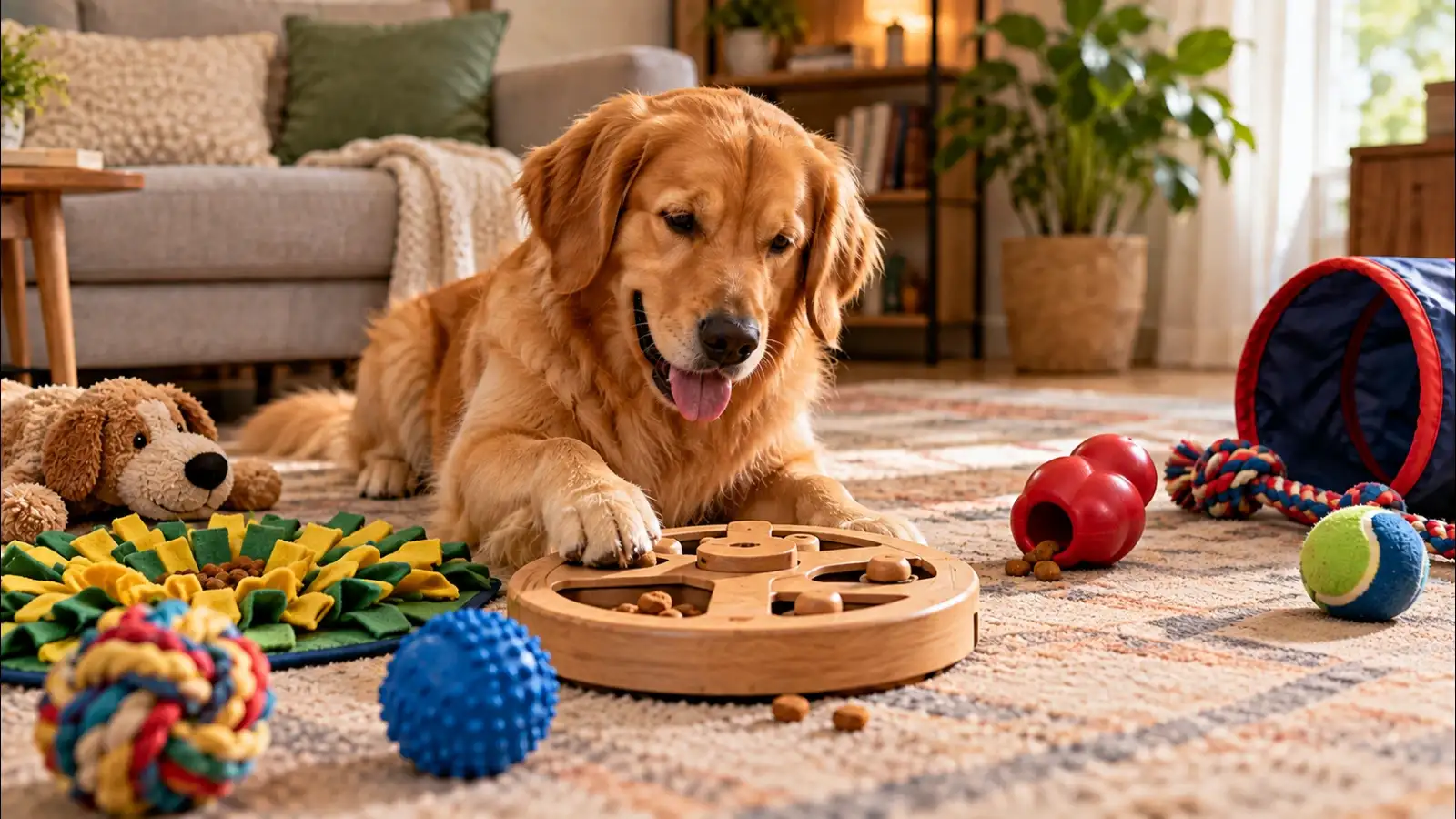
A dog that spends most of its time indoors can become bored when its daily routine offers little variety. This does not necessarily mean you need expensive toys or complicated activities. Simple games involving food, scent, training and exploration can provide useful mental enrichment.
Here are some practical ways to keep your dog mentally stimulated at home.
Depending on the toy, your dog may need to roll, nudge, move or manipulate different parts to release the food. This encourages problem-solving and can make mealtimes more engaging.
Start with an easy puzzle and gradually increase the difficulty as your dog understands how it works. Always choose a toy appropriate for your dog's size and chewing habits.
Ask your dog to stay in one location while you hide somewhere nearby. Call your dog once you are ready and reward it when it finds you.
If your dog is not familiar with the game, begin with an easy hiding place and gradually make the challenge more difficult.
The activity combines movement, listening and searching while also strengthening interaction between you and your dog.
Hide a few pieces of your dog's regular food around an accessible room and encourage your dog to search for them. Start by placing them in obvious locations before making the hiding spots more challenging.
You can also use a snuffle mat designed for dogs. These activities allow dogs to investigate different scents at their own pace.
You can teach behaviours such as touching your hand with its nose, going to a designated mat, waiting before taking food or picking up a specific toy.
Keep training sessions short and use rewards that your dog values. Ending a session while your dog is still interested can help keep training enjoyable.
Instead of leaving every toy out permanently, keep some safely stored and rotate them every few days. A familiar toy can seem more interesting when it reappears after being unavailable for a while.
Make sure toys are regularly inspected for damage and remove anything that could become a choking or swallowing hazard.
Place small portions of its usual food or suitable treats in different safe locations around the home. You can hide them behind furniture, near a dog's bed or in other areas that are easy for the dog to access.
Avoid locations where the dog could knock something over, chew an unsafe object or become trapped.
As your dog becomes better at searching, you can gradually make the hiding places more challenging.
Offer veterinarian-approved chew products or durable toys suited to your dog's size and chewing style. Supervise your dog when introducing a new chew, particularly if you are unsure how it will behave with it.
Avoid giving dogs objects that can splinter, break into sharp pieces or create a choking risk.
Call your dog's name from a short distance and reward it when it looks towards you or comes to you. Gradually increase the distance or introduce mild distractions.
These exercises can reinforce useful communication between you and your dog while giving it a focused activity.
You can encourage your dog to explore different safe areas of the home, introduce a new toy, practise a command before meals or use part of its normal food allowance in a puzzle toy.
Small changes can add variety to a familiar routine without overwhelming the dog.
Instead of constantly directing your dog during play, give it opportunities to sniff, investigate safe objects and choose between appropriate toys.
Dogs process a great deal of information through their sense of smell. Providing opportunities for calm exploration can therefore be just as useful as energetic games.
If your dog becomes frustrated, excessively excited or loses interest during an activity, give it a break. Mental enrichment should be appropriate for the individual dog rather than treated as a competition to keep it occupied constantly.
Puppies, older dogs and dogs with different energy levels may require different types and amounts of stimulation.
For example, you might begin the day with a walk, use a food puzzle at breakfast, practise a few commands later in the day and finish with a calm scent game or chew.
The exact routine will depend on your dog's age, breed, health, temperament and individual needs.
A short training session, a scent game, a puzzle toy or a simple treasure hunt can turn an ordinary day at home into a more engaging one.
The key is variety and observation. Pay attention to the activities your dog enjoys, introduce new challenges gradually and provide plenty of time for rest between activities.
A dog that spends most of its time indoors can become bored when its daily routine offers little variety. This does not necessarily mean you need expensive toys or complicated activities. Simple games involving food, scent, training and exploration can provide useful mental enrichment.
Here are some practical ways to keep your dog mentally stimulated at home.
Use Food Puzzle Toys
Food puzzle toys make dogs work for some of their food rather than receiving every meal from a conventional bowl.Depending on the toy, your dog may need to roll, nudge, move or manipulate different parts to release the food. This encourages problem-solving and can make mealtimes more engaging.
Start with an easy puzzle and gradually increase the difficulty as your dog understands how it works. Always choose a toy appropriate for your dog's size and chewing habits.
Play Hide and Seek
Hide and seek can turn an ordinary room into a simple enrichment activity.Ask your dog to stay in one location while you hide somewhere nearby. Call your dog once you are ready and reward it when it finds you.
If your dog is not familiar with the game, begin with an easy hiding place and gradually make the challenge more difficult.
The activity combines movement, listening and searching while also strengthening interaction between you and your dog.
Introduce Scent Games
Dogs have an exceptionally strong sense of smell, so scent-based activities can provide substantial mental stimulation.Hide a few pieces of your dog's regular food around an accessible room and encourage your dog to search for them. Start by placing them in obvious locations before making the hiding spots more challenging.
You can also use a snuffle mat designed for dogs. These activities allow dogs to investigate different scents at their own pace.
Teach New Commands
Training does not have to stop once a dog knows basic commands.You can teach behaviours such as touching your hand with its nose, going to a designated mat, waiting before taking food or picking up a specific toy.
Keep training sessions short and use rewards that your dog values. Ending a session while your dog is still interested can help keep training enjoyable.
Rotate Your Dog's Toys
Dogs can lose interest when the same toys are available every day.Instead of leaving every toy out permanently, keep some safely stored and rotate them every few days. A familiar toy can seem more interesting when it reappears after being unavailable for a while.
Make sure toys are regularly inspected for damage and remove anything that could become a choking or swallowing hazard.
Create an Indoor Treasure Hunt
A simple treasure hunt can encourage your dog to explore and use its nose.Place small portions of its usual food or suitable treats in different safe locations around the home. You can hide them behind furniture, near a dog's bed or in other areas that are easy for the dog to access.
Avoid locations where the dog could knock something over, chew an unsafe object or become trapped.
As your dog becomes better at searching, you can gradually make the hiding places more challenging.
Give Your Dog Something Safe to Chew
Chewing is a normal behaviour for dogs and can provide an appropriate form of enrichment.Offer veterinarian-approved chew products or durable toys suited to your dog's size and chewing style. Supervise your dog when introducing a new chew, particularly if you are unsure how it will behave with it.
Avoid giving dogs objects that can splinter, break into sharp pieces or create a choking risk.
Practise Name Recognition and Recall
Short training games can be mentally stimulating even inside the home.Call your dog's name from a short distance and reward it when it looks towards you or comes to you. Gradually increase the distance or introduce mild distractions.
These exercises can reinforce useful communication between you and your dog while giving it a focused activity.
Make Everyday Routines More Interesting
Mental stimulation does not always require a dedicated play session.You can encourage your dog to explore different safe areas of the home, introduce a new toy, practise a command before meals or use part of its normal food allowance in a puzzle toy.
Small changes can add variety to a familiar routine without overwhelming the dog.
Give Your Dog Time to Explore
Allowing a dog to investigate its surroundings can itself be enriching.Instead of constantly directing your dog during play, give it opportunities to sniff, investigate safe objects and choose between appropriate toys.
You may also like
- When the theft becomes part of the masterpiece
- Why Does Maa Durga Change Her Vahan Every Year?
- Why Do Pregnant Women Become Forgetful? Understanding 'Momnesia'
- Prostate Cancer Symptoms: Why Men May Have No Warning Signs in Early Stages
- Can a Simple CBC Blood Test Catch Blood Cancer, Oncologist Explains the Reality
Dogs process a great deal of information through their sense of smell. Providing opportunities for calm exploration can therefore be just as useful as energetic games.
Avoid Overstimulation
More activity is not always better. Dogs also need sufficient rest and uninterrupted sleep.If your dog becomes frustrated, excessively excited or loses interest during an activity, give it a break. Mental enrichment should be appropriate for the individual dog rather than treated as a competition to keep it occupied constantly.
Puppies, older dogs and dogs with different energy levels may require different types and amounts of stimulation.
Build a Balanced Indoor Routine
A good home routine can combine physical exercise, mental enrichment, training, rest and social interaction.For example, you might begin the day with a walk, use a food puzzle at breakfast, practise a few commands later in the day and finish with a calm scent game or chew.
The exact routine will depend on your dog's age, breed, health, temperament and individual needs.
Keep Your Dog Curious and Engaged
Mental stimulation is about giving dogs opportunities to think, explore and interact with their environment. You do not need a large collection of expensive products to provide it.A short training session, a scent game, a puzzle toy or a simple treasure hunt can turn an ordinary day at home into a more engaging one.
The key is variety and observation. Pay attention to the activities your dog enjoys, introduce new challenges gradually and provide plenty of time for rest between activities.






Loving Newspoint? Download the app now
