
How to Organise a Small Kitchen: 10 Smart Storage Ideas That Actually Work

A small kitchen can quickly become cluttered when utensils, groceries, appliances and containers compete for limited space. Finding what you need may become difficult, especially when cabinets are overflowing and countertops are covered with everyday essentials. However, an organised kitchen does not necessarily require expensive renovations or fancy storage products.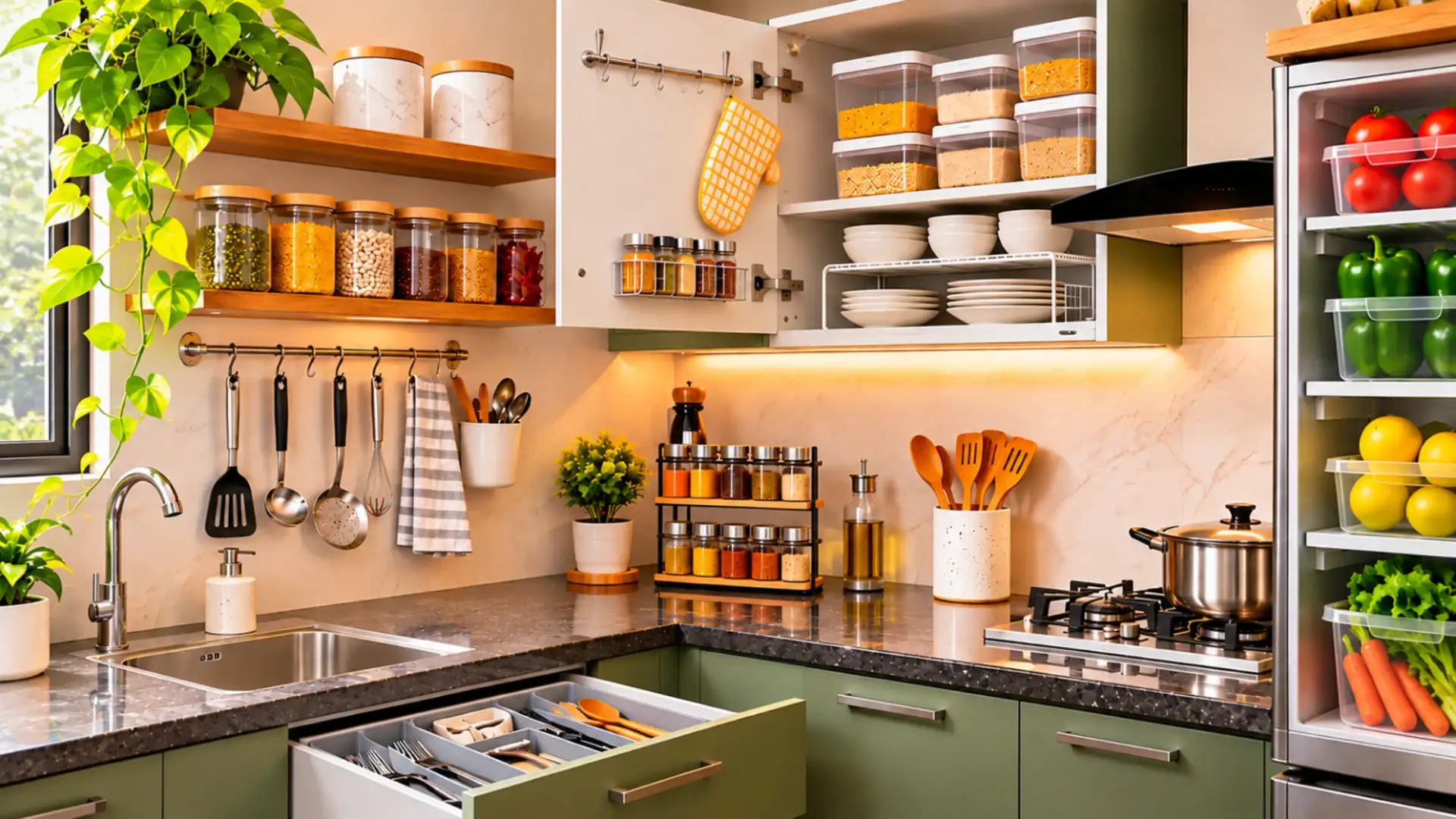
With a few practical changes, you can make even a compact kitchen more functional and easier to maintain. Here are 10 smart storage ideas that can help you organise your kitchen without taking up additional space.
Wall-mounted racks and hooks can also hold ladles, spatulas and other utensils. This keeps essentials within reach while freeing up valuable drawer and counter space.
Choose adjustable organisers that fit your drawer size. You can also use small trays to store measuring spoons, peelers, bottle openers and other kitchen accessories.
Clear containers allow you to identify ingredients quickly without opening every jar. Choose stackable containers of similar shapes and sizes to make better use of cabinet space. Remember to label them with the ingredient name and purchase or expiry date.
This is an inexpensive way to create extra storage without installing another cabinet. Just make sure the items do not interfere with the shelves when the doors close.
You can also use tiered organisers for spices and condiments so that every item remains visible and accessible.
Use small, refrigerator-safe bins to group similar items together. For example, keep dairy products in one section, sauces in another and ready-to-eat foods separately. Store leftovers in clearly labelled, airtight containers and place older items where they are easy to spot and use first.
Avoid overcrowding the refrigerator, as proper air circulation helps it maintain a consistent temperature.
A compact pull-out organiser or stackable baskets can help divide the space. Keep cleaning chemicals separate from food and cooking ingredients, and store them safely away from children and pets.
For example, nesting mixing bowls, measuring cups that fit inside one another and stackable cookware can save considerable cabinet space. Foldable strainers and collapsible storage baskets are also useful options for compact kitchens.
Items used occasionally, such as festive serveware, baking equipment and special cookware, can be stored on higher shelves or in less accessible cabinets. This arrangement reduces unnecessary movement and keeps your main workspace clutter-free.
Remove broken utensils, duplicate tools, empty containers and expired groceries. Donate kitchenware that is still usable but no longer needed. Returning everything to its designated place after use will also make it easier to maintain an organised kitchen.
Start with one cabinet or drawer at a time rather than trying to reorganise everything in a single day. With a little planning and regular decluttering, even a compact kitchen can become neat, functional and comfortable to use.
With a few practical changes, you can make even a compact kitchen more functional and easier to maintain. Here are 10 smart storage ideas that can help you organise your kitchen without taking up additional space.
1. Make Use of Vertical Space
When floor and counter space are limited, look upwards. Install shelves above the countertop or use empty wall space to store frequently used items such as spice jars, mugs and small containers.Wall-mounted racks and hooks can also hold ladles, spatulas and other utensils. This keeps essentials within reach while freeing up valuable drawer and counter space.
2. Use Drawer Organisers for Utensils
A cluttered kitchen drawer can make it difficult to find spoons, forks and other everyday tools. Drawer organisers help separate utensils into different sections, preventing everything from getting mixed together.Choose adjustable organisers that fit your drawer size. You can also use small trays to store measuring spoons, peelers, bottle openers and other kitchen accessories.
3. Store Groceries in Transparent Containers
Transferring rice, pulses, flour, sugar and other dry groceries into transparent airtight containers makes your pantry easier to manage.Clear containers allow you to identify ingredients quickly without opening every jar. Choose stackable containers of similar shapes and sizes to make better use of cabinet space. Remember to label them with the ingredient name and purchase or expiry date.
4. Install Hooks Inside Cabinet Doors
The inside of cabinet doors often goes unused, even though it offers additional storage space. Stick-on hooks or small organisers can help you store measuring cups, lightweight utensils, kitchen towels and pot holders.This is an inexpensive way to create extra storage without installing another cabinet. Just make sure the items do not interfere with the shelves when the doors close.
5. Use Stackable Shelves
Deep kitchen cabinets can become difficult to organise because smaller items often get hidden behind larger ones. Stackable shelves create additional levels, allowing you to store plates, bowls, cups and jars more efficiently.You can also use tiered organisers for spices and condiments so that every item remains visible and accessible.
6. Organise Your Refrigerator with Storage Bins
A refrigerator can become messy when vegetables, sauces, leftovers and packaged foods are stored without a system.Use small, refrigerator-safe bins to group similar items together. For example, keep dairy products in one section, sauces in another and ready-to-eat foods separately. Store leftovers in clearly labelled, airtight containers and place older items where they are easy to spot and use first.
Avoid overcrowding the refrigerator, as proper air circulation helps it maintain a consistent temperature.
7. Use the Space Under the Sink
The area beneath the kitchen sink is often wasted because of plumbing pipes and awkward corners. However, it can still be used to store cleaning supplies, garbage bags, sponges and dishwashing products.A compact pull-out organiser or stackable baskets can help divide the space. Keep cleaning chemicals separate from food and cooking ingredients, and store them safely away from children and pets.
8. Choose Multi-Purpose Kitchen Tools
In a small kitchen, every item should serve a useful purpose. Instead of buying separate appliances and tools for occasional tasks, consider multi-purpose alternatives.For example, nesting mixing bowls, measuring cups that fit inside one another and stackable cookware can save considerable cabinet space. Foldable strainers and collapsible storage baskets are also useful options for compact kitchens.
9. Keep Everyday Essentials Within Easy Reach
Frequently used items should be stored where they are easiest to access. Keep cooking oil, salt, commonly used spices and everyday utensils near the stove or preparation area.Items used occasionally, such as festive serveware, baking equipment and special cookware, can be stored on higher shelves or in less accessible cabinets. This arrangement reduces unnecessary movement and keeps your main workspace clutter-free.
10. Declutter Your Kitchen Regularly
Even the best storage system will stop working if unnecessary items continue accumulating. Set aside some time every few weeks to check your cabinets, drawers and pantry.Remove broken utensils, duplicate tools, empty containers and expired groceries. Donate kitchenware that is still usable but no longer needed. Returning everything to its designated place after use will also make it easier to maintain an organised kitchen.
Make the Most of Your Kitchen Space
Organising a small kitchen is less about having more storage and more about using the available space wisely. Simple additions such as transparent containers, drawer dividers, wall hooks and stackable shelves can make everyday cooking much easier.Start with one cabinet or drawer at a time rather than trying to reorganise everything in a single day. With a little planning and regular decluttering, even a compact kitchen can become neat, functional and comfortable to use.
Next Story