
Weekly Meal Planning: How to Organise Breakfast, Lunch and Dinner at Home

Deciding what to cook every day can become a time-consuming part of household management. Without a plan, grocery shopping may involve repeated trips, ingredients can remain unused and meals may become repetitive.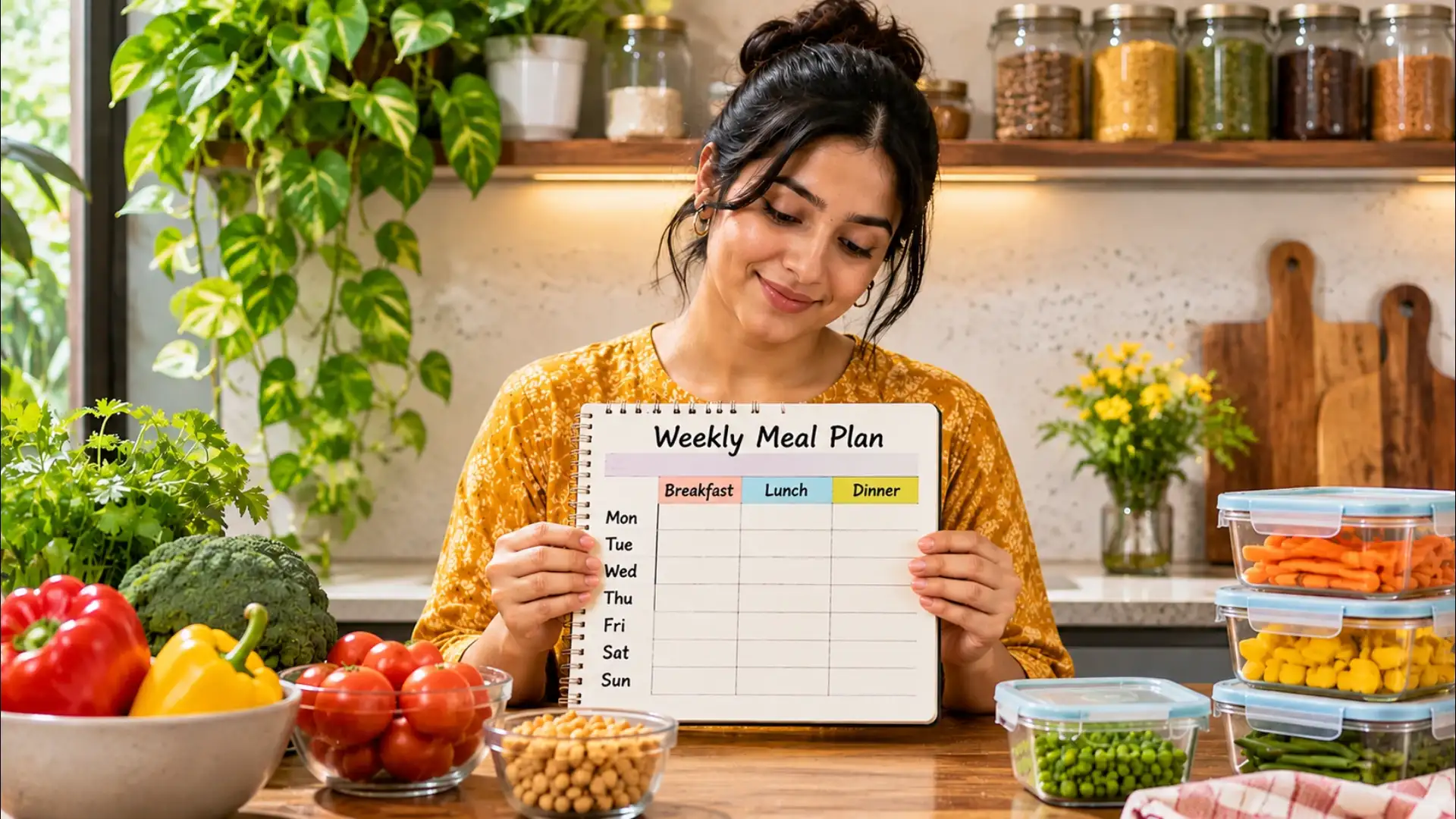
A weekly vegetarian menu offers a simple way to organise home cooking. It does not mean following a rigid timetable or preparing every dish in advance. Instead, it gives the household a broad idea of what to cook and what ingredients are needed.
Some households may have more time at weekends, while weekdays may require simpler meals. Note days when family members have different schedules or when lunch needs to be packed.
The menu should fit the routine rather than creating extra pressure.
For example, one day could include a rice-based meal, another could feature rotis with a vegetable preparation, while a third could include a one-pot dish.
You can also alternate between lentil-based meals, seasonal vegetables, breakfast dishes and simple snacks.
This creates variety without making the shopping list unnecessarily long.
Adjust the dishes according to family preferences, availability of ingredients and cooking time.
Separate the shopping list into categories such as vegetables, fruits, grains, pulses, dairy products and pantry essentials.
Check what is already available. This avoids buying duplicate packets or ingredients that may not be used during the week.
For example, carrots may be used in pulao, a vegetable preparation and sandwiches. Coriander can be used in chutneys, garnishes and cooked dishes.
However, using the same ingredients does not mean preparing the same meal repeatedly. Change the combinations and cooking methods to maintain variety.
Wash and dry suitable vegetables, organise pulses and grains, and prepare a small quantity of chutney when needed.
Store prepared ingredients in clean, suitable containers and refrigerate items that require cooling. Follow appropriate storage practices rather than leaving cooked food at room temperature for extended periods.
Keep one meal slot flexible so that leftovers can be used sensibly or a quick dish can be prepared with ingredients already available.
This prevents the menu from becoming difficult to follow.
Make changes to the next week's plan based on what the household enjoyed. Over time, the process becomes easier because favourite meals and useful combinations are already known.
Weekly meal planning works best when it remains practical, flexible and suited to the household's everyday routine.
A weekly vegetarian menu offers a simple way to organise home cooking. It does not mean following a rigid timetable or preparing every dish in advance. Instead, it gives the household a broad idea of what to cook and what ingredients are needed.
1. Begin with the family's routine
Before preparing a menu, consider how much time is available for cooking on different days.Some households may have more time at weekends, while weekdays may require simpler meals. Note days when family members have different schedules or when lunch needs to be packed.
The menu should fit the routine rather than creating extra pressure.
2. Choose a few meal categories
Instead of deciding every dish individually, start with broad categories.For example, one day could include a rice-based meal, another could feature rotis with a vegetable preparation, while a third could include a one-pot dish.
You can also alternate between lentil-based meals, seasonal vegetables, breakfast dishes and simple snacks.
This creates variety without making the shopping list unnecessarily long.
3. Build a sample weekly menu
A simple menu could look like this:| Day | Lunch | Dinner |
|---|---|---|
| Monday | Dal, rice and seasonal vegetable | Roti and mixed vegetable curry |
| Tuesday | Vegetable pulao and curd | Moong dal khichdi |
| Wednesday | Roti, chana masala and salad | Vegetable soup and toasted sandwiches |
| Thursday | Lemon rice and cucumber raita | Dal, roti and bhindi |
| Friday | Vegetable sambar and rice | Paneer bhurji and roti |
| Saturday | Besan Chilla and chutney | Vegetable pulao and curd |
| Sunday | Seasonal vegetable curry and rice | Simple dal and roti |
4. Make a shopping list from the menu
Once the menu is ready, check the kitchen before shopping.Separate the shopping list into categories such as vegetables, fruits, grains, pulses, dairy products and pantry essentials.
Check what is already available. This avoids buying duplicate packets or ingredients that may not be used during the week.
5. Use ingredients in more than one meal
Ingredient planning can make shopping more efficient.For example, carrots may be used in pulao, a vegetable preparation and sandwiches. Coriander can be used in chutneys, garnishes and cooked dishes.
However, using the same ingredients does not mean preparing the same meal repeatedly. Change the combinations and cooking methods to maintain variety.
6. Prepare a few basics in advance
Some simple preparation can reduce cooking time.Wash and dry suitable vegetables, organise pulses and grains, and prepare a small quantity of chutney when needed.
Store prepared ingredients in clean, suitable containers and refrigerate items that require cooling. Follow appropriate storage practices rather than leaving cooked food at room temperature for extended periods.
7. Keep one flexible meal slot
Unexpected plans can disrupt even a well-prepared menu.Keep one meal slot flexible so that leftovers can be used sensibly or a quick dish can be prepared with ingredients already available.
This prevents the menu from becoming difficult to follow.
8. Review the menu at the end of the week
Check which dishes were convenient and which ingredients remained unused.Make changes to the next week's plan based on what the household enjoyed. Over time, the process becomes easier because favourite meals and useful combinations are already known.
Weekly meal planning works best when it remains practical, flexible and suited to the household's everyday routine.
Next Story