
How to Prepare a Healthy Aquarium with Proper Filtration and Water Testing

An aquarium is more than a glass tank filled with water and decorative plants. Fish depend on stable water conditions, adequate space, filtration and a suitable environment for their species. A tank that looks clear is not necessarily safe, because harmful waste compounds can build up without being visible.
Before buying fish, it is worth learning how the aquarium's biological filter develops and why a new tank needs preparation. Choosing compatible species and testing the water regularly are essential parts of responsible fish care. A slower start helps prevent avoidable stress and gives the aquarium a better chance of becoming stable.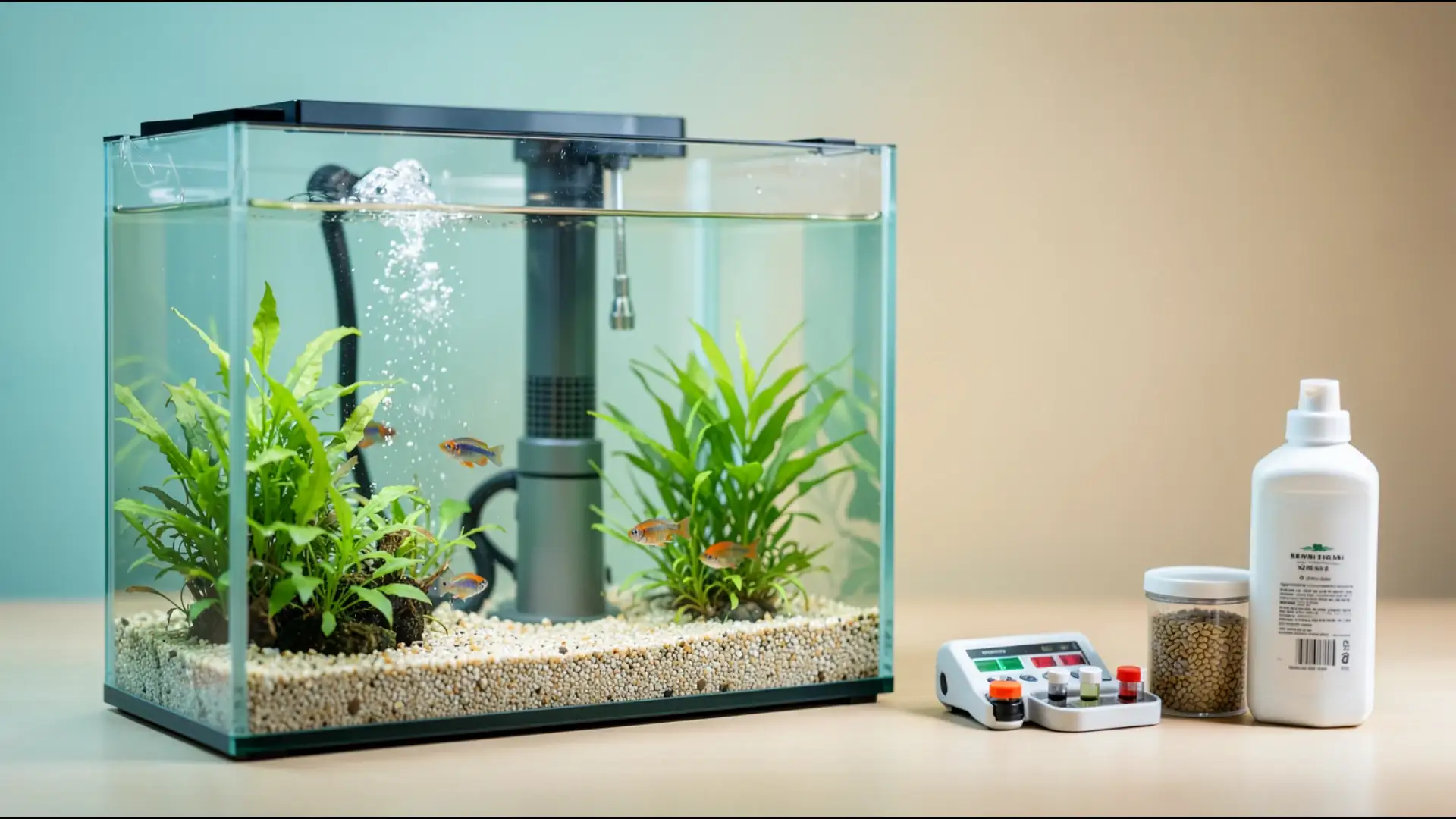
A suitable filter, aquarium-safe substrate and secure lid are important. Add a heater only if the selected species needs controlled warmth. Avoid buying fish before the tank is prepared.
Use an aquarium test kit to monitor ammonia, nitrite and nitrate during a fishless cycling process. Do not add fish until testing shows the system can process waste safely. Clear water alone does not prove that the aquarium is ready.
Watch for changes in appetite, swimming or breathing. Seek advice from an aquatic veterinarian or knowledgeable specialist if a fish appears unwell.
Clean filter media gently in removed aquarium water rather than untreated tap water, which may harm beneficial bacteria. Keep a record of test results, water changes and equipment checks. Responsible fish care depends on preparation and stable conditions, not frequent decorative changes.
Before buying fish, it is worth learning how the aquarium's biological filter develops and why a new tank needs preparation. Choosing compatible species and testing the water regularly are essential parts of responsible fish care. A slower start helps prevent avoidable stress and gives the aquarium a better chance of becoming stable.
Choose the tank before the fish
Research the adult size, social behaviour and water requirements of the species you are considering. Some fish need groups or more swimming space than a beginner expects. Their temperature and water needs must also be compatible. Choose a tank large enough for the adult fish and practical for you to maintain.A suitable filter, aquarium-safe substrate and secure lid are important. Add a heater only if the selected species needs controlled warmth. Avoid buying fish before the tank is prepared.
Understand the nitrogen cycle
Fish waste and uneaten food release ammonia, which is toxic. In an established aquarium, beneficial bacteria help convert ammonia into nitrite and then nitrate. A new tank does not automatically contain enough of these bacteria, so it needs to be cycled before fish are introduced.Use an aquarium test kit to monitor ammonia, nitrite and nitrate during a fishless cycling process. Do not add fish until testing shows the system can process waste safely. Clear water alone does not prove that the aquarium is ready.
Introduce fish carefully
Once the tank is stable, add a small number of compatible fish rather than stocking it all at once. Acclimatise them according to species-specific guidance. Feed only what they can consume promptly; excess food breaks down and increases waste.Watch for changes in appetite, swimming or breathing. Seek advice from an aquatic veterinarian or knowledgeable specialist if a fish appears unwell.
Maintain water quality
Test regularly, particularly after adding fish or noticing unusual behaviour. Partial water changes help manage nitrate and remove dissolved waste. Use a suitable water conditioner when required, and match replacement water temperature as closely as practical.Clean filter media gently in removed aquarium water rather than untreated tap water, which may harm beneficial bacteria. Keep a record of test results, water changes and equipment checks. Responsible fish care depends on preparation and stable conditions, not frequent decorative changes.
Next Story