
How to Preserve Old Family Photographs at Home

Old family photographs are often among the most treasured objects kept at home. They may show grandparents at a wedding, children at school, family gatherings or places that have changed over the years. However, printed photographs can gradually deteriorate if they are exposed to unsuitable storage conditions.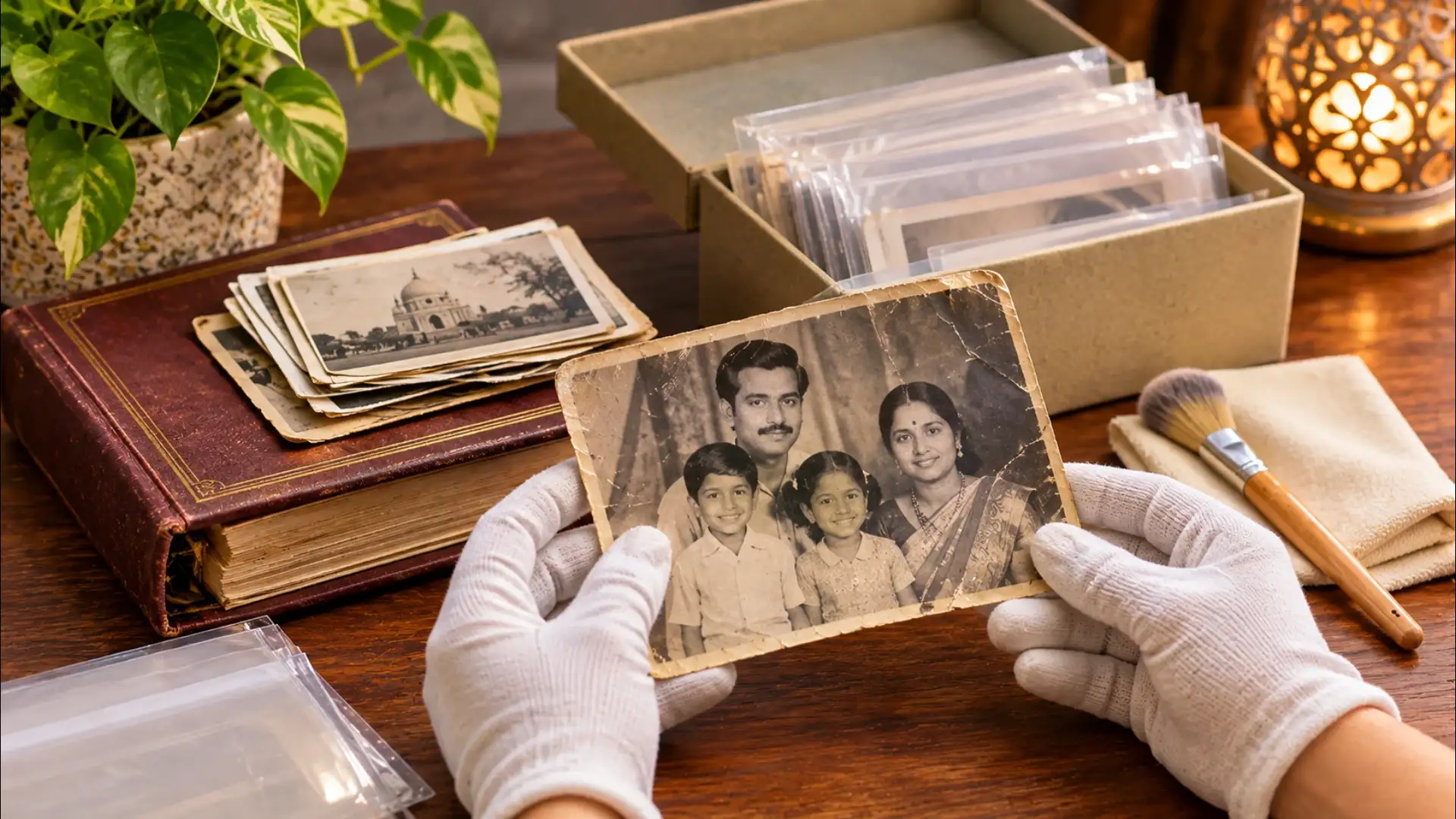
Heat, moisture, direct sunlight and careless handling can affect the paper and image surface. A few simple precautions can help protect these memories and make them easier to pass on to future generations.
For fragile, curled or damaged photographs, avoid trying to flatten them by force. Do not pull apart prints that have stuck together, as this can remove the image layer.
If a photograph is particularly old, valuable or badly damaged, consult a professional photo conservator before attempting repairs.
Use archival-quality photo sleeves, folders or boxes designed for long-term storage. Look for products described as acid-free and suitable for photographs.
Keep prints flat where possible, especially if they are already fragile. Do not overcrowd albums or boxes because pressure can cause bending and surface damage.
Moisture can encourage mould growth and may cause prints to stick together. Store photographs in a dry, stable part of the house rather than in damp cupboards, bathrooms or areas close to water pipes.
Avoid keeping family albums in attics or other places where temperatures can fluctuate significantly.
Instead, use archival-quality labels on album pages or storage sleeves. Keep notes separately if the photograph is especially delicate.
Ask older family members to identify people and places while they can still share those memories. Their descriptions can help preserve details that may otherwise be lost.
Save high-quality copies in more than one location, such as an external storage device and a secure cloud account. Organise digital files using dates, names or family events.
Keep the original photographs even after scanning them. Digital copies make sharing easier, but they do not replace the physical prints.
A little organisation can turn a scattered collection into a family archive. By storing photographs carefully, recording their stories and keeping digital copies, households can make these personal memories easier to preserve and revisit.
Heat, moisture, direct sunlight and careless handling can affect the paper and image surface. A few simple precautions can help protect these memories and make them easier to pass on to future generations.
Handle Photographs Carefully
Before sorting old photographs, make sure your hands are clean and completely dry. Hold prints by their edges rather than touching the image surface repeatedly.For fragile, curled or damaged photographs, avoid trying to flatten them by force. Do not pull apart prints that have stuck together, as this can remove the image layer.
If a photograph is particularly old, valuable or badly damaged, consult a professional photo conservator before attempting repairs.
Choose Suitable Storage Materials
Avoid storing photographs in ordinary envelopes, newspaper cuttings or plastic sleeves of unknown quality. Some materials can release chemicals or trap moisture.Use archival-quality photo sleeves, folders or boxes designed for long-term storage. Look for products described as acid-free and suitable for photographs.
Keep prints flat where possible, especially if they are already fragile. Do not overcrowd albums or boxes because pressure can cause bending and surface damage.
Protect Them From Sunlight and Moisture
Direct sunlight can cause photographs to fade. Avoid displaying valuable originals in places that receive strong sunlight for long periods.You may also like
- Pasteurized Milk: Why does no company sell milk without boiling it? What is the reason behind it?
- Hair Care Tips: This thing will keep your hair black for life, use it every week.
- Revitalize Your Skin: Essential Post-Festival Skincare Tips
- Essential Winter Skincare Tips to Combat Dryness
- 'Divine grace has no logic': Dr Jai Madaan on life, spirituality, humility and finding true prosperity
Moisture can encourage mould growth and may cause prints to stick together. Store photographs in a dry, stable part of the house rather than in damp cupboards, bathrooms or areas close to water pipes.
Avoid keeping family albums in attics or other places where temperatures can fluctuate significantly.
Label Albums Without Writing on Prints
It is useful to record the names, dates and locations associated with old photographs. However, writing directly on the back of a fragile print can cause damage.Instead, use archival-quality labels on album pages or storage sleeves. Keep notes separately if the photograph is especially delicate.
Ask older family members to identify people and places while they can still share those memories. Their descriptions can help preserve details that may otherwise be lost.
Create Digital Copies
Scanning old photographs creates a convenient backup that can be shared with family members. Use a clean scanner and handle the originals carefully.Save high-quality copies in more than one location, such as an external storage device and a secure cloud account. Organise digital files using dates, names or family events.
Keep the original photographs even after scanning them. Digital copies make sharing easier, but they do not replace the physical prints.
A little organisation can turn a scattered collection into a family archive. By storing photographs carefully, recording their stories and keeping digital copies, households can make these personal memories easier to preserve and revisit.






Loving Newspoint? Download the app now
