
How to Read Indian Packaged Food Labels Before You Put Products in Your Basket

Ingredients, Nutrition and Dates: What to Check on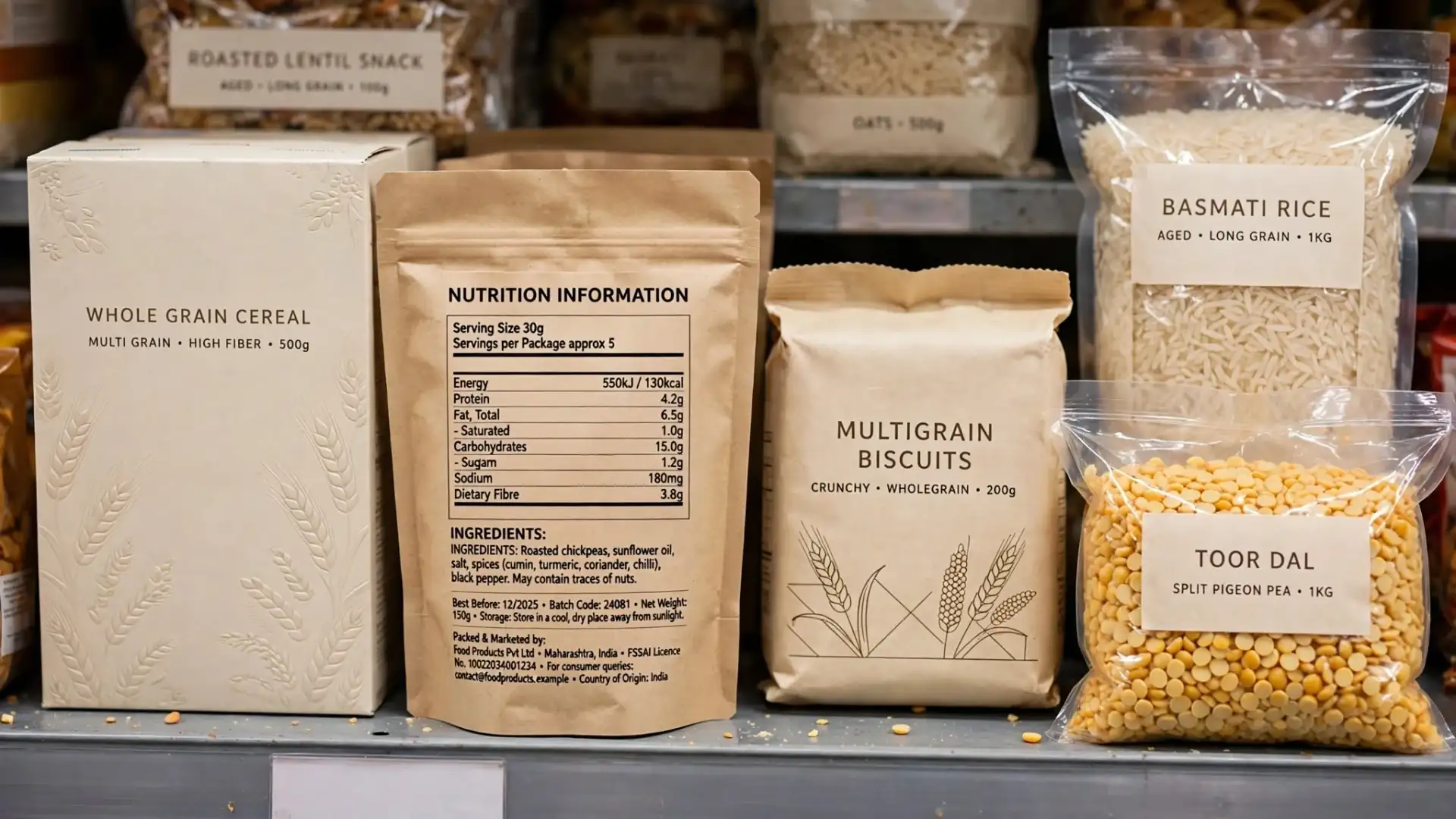
Packaged foods often make several promises on the front of the packet, but the most useful details are often found on the back or side. Reading the label helps you understand what a product contains, how much a serving provides and whether it suits your dietary needs. It can prevent you from comparing two foods using claims that mean different things.
Indian packaged food labels carry information such as ingredients, nutrition details, date marking and vegetarian identification. Knowing how to read food labels makes shopping more deliberate and easier, whether you are choosing breakfast cereal, snacks, sauces or ready-to-cook ingredients.
Check the allergen declaration if anyone eating the food has an allergy or intolerance. Ingredients and manufacturing information can change, so read the label each time you buy a product rather than assuming a packet is unchanged.
Pay attention to energy, protein, carbohydrate, total sugars, fat, saturated fat and sodium or salt where listed.
In India, the FSSAI vegetarian symbol is a green mark on packaged food labels that identifies products classified as vegetarian under applicable rules. Read the ingredient list if you have specific dietary requirements, because recipes and labels can change. Also check the manufacturer’s contact details and the required licence or registration information.
Packaged foods often make several promises on the front of the packet, but the most useful details are often found on the back or side. Reading the label helps you understand what a product contains, how much a serving provides and whether it suits your dietary needs. It can prevent you from comparing two foods using claims that mean different things.
Indian packaged food labels carry information such as ingredients, nutrition details, date marking and vegetarian identification. Knowing how to read food labels makes shopping more deliberate and easier, whether you are choosing breakfast cereal, snacks, sauces or ready-to-cook ingredients.
Start with the ingredient list
Ingredients are generally listed in descending order by weight, so items near the beginning make up a larger share of the product. If sugar, salt or refined fat appears near the top, that may matter when comparing similar products. Look at the full list rather than relying only on words such as “light”, “natural” or “multigrain” on the front.Check the allergen declaration if anyone eating the food has an allergy or intolerance. Ingredients and manufacturing information can change, so read the label each time you buy a product rather than assuming a packet is unchanged.
Understand the nutrition information panel
The nutrition information may be presented per 100 grams or millilitres, per serving, or both. Per-100-gram figures make it easier to compare similar products, while serving figures help estimate what you consume if your portion matches the stated amount. A packet’s suggested serving may be smaller than the quantity people typically eat, so check the numbers carefully.Pay attention to energy, protein, carbohydrate, total sugars, fat, saturated fat and sodium or salt where listed.
Check dates and vegetarian identification
Look for the date marking, storage instructions and directions after opening. Follow the label’s storage guidance, especially for products that require refrigeration, and do not use food that shows signs of spoilage simply because the date has not passed. Where the meaning of a date label is unclear, consult current food-safety guidance rather than relying on smell alone.In India, the FSSAI vegetarian symbol is a green mark on packaged food labels that identifies products classified as vegetarian under applicable rules. Read the ingredient list if you have specific dietary requirements, because recipes and labels can change. Also check the manufacturer’s contact details and the required licence or registration information.
Compare products calmly
Front-of-pack claims can be useful starting points, but they do not replace the label. Compare like with like, check the quantity you use and choose based on your needs, taste and budget. A label check can turn a purchase into a better-informed decision without making grocery shopping complicated.Next Story