
How to Set Up a Freshwater Aquarium at Home: A Beginner's Guide

A freshwater aquarium can be an attractive addition to a home, but keeping fish requires more preparation than simply filling a glass tank with water.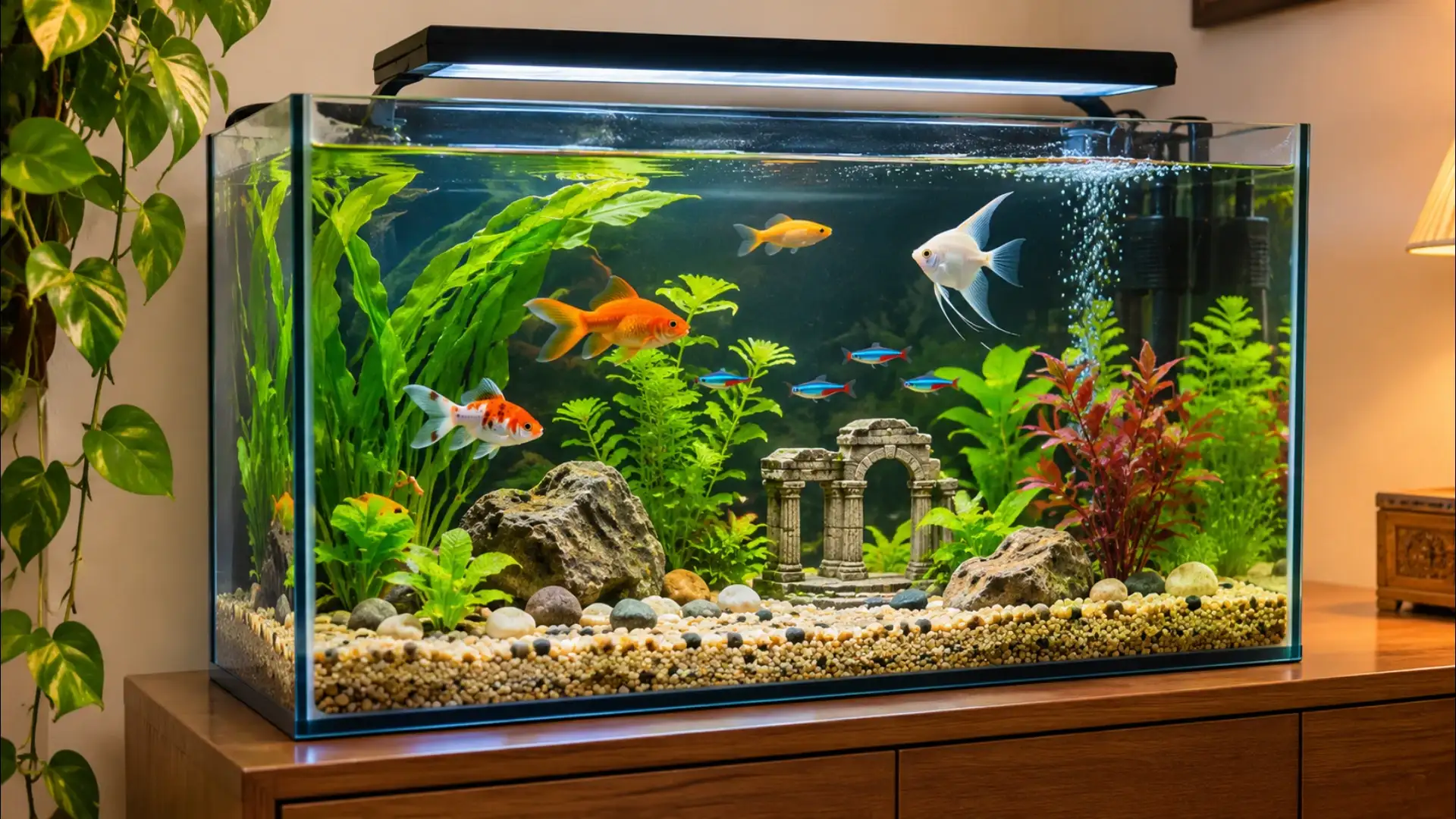
Fish need adequate swimming space, suitable water conditions, filtration and a stable environment. First-time owners should understand these requirements before choosing fish or purchasing aquarium equipment.
The RSPCA recommends selecting a tank with enough space for the adult size of the fish and stresses that larger aquariums generally provide more stable water conditions.
A larger tank is generally easier to maintain because changes in temperature and water quality tend to be less sudden than in a very small container.
The RSPCA advises choosing a tank larger than 45 x 30 x 30 centimetres, or approximately 40 litres. This should be treated as a general minimum reference rather than a universal size for every species.
Avoid locations exposed to direct sunlight, as this can encourage unwanted algae growth and make temperature control more difficult.
Keep the tank away from areas where it may be knocked accidentally. It should also be placed near a convenient power source for the filter and other equipment.
Choose a filter suitable for the tank's volume and the species you plan to keep. Follow the manufacturer's instructions for installation and maintenance.
A filter should run continuously once the aquarium is operating. Turning it off for extended periods can affect the biological filtration system.
Temperature is another important consideration. Select fish that are compatible with the local water conditions and the equipment available.
Use an aquarium thermometer and appropriate testing kits to monitor the water.
The RSPCA recommends fishless cycling, which means allowing the filter to establish its biological activity before adding fish.
During this period, monitor ammonia and nitrite levels using suitable test kits. Add fish only when the aquarium's water readings indicate that the system is ready.
Some species need to live in groups, while others require separate territories. Mixing incompatible fish can create unnecessary stress and competition.
Ask a knowledgeable aquarium specialist for advice before purchasing different species.
Follow appropriate acclimatisation instructions so the fish can adjust gradually to the aquarium's water conditions.
Observe their behaviour and continue monitoring the water quality after introduction.
Do not replace all the filter media at once unless the manufacturer's instructions specifically require it. This can disturb the biological filtration system.
A successful aquarium depends on consistency. Planning the tank properly before bringing fish home makes it easier to create a suitable environment for them.
Fish need adequate swimming space, suitable water conditions, filtration and a stable environment. First-time owners should understand these requirements before choosing fish or purchasing aquarium equipment.
The RSPCA recommends selecting a tank with enough space for the adult size of the fish and stresses that larger aquariums generally provide more stable water conditions.
1. Choose an appropriately sized tank
Start by researching the species you want to keep. Different fish have different space requirements, and some grow much larger than they appear when sold as juveniles.A larger tank is generally easier to maintain because changes in temperature and water quality tend to be less sudden than in a very small container.
The RSPCA advises choosing a tank larger than 45 x 30 x 30 centimetres, or approximately 40 litres. This should be treated as a general minimum reference rather than a universal size for every species.
2. Select a suitable location
Place the aquarium on a sturdy, level stand capable of supporting its filled weight.Avoid locations exposed to direct sunlight, as this can encourage unwanted algae growth and make temperature control more difficult.
Keep the tank away from areas where it may be knocked accidentally. It should also be placed near a convenient power source for the filter and other equipment.
3. Install a filtration system
A filter helps remove suspended particles and provides a surface where beneficial bacteria can develop.Choose a filter suitable for the tank's volume and the species you plan to keep. Follow the manufacturer's instructions for installation and maintenance.
A filter should run continuously once the aquarium is operating. Turning it off for extended periods can affect the biological filtration system.
4. Prepare the water
Tap water may contain substances that need to be treated before it is suitable for aquarium use. Use an appropriate water conditioner according to its instructions.Temperature is another important consideration. Select fish that are compatible with the local water conditions and the equipment available.
Use an aquarium thermometer and appropriate testing kits to monitor the water.
5. Allow the tank to cycle
A new aquarium needs time to develop the beneficial bacterial colonies that support its filtration system. This process is known as cycling.The RSPCA recommends fishless cycling, which means allowing the filter to establish its biological activity before adding fish.
During this period, monitor ammonia and nitrite levels using suitable test kits. Add fish only when the aquarium's water readings indicate that the system is ready.
6. Choose compatible fish
Do not select fish only because they look attractive. Research their adult size, preferred temperature, water requirements and social behaviour.You may also like
- Laptop neck pain: Physiotherapy helps in many cases, but these warning signs need medical attention
- Hans Christian Andersen reportedly feared being buried alive and carried a note saying he was not dead when he went to sleep: The strange bedtime precaution of the Danish storyteller behind 'The Little Mermaid'
- In 2025, Pune student Swasti Patil won bronze at the European Girls' Olympiad in Informatics; a year later, she became the first Indian to win gold at the competition while studying outside formal school
- Are you using cold relief balms too often? Here's what excessive use can do
- Meet Sumira Tiwari, who dreams of flying the Rafale and secured 11th rank in the NDA; one of only two women selected for the Indian Air Force's flying branch, she was inspired by wearing her father's helmet and boots
Some species need to live in groups, while others require separate territories. Mixing incompatible fish can create unnecessary stress and competition.
Ask a knowledgeable aquarium specialist for advice before purchasing different species.
7. Introduce fish gradually
Once the aquarium is ready, introduce a small number of fish rather than filling the tank immediately.Follow appropriate acclimatisation instructions so the fish can adjust gradually to the aquarium's water conditions.
Observe their behaviour and continue monitoring the water quality after introduction.
8. Maintain a regular routine
Remove uneaten food, clean the glass when necessary and carry out partial water changes according to the aquarium's requirements.Do not replace all the filter media at once unless the manufacturer's instructions specifically require it. This can disturb the biological filtration system.
A successful aquarium depends on consistency. Planning the tank properly before bringing fish home makes it easier to create a suitable environment for them.






Loving Newspoint? Download the app now
