
How to Store and Reheat Vegetarian Leftovers Safely at Home

Leftovers can make everyday cooking easier, particularly when preparing meals for work or a busy family schedule. Cooked rice, dal, vegetables and other vegetarian dishes can often be stored for later use, reducing the need to prepare a completely new meal every time.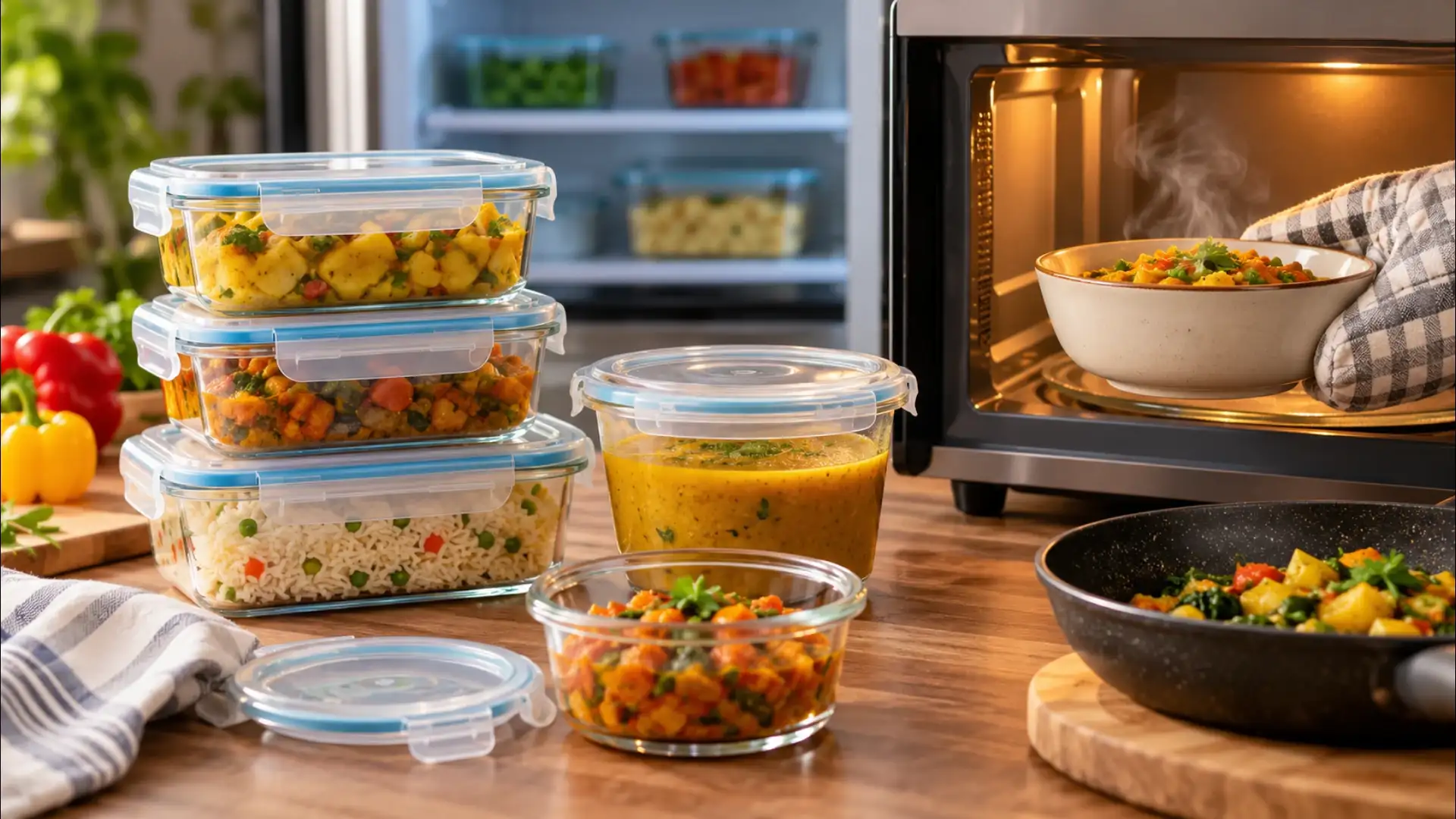
However, food that looks or smells normal is not necessarily safe to eat. Bacteria can grow when cooked food remains at unsuitable temperatures, and reheating does not always correct problems caused by unsafe storage. Following a few straightforward precautions can help households enjoy leftovers while reducing the risk of foodborne illness.
Divide a large quantity of dal, vegetable curry or cooked rice into smaller portions in shallow, clean containers. Smaller portions cool more quickly than a deep pot, reducing the time food spends at temperatures that encourage bacterial growth.
Keep the refrigerator at a safe temperature and avoid overcrowding it, as cold air needs to circulate.
If you prepare meals for several days, label the containers with the date. Refrigerated leftovers should be used promptly according to reliable food-safety guidance. Freeze suitable portions if you do not expect to use them in time.
Do not rely only on smell, taste or appearance to determine whether food is safe. Some harmful bacteria do not produce obvious signs of spoilage.
Microwaves can create cold spots, so stir the food and rotate the container where appropriate. Use microwave-safe dishes and allow the food to stand briefly before checking that it has heated evenly.
Reheat only the portion you intend to eat rather than repeatedly warming the entire batch.
If rice is left at room temperature for too long, bacteria may multiply and produce toxins that reheating may not destroy. Refrigerate it promptly in a shallow container and follow established storage guidance.
Do not assume that boiling or microwaving rice makes improperly stored food safe.
The most useful routine is simple: cool promptly, store correctly, label portions and reheat thoroughly. These habits can make meal preparation more convenient without compromising food safety.
However, food that looks or smells normal is not necessarily safe to eat. Bacteria can grow when cooked food remains at unsuitable temperatures, and reheating does not always correct problems caused by unsafe storage. Following a few straightforward precautions can help households enjoy leftovers while reducing the risk of foodborne illness.
Refrigerate cooked food promptly
Do not leave cooked meals sitting at room temperature for extended periods. As a general food-safety rule, refrigerate perishable cooked food within two hours, or sooner in very hot conditions.Divide a large quantity of dal, vegetable curry or cooked rice into smaller portions in shallow, clean containers. Smaller portions cool more quickly than a deep pot, reducing the time food spends at temperatures that encourage bacterial growth.
Keep the refrigerator at a safe temperature and avoid overcrowding it, as cold air needs to circulate.
Store portions separately
Use clean, covered containers and avoid repeatedly opening the same container throughout the day.If you prepare meals for several days, label the containers with the date. Refrigerated leftovers should be used promptly according to reliable food-safety guidance. Freeze suitable portions if you do not expect to use them in time.
Do not rely only on smell, taste or appearance to determine whether food is safe. Some harmful bacteria do not produce obvious signs of spoilage.
Reheat food thoroughly
When reheating rice, dal, vegetable curry or soup, heat it evenly until steaming hot throughout.You may also like
- A class 12th student noticed that visually impaired students often face hardships in learning and writing down their exams and launched two projects that help provide scribes to the specially abled: Meet Zeus Lalani
- 7 female authors who took the literary world by storm under pen names: From George Eliot to J.K. Rowling, these women defied stereotypes, challenged gender bias and proved that powerful stories can outshine the names behind them
- Octavia E. Butler, the science-fiction writer who woke up at 2am to write before going to work as a dishwasher and potato-chip inspector
- Adding these 5 things to your houseplants can help boost their growth
- Weight Loss: Just 30 minutes of walking every day will help you lose weight! Learn about Japan's 3-3-3 formula
Microwaves can create cold spots, so stir the food and rotate the container where appropriate. Use microwave-safe dishes and allow the food to stand briefly before checking that it has heated evenly.
Reheat only the portion you intend to eat rather than repeatedly warming the entire batch.
Pay particular attention to cooked rice
Cooked rice needs careful handling because some bacteria can survive the cooking process in the form of spores.If rice is left at room temperature for too long, bacteria may multiply and produce toxins that reheating may not destroy. Refrigerate it promptly in a shallow container and follow established storage guidance.
Do not assume that boiling or microwaving rice makes improperly stored food safe.
When should leftovers be discarded?
Discard food that has been stored outside safe conditions for too long or has clear signs of spoilage. When storage history is uncertain, it is safer not to eat it.The most useful routine is simple: cool promptly, store correctly, label portions and reheat thoroughly. These habits can make meal preparation more convenient without compromising food safety.






Loving Newspoint? Download the app now
