
How to Store Indian Spices So They Retain Their Aroma for Longer

Spices are central to Indian cooking, and many households keep a wide collection of whole and ground varieties. However, buying good-quality spices is only one part of maintaining their flavour.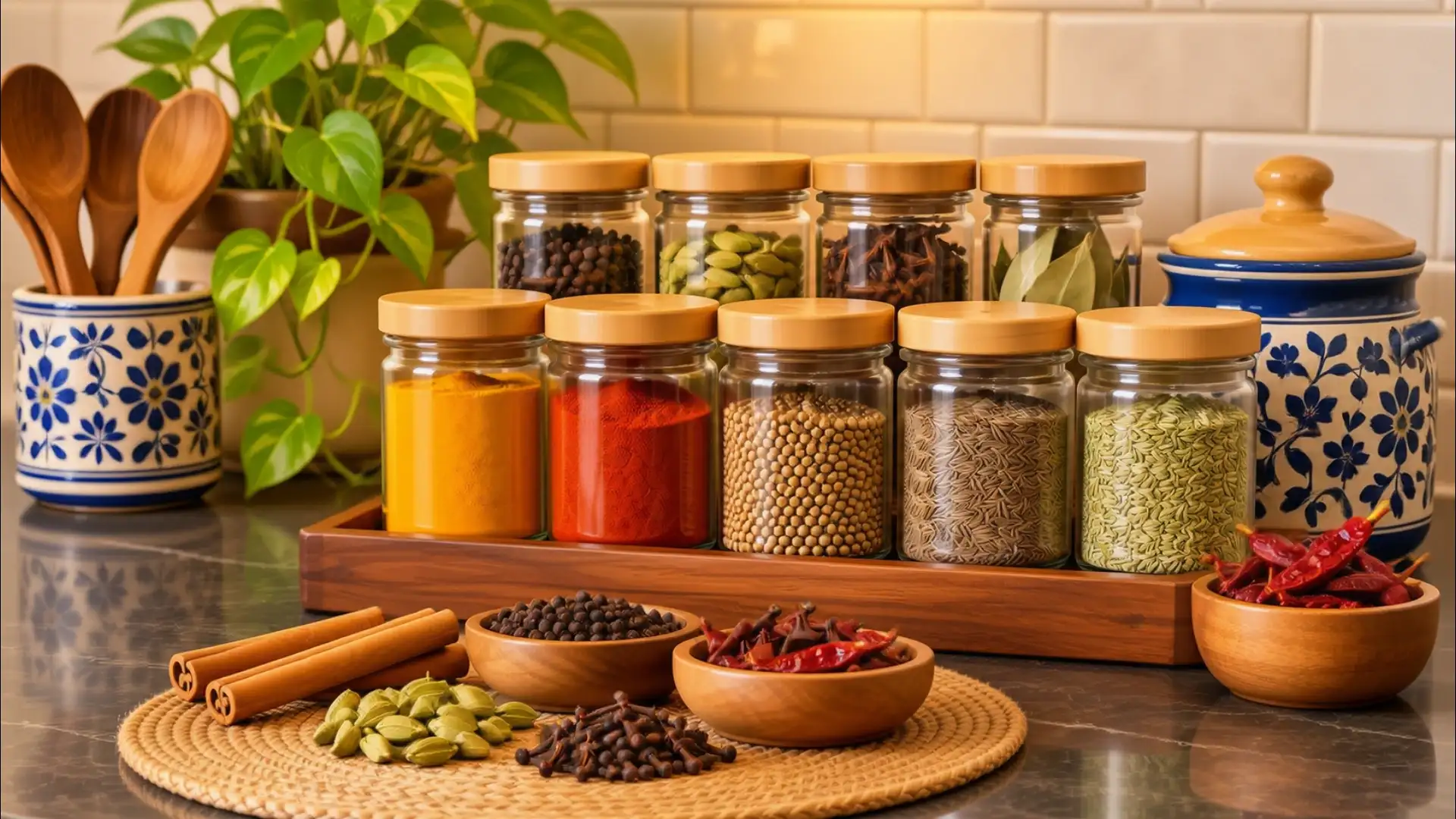
The way they are stored also matters. Heat, light, air and moisture can gradually affect the aroma and quality of dried spices.
A few practical habits can help organise the masala shelf, reduce unnecessary waste and make everyday cooking easier.
Glass jars with secure lids are a popular option because their contents are easy to identify. Food-grade containers with tight-fitting lids can also be used.
The most important feature is that the container closes properly and protects the contents from moisture.
Avoid leaving spices in open bowls or loosely folded packets for long periods. Once a packet has been opened, transfer its contents into a suitable sealed container if you plan to store them for regular use.
However, storing spices directly beside the stove can expose them to repeated heat. The same applies to shelves above ovens and other warm appliances.
Choose a cool, dry cupboard instead.
If you need a small selection of frequently used spices near the cooking area, keep only a limited quantity there and store the remaining supply separately.
Store jars inside a cupboard or use opaque containers if they are kept on an open shelf.
Moisture is another concern. Avoid placing containers close to the sink or where water splashes are common.
Always use a clean, dry spoon to remove spices. Do not dip a damp spoon into a jar, as moisture can enter the container and affect its contents.
This is one reason many home cooks prefer to grind small quantities when needed.
If you buy ground spices in larger packs, transfer them into smaller airtight jars. Keeping a large container open repeatedly can expose the entire supply to air and moisture.
For ingredients such as cumin, coriander, pepper and cardamom, buying whole and grinding as required can be a useful option if you cook regularly.
Write the spice name and the date when the packet was opened or transferred. If you use different varieties of chilli powder or turmeric, label them clearly.
This also makes it easier to identify older stock and use it before opening a new packet.
Buy quantities that match your household's cooking habits.
For spices used only occasionally, smaller packs are usually more practical.
Open the jar and check its aroma. If the characteristic smell has faded considerably, it may no longer contribute much flavour to your cooking.
Also look for signs of moisture, unusual clumping or visible changes. If a container has been exposed to water or its contents appear compromised, replace the spice rather than using it.
A simple tray or drawer organiser can prevent small jars from getting lost.
With the right containers and a sensible storage location, an Indian kitchen's spice collection can remain organised and easier to maintain.
The way they are stored also matters. Heat, light, air and moisture can gradually affect the aroma and quality of dried spices.
A few practical habits can help organise the masala shelf, reduce unnecessary waste and make everyday cooking easier.
Choose the right containers
Airtight containers are useful for storing both whole and ground spices.Glass jars with secure lids are a popular option because their contents are easy to identify. Food-grade containers with tight-fitting lids can also be used.
The most important feature is that the container closes properly and protects the contents from moisture.
Avoid leaving spices in open bowls or loosely folded packets for long periods. Once a packet has been opened, transfer its contents into a suitable sealed container if you plan to store them for regular use.
Keep spices away from heat
Many kitchens have a spice rack close to the cooking area because it makes ingredients easy to reach.However, storing spices directly beside the stove can expose them to repeated heat. The same applies to shelves above ovens and other warm appliances.
Choose a cool, dry cupboard instead.
If you need a small selection of frequently used spices near the cooking area, keep only a limited quantity there and store the remaining supply separately.
Protect them from light and moisture
Direct sunlight can affect the quality of dried spices over time.Store jars inside a cupboard or use opaque containers if they are kept on an open shelf.
Moisture is another concern. Avoid placing containers close to the sink or where water splashes are common.
Always use a clean, dry spoon to remove spices. Do not dip a damp spoon into a jar, as moisture can enter the container and affect its contents.
Store whole spices and ground masalas thoughtfully
Whole spices generally retain their aroma for longer than ground varieties because their natural oils are less exposed.This is one reason many home cooks prefer to grind small quantities when needed.
If you buy ground spices in larger packs, transfer them into smaller airtight jars. Keeping a large container open repeatedly can expose the entire supply to air and moisture.
For ingredients such as cumin, coriander, pepper and cardamom, buying whole and grinding as required can be a useful option if you cook regularly.
Label every container
Labels help avoid confusion between similar-looking powders.Write the spice name and the date when the packet was opened or transferred. If you use different varieties of chilli powder or turmeric, label them clearly.
This also makes it easier to identify older stock and use it before opening a new packet.
Avoid buying more than you need
It is tempting to purchase large packs when a spice is available at a lower price. However, the savings may not be worthwhile if the ingredient remains unused for a long time.Buy quantities that match your household's cooking habits.
For spices used only occasionally, smaller packs are usually more practical.
Check freshness regularly
Do not rely only on a printed date to judge the quality of a dried spice.Open the jar and check its aroma. If the characteristic smell has faded considerably, it may no longer contribute much flavour to your cooking.
Also look for signs of moisture, unusual clumping or visible changes. If a container has been exposed to water or its contents appear compromised, replace the spice rather than using it.
Make the masala shelf easier to use
Arrange spices by frequency of use or by category. Keep everyday ingredients at the front and occasional-use varieties towards the back.A simple tray or drawer organiser can prevent small jars from getting lost.
With the right containers and a sensible storage location, an Indian kitchen's spice collection can remain organised and easier to maintain.
Next Story