
How to Store Seasonal Clothes Properly: 6 Tips to Keep Them Fresh and Organised

As seasons change, so does our wardrobe. With winter approaching, it is time to bring out sweaters, jackets and warm clothing while making space for lighter summer outfits. However, simply folding seasonal clothes and putting them away is not always enough. Improper storage can lead to unpleasant odours, moisture damage, wrinkles and even fabric deterioration.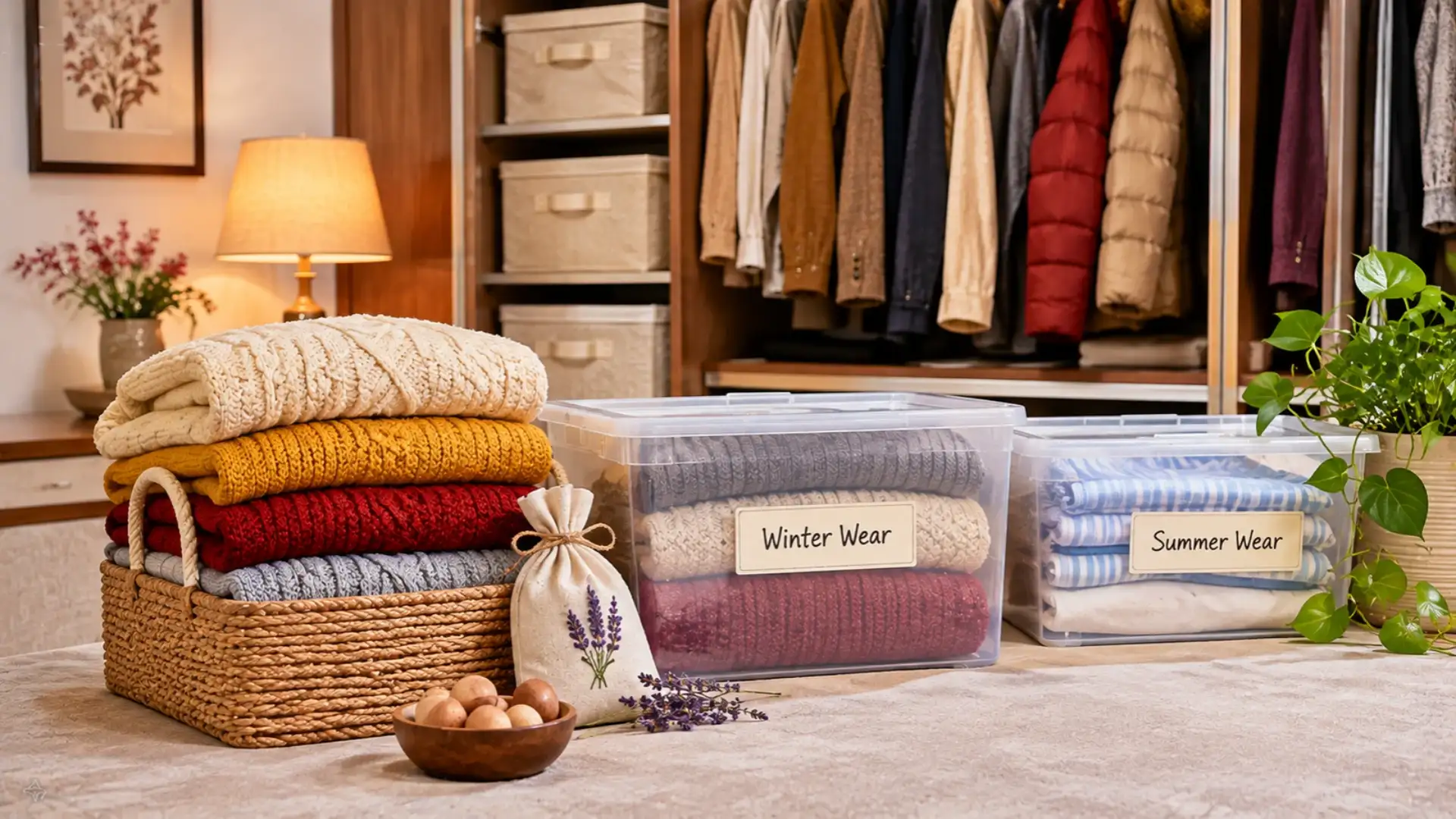
Whether you have a large wardrobe or limited storage space, organising your seasonal clothes properly can help keep them in good condition for months. From washing clothes before storing them to choosing the right storage containers, here are six simple tips to keep your wardrobe fresh, organised and clutter-free.
Wash or dry-clean your clothes according to their fabric care instructions before putting them away. Make sure every item is completely dry before storing it, as even a little moisture can encourage mould and mildew growth.
You can further organise clothes into categories such as T-shirts, trousers, dresses, sweaters and jackets. This makes it easier to find specific items when you need them and prevents your storage space from becoming cluttered.
Getting rid of clothes that no longer fit or are damaged can also help free up valuable wardrobe space.
Cotton and other natural fabrics benefit from breathable storage because it allows air circulation. For clothes that need protection from dust, fabric storage bags can be a good choice.
Avoid using damaged or dirty containers, and make sure everything is completely dry before packing it away.
Keep your wardrobe and storage areas dry and well-ventilated. You can use moisture-absorbing products or silica gel packets inside storage containers to help control excess moisture.
Avoid placing clothes directly against damp walls or storing them in areas where water leakage is possible. Check your storage spaces occasionally to ensure they remain dry.
To prevent this, make sure clothes are completely dry before storing them. Avoid overcrowding your wardrobe or storage boxes, as tightly packed clothes have less room for air circulation.
Whenever possible, open your wardrobe and storage spaces occasionally to allow fresh air inside. You can also place a small sachet of dried lavender in your wardrobe for a mild fragrance.
For example, you can label separate boxes as winter sweaters, summer dresses, jackets or everyday clothing. If you store clothes for different family members together, adding names can make the arrangement even easier to manage.
You can also keep a small list of stored items on your phone to remember where everything is kept.
By washing clothes before storage, folding them carefully, using suitable containers and keeping your wardrobe dry, you can make seasonal wardrobe changes much easier. A little organisation now can save you time and effort when it is time to bring those clothes out again.
Whether you have a large wardrobe or limited storage space, organising your seasonal clothes properly can help keep them in good condition for months. From washing clothes before storing them to choosing the right storage containers, here are six simple tips to keep your wardrobe fresh, organised and clutter-free.
1. Wash Clothes Before Storing Them
One of the most important steps before storing seasonal clothes is making sure they are clean. Even clothes that appear perfectly fresh may have traces of sweat, body oils, perfume or food stains that can attract insects and cause unpleasant smells over time.Wash or dry-clean your clothes according to their fabric care instructions before putting them away. Make sure every item is completely dry before storing it, as even a little moisture can encourage mould and mildew growth.
2. Sort Your Clothes by Season and Category
Before packing everything away, separate your clothes according to the season and type. Keep summer outfits, winter wear, occasion wear and everyday clothing in different sections.You can further organise clothes into categories such as T-shirts, trousers, dresses, sweaters and jackets. This makes it easier to find specific items when you need them and prevents your storage space from becoming cluttered.
Getting rid of clothes that no longer fit or are damaged can also help free up valuable wardrobe space.
3. Choose the Right Storage Bags and Containers
The type of storage you use can make a big difference in keeping seasonal clothes fresh. Clean plastic storage boxes, fabric organisers and breathable garment bags are useful options depending on the type of clothing.Cotton and other natural fabrics benefit from breathable storage because it allows air circulation. For clothes that need protection from dust, fabric storage bags can be a good choice.
Avoid using damaged or dirty containers, and make sure everything is completely dry before packing it away.
4. Protect Clothes from Moisture and Dampness
Moisture is one of the biggest problems when storing seasonal clothes, particularly during humid weather or in poorly ventilated cupboards. Damp conditions can encourage mould growth and leave clothes with a musty smell.Keep your wardrobe and storage areas dry and well-ventilated. You can use moisture-absorbing products or silica gel packets inside storage containers to help control excess moisture.
Avoid placing clothes directly against damp walls or storing them in areas where water leakage is possible. Check your storage spaces occasionally to ensure they remain dry.
5. Prevent Unpleasant Odours with Proper Ventilation
Clothes stored for several months can sometimes develop a stale or musty smell, especially when kept in closed cupboards or containers.You may also like
- Chipped a Front Tooth? Can Dental Bonding Restore Your Smile?
- After 12 years, the EPS pension amount could increase from ₹1,000 to ₹3,000; EPFO may grant approval on November 19..
- Scabies Itch Worse at Night? Here's Why Your Whole Family May Need Treatment
- SSY Calculation: Depositing ₹1 lakh will yield approximately ₹48 lakh for your daughter; check the calculation..
- Why put aluminium foil under your ironing board cover? How this simple trick can speed up ironing and help remove stubborn wrinkles from clothes more efficiently
To prevent this, make sure clothes are completely dry before storing them. Avoid overcrowding your wardrobe or storage boxes, as tightly packed clothes have less room for air circulation.
Whenever possible, open your wardrobe and storage spaces occasionally to allow fresh air inside. You can also place a small sachet of dried lavender in your wardrobe for a mild fragrance.
6. Label Storage Boxes for Easy Access
Labelling your storage boxes is a simple but effective way to keep seasonal clothing organised. Instead of opening multiple containers to find a particular item, clearly mention what each box contains.For example, you can label separate boxes as winter sweaters, summer dresses, jackets or everyday clothing. If you store clothes for different family members together, adding names can make the arrangement even easier to manage.
You can also keep a small list of stored items on your phone to remember where everything is kept.
Keep Your Seasonal Wardrobe Fresh and Organised
Storing seasonal clothes properly is not just about saving wardrobe space. It also helps protect your favourite outfits from moisture, insects, unpleasant odours and unnecessary wear and tear.By washing clothes before storage, folding them carefully, using suitable containers and keeping your wardrobe dry, you can make seasonal wardrobe changes much easier. A little organisation now can save you time and effort when it is time to bring those clothes out again.






Loving Newspoint? Download the app now
