
Grow Lights for Indoor Plants: How to Choose and Position Them Properly

Indoor plants bring greenery and freshness to living spaces, but keeping them healthy can be challenging when natural sunlight is limited. Plants placed in shaded corners, rooms with small windows or spaces that receive little daylight may struggle to grow. Their leaves can turn pale, stems may become weak and overall growth may slow down.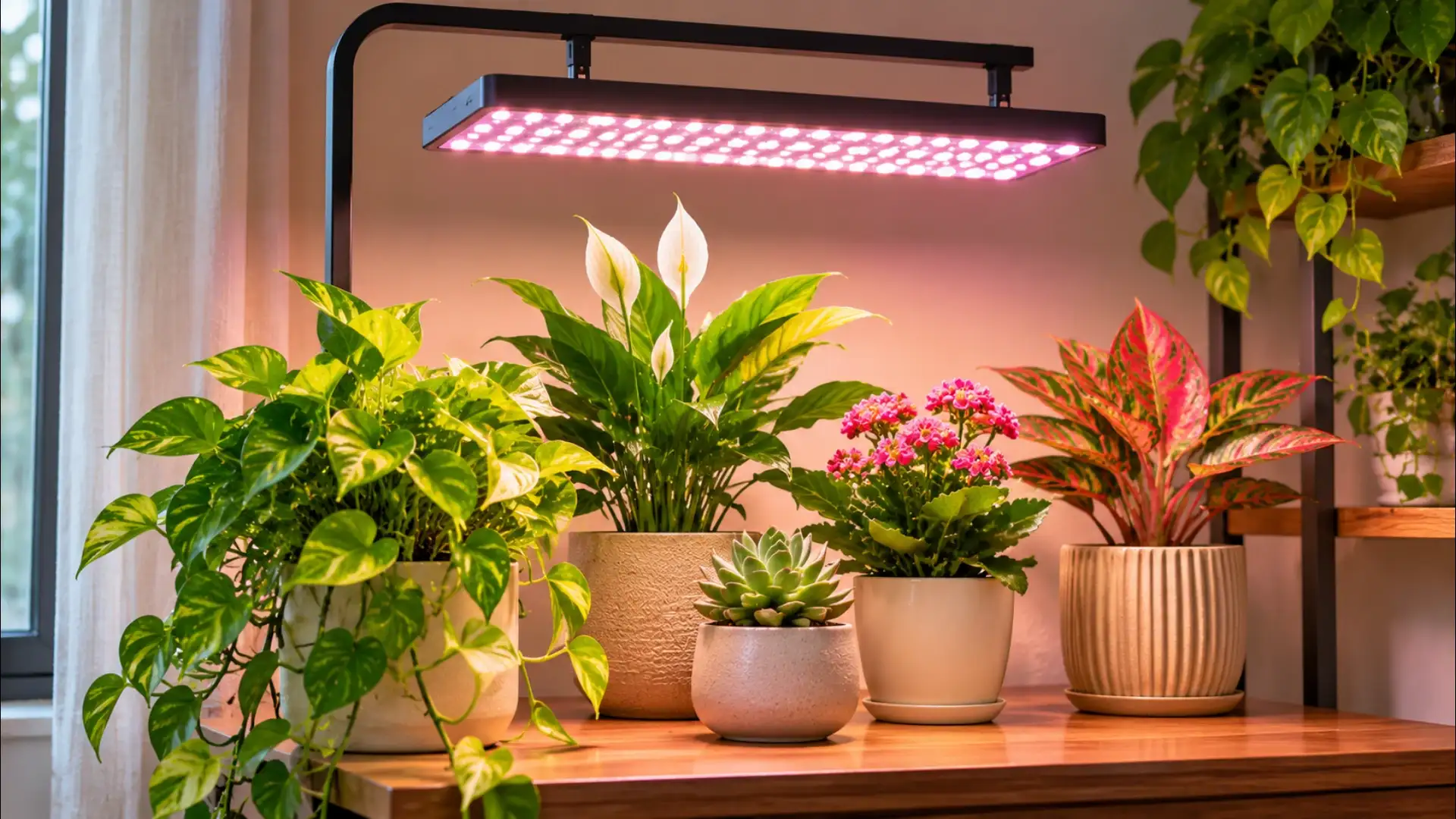
Grow lights offer a practical solution to this problem. These specially designed lights provide the wavelengths plants need for photosynthesis, helping them grow even in areas with limited sunlight. However, choosing the right grow light and positioning it correctly are important for getting good results.
They are available in different types, including LED, fluorescent and full-spectrum lights. These can be used for everything from small indoor plants and herbs to flowering varieties and indoor vegetable gardens.
LED grow lights are particularly popular because they consume less electricity, produce comparatively less heat and are available in different sizes and designs.
1. Choose Full-Spectrum Lighting
Full-spectrum grow lights provide a combination of wavelengths that support different stages of plant growth. They are a convenient option for people growing multiple types of indoor plants, as they can support both leafy growth and flowering.
2. Consider LED Grow Lights
LED grow lights are suitable for most indoor gardening setups. They are energy-efficient, have a longer lifespan and are available in different shapes, including bulbs, strips and panels.
For a small collection of plants, an LED bulb may be sufficient, while larger indoor gardens may benefit from panel-style lights.
3. Check the Light Intensity
Different plants have different lighting requirements. Low-light plants such as pothos and snake plants need less intense lighting than sun-loving varieties.
Check the manufacturer's recommendations for light intensity and coverage before purchasing a product. A light that is too weak may not support healthy growth, while excessive intensity can damage sensitive leaves.
4. Look for Adjustable Settings
Some grow lights offer adjustable brightness and timers. These features make it easier to control the amount of light plants receive and adjust the settings according to their requirements.
Maintain the Right Distance: Position the grow light according to the manufacturer's recommended distance. Small LED lights may need to be placed closer to plants than powerful panels. If leaves develop brown patches, curl or appear scorched, the light may be too intense or too close.
Provide Even Light Coverage: Make sure the light reaches the plant's leaves evenly. If the light falls only on one side, plants may begin leaning towards it. Adjustable fixtures can help distribute light more effectively.
Adjust the Height as Plants Grow: As plants become taller, the distance between their leaves and the light source changes. Adjust the fixture periodically to maintain suitable coverage and prevent excessive exposure.
Avoid Placing Lights Too Close: Although plants need adequate lighting, keeping a powerful grow light very close to the leaves can cause stress. Follow the recommended distance rather than assuming that closer placement will produce better growth.
Using a timer can help maintain a consistent schedule. It is also important to provide plants with a period of darkness, as they need a regular light-dark cycle.
Avoid keeping grow lights switched on throughout the day and night, as continuous exposure is not beneficial for most indoor plants.
Ignoring the recommended distance, leaving lights on for too long and failing to adjust their position as plants grow can also affect plant health.
Pay attention to your plants' appearance. Long, weak stems and pale leaves may indicate insufficient light, while scorched patches or excessive leaf curling can suggest too much light or heat.
Grow lights can make indoor gardening easier, especially in homes where natural sunlight is limited. Choosing an appropriate LED or full-spectrum light, maintaining the correct distance and following a consistent lighting schedule can help plants grow well indoors. With regular observation and a few adjustments, even a shaded corner can become a suitable space for a healthy indoor garden.
Grow lights offer a practical solution to this problem. These specially designed lights provide the wavelengths plants need for photosynthesis, helping them grow even in areas with limited sunlight. However, choosing the right grow light and positioning it correctly are important for getting good results.
What Are Grow Lights for Indoor Plants?
Grow lights are artificial lighting systems designed to support plant growth. Unlike ordinary household bulbs, they are made to provide light that plants can use for photosynthesis.They are available in different types, including LED, fluorescent and full-spectrum lights. These can be used for everything from small indoor plants and herbs to flowering varieties and indoor vegetable gardens.
LED grow lights are particularly popular because they consume less electricity, produce comparatively less heat and are available in different sizes and designs.
How to Choose the Right Grow Light
Before purchasing a grow light, consider the type of plants you have, the available space and how much natural sunlight the area receives.1. Choose Full-Spectrum Lighting
Full-spectrum grow lights provide a combination of wavelengths that support different stages of plant growth. They are a convenient option for people growing multiple types of indoor plants, as they can support both leafy growth and flowering.
2. Consider LED Grow Lights
LED grow lights are suitable for most indoor gardening setups. They are energy-efficient, have a longer lifespan and are available in different shapes, including bulbs, strips and panels.
For a small collection of plants, an LED bulb may be sufficient, while larger indoor gardens may benefit from panel-style lights.
3. Check the Light Intensity
Different plants have different lighting requirements. Low-light plants such as pothos and snake plants need less intense lighting than sun-loving varieties.
Check the manufacturer's recommendations for light intensity and coverage before purchasing a product. A light that is too weak may not support healthy growth, while excessive intensity can damage sensitive leaves.
4. Look for Adjustable Settings
Some grow lights offer adjustable brightness and timers. These features make it easier to control the amount of light plants receive and adjust the settings according to their requirements.
How to Position Grow Lights Properly
Choosing a suitable light is only half the task. Its placement also determines how effectively plants receive artificial light.Maintain the Right Distance: Position the grow light according to the manufacturer's recommended distance. Small LED lights may need to be placed closer to plants than powerful panels. If leaves develop brown patches, curl or appear scorched, the light may be too intense or too close.
Provide Even Light Coverage: Make sure the light reaches the plant's leaves evenly. If the light falls only on one side, plants may begin leaning towards it. Adjustable fixtures can help distribute light more effectively.
You may also like
- Have a ₹20 lakh mutual fund investment? How many years will the money last if you withdraw ₹10,000 every month via an SWP?
- Mutual Fund SIP: Invest just ₹3.6 lakh and accumulate ₹10 lakh! Here's how a monthly SIP of ₹2,000 can help you build a substantial corpus
- 8th Pay Commission: Pensioners' concerns reach PM Modi! A major demand raised for those who retired before January 1, 2026.
- Priyanka Chopra takes Malti on a wildlife adventure at a zoo, where feeding kangaroos and cuddling koalas become lessons in curiosity and how parents can teach children to love and respect animals
- Can Babies Wear Woollen Clothes Directly?
Adjust the Height as Plants Grow: As plants become taller, the distance between their leaves and the light source changes. Adjust the fixture periodically to maintain suitable coverage and prevent excessive exposure.
Avoid Placing Lights Too Close: Although plants need adequate lighting, keeping a powerful grow light very close to the leaves can cause stress. Follow the recommended distance rather than assuming that closer placement will produce better growth.
How Many Hours Should Grow Lights Stay On?
The required lighting duration depends on the plant variety, natural sunlight and intensity of the grow light. Many common indoor foliage plants do well with around 10 to 14 hours of supplemental lighting, although individual requirements can vary.Using a timer can help maintain a consistent schedule. It is also important to provide plants with a period of darkness, as they need a regular light-dark cycle.
Avoid keeping grow lights switched on throughout the day and night, as continuous exposure is not beneficial for most indoor plants.
Common Grow Light Mistakes to Avoid
One common mistake is using ordinary decorative bulbs instead of suitable plant lighting. Another is assuming that every indoor plant needs the same amount of light.Ignoring the recommended distance, leaving lights on for too long and failing to adjust their position as plants grow can also affect plant health.
Pay attention to your plants' appearance. Long, weak stems and pale leaves may indicate insufficient light, while scorched patches or excessive leaf curling can suggest too much light or heat.
Grow lights can make indoor gardening easier, especially in homes where natural sunlight is limited. Choosing an appropriate LED or full-spectrum light, maintaining the correct distance and following a consistent lighting schedule can help plants grow well indoors. With regular observation and a few adjustments, even a shaded corner can become a suitable space for a healthy indoor garden.






Loving Newspoint? Download the app now
