
How Traditional Indian Musical Instruments Are Made From Local Materials

India's traditional musical instruments are more than tools for creating melodies. They reflect generations of craftsmanship, regional traditions and a deep understanding of natural materials. From bamboo flutes and wooden tablas to gourds used in string instruments, artisans have long transformed locally available resources into instruments with distinctive sounds.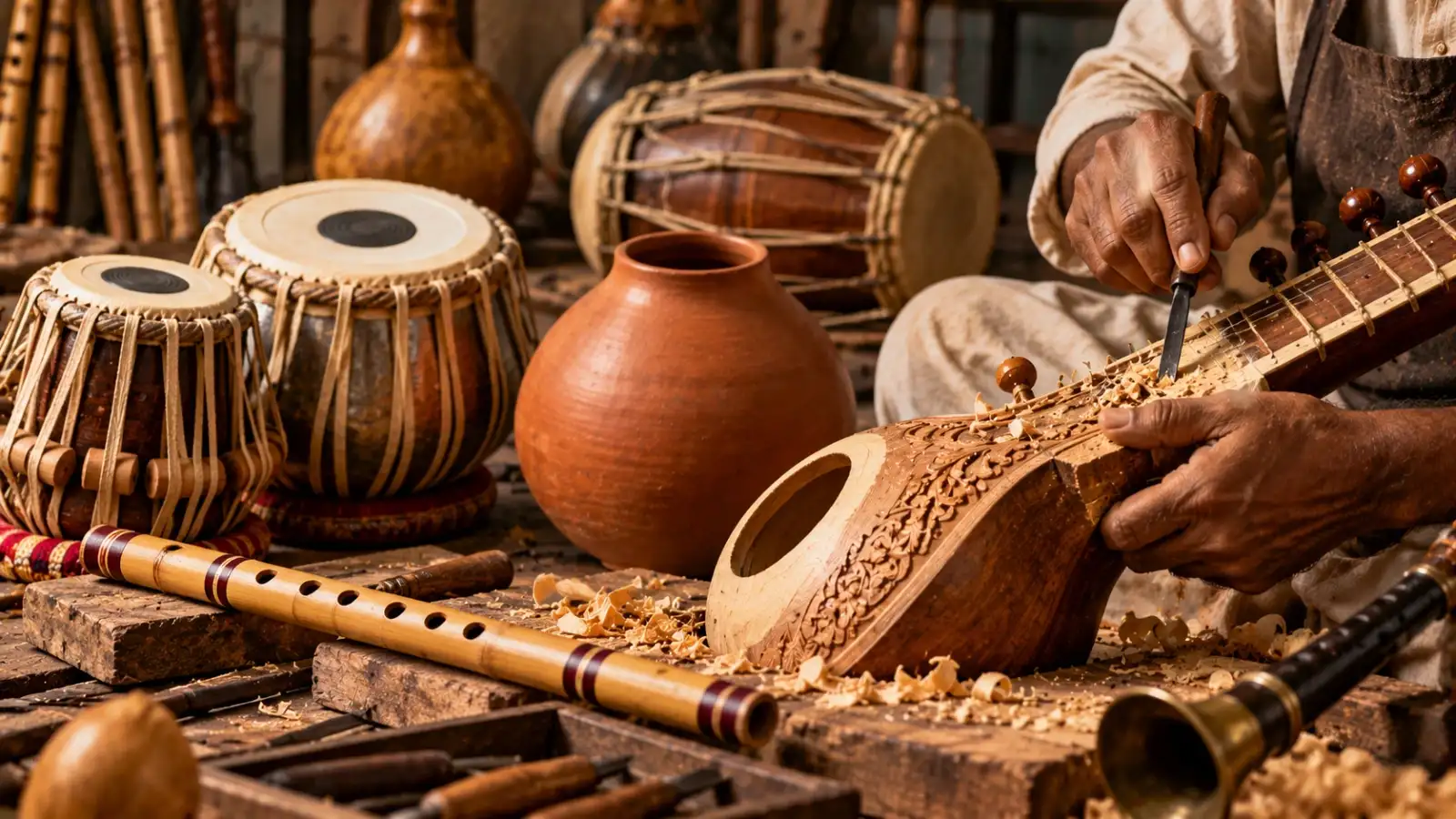
The process often involves selecting the right material, shaping it by hand, assembling individual components and carefully adjusting the instrument's sound. Although modern tools are now used in many workshops, traditional knowledge continues to influence how these instruments are made. Understanding their construction offers a glimpse into India's musical heritage and the skills that keep these crafts alive.
The process begins with selecting a straight piece of bamboo with suitable thickness and spacing between its natural joints. Artisans dry the bamboo carefully to reduce moisture and lower the risk of cracking.
Once prepared, the bamboo is cut to the required length. The maker marks the positions of the blowing hole and finger holes, which must be placed accurately to produce the intended musical notes.
The holes are created using heated metal tools or other suitable methods, depending on the maker's technique. Their size and spacing influence the flute's pitch and playing characteristics. The edges are then smoothed, and the instrument is tested by playing different notes.
A well-made bansuri depends on more than the quality of bamboo. Precision, experience and careful tuning are essential to producing a clear and balanced sound.
The smaller drum, called the dayan, traditionally has a hollow wooden body made from suitable hardwood, such as sheesham or neem. The larger bayan is commonly made from metal, including brass or steel, although designs can vary.
For the wooden drum, artisans select seasoned timber and shape it into a hollow shell. The wood must be strong and free from significant defects that could affect its durability or sound.
A prepared membrane is stretched over the opening and secured with cords and other components. The central black patch, known as syahi, is applied in layers using a specialised mixture. Its thickness and composition influence the drum's pitch and distinctive tonal quality.
Finally, the artisan adjusts the tension, checks the drum's response and makes the necessary refinements. This detailed work explains why traditional tabla making requires both material knowledge and a trained musical ear.
Traditional sitars use seasoned wood for components such as the neck and soundboard. A dried gourd, known as a tumba, may be used to create the main resonator. The gourd is carefully prepared, hollowed and shaped before being fitted to the instrument.
The wooden parts are cut, carved and joined with attention to their dimensions and proportions. Metal frets are fitted to the neck, while tuning pegs and a bridge are installed to support the strings.
The maker must ensure that the components fit together securely and that the strings sit correctly over the bridge and frets. Decorative carving and polishing may be added once the main structure is complete.
Even small differences in the wood, resonator, bridge or string arrangement can influence the finished instrument's sound. This is why experienced sitar makers rely on a combination of traditional methods and repeated sound testing.
Artisans commonly use suitable woods, including mango and sheesham, to form the body. The wood is shaped and seasoned to help reduce cracking and improve durability.
The drumheads are prepared separately and fitted over the openings. Traditionally, animal hide has been widely used for these membranes, although construction materials can vary between makers and modern instruments.
The heads are secured with ropes, rings or other tensioning systems. Adjusting the tension changes the pitch and tone, allowing the maker or musician to achieve the desired sound.
Once assembled, the dholak is played and checked for balance between its two sides. Its quality depends on the body shape, membrane preparation, tension and the skill used during final adjustments.
The maker prepares suitable clay and shapes it into a rounded, pot-like vessel with a narrow opening. The walls must have an appropriate thickness so that the instrument produces a clear response when struck.
Depending on the craft tradition, the clay may be mixed with other materials to achieve the desired strength and acoustic properties. The shaped vessel is dried and fired in a kiln.
After firing, the ghatam is inspected for cracks and tested for its tonal response. Musicians create different sounds by striking various parts of its body with their fingers, palms and wrists.
Its construction demonstrates how a familiar natural material can become a sophisticated musical instrument through careful shaping and an understanding of sound.
Some forms use a hollow gourd as the resonator, while others incorporate wood or other locally available materials. A bamboo or wooden neck supports the string, which is attached between the neck and the body.
The resonator helps amplify the vibrations produced when the string is plucked. In certain designs, a flexible or split neck can be squeezed to alter string tension and create changes in pitch.
Although the ektara may appear simple compared with instruments such as the sitar, making one that produces a stable, pleasing sound still requires care. The choice of materials, the string tension and the relationship between the neck and resonator all affect its performance.
The body is carefully carved and tapered to help produce its characteristic sound. The placement and size of the finger holes influence the notes available to the player.
The reed is a particularly important component. It must vibrate correctly in response to the musician's breath, while the instrument's bore and holes help determine its pitch and tone.
Artisans fit the components together and test the instrument across its range. Adjustments may be necessary to achieve a suitable response and intonation.
The shehnai illustrates how traditional instrument making combines the properties of wood with the precise control of airflow and vibration.
Natural materials are not identical, even when they come from the same source. Bamboo can differ in thickness and density, while wood varies in grain, moisture content and hardness. These differences mean that artisans must assess individual pieces rather than rely on appearance alone.
The material is only one part of the process. Shape, thickness, tension, assembly and finishing all influence the final sound. Traditional makers develop their skills through experience, repeated testing and knowledge passed between generations.
However, artisans can face challenges such as changing material availability, rising production costs, competition from mass-produced instruments and fewer young people entering traditional crafts. Some workshops now combine hand craftsmanship with modern tools to improve consistency and efficiency.
Supporting skilled makers, purchasing well-made instruments and documenting regional techniques can help keep these traditions alive. Conservation of suitable natural resources is equally important, particularly when instruments depend on specific woods, bamboo varieties or other materials.
Each instrument requires its own combination of materials, techniques and acoustic knowledge. While modern manufacturing continues to evolve, the experience of skilled artisans remains essential to preserving the distinctive character of many traditional instruments.
These crafts remind us that music begins long before the first note is played. It starts with selecting a suitable material, understanding its qualities and transforming it into something capable of carrying a musical tradition across generations.
The process often involves selecting the right material, shaping it by hand, assembling individual components and carefully adjusting the instrument's sound. Although modern tools are now used in many workshops, traditional knowledge continues to influence how these instruments are made. Understanding their construction offers a glimpse into India's musical heritage and the skills that keep these crafts alive.
1. Bansuri: Turning Bamboo Into a Flute
The bansuri is one of India's most recognisable traditional wind instruments. It is made primarily from bamboo, a natural material valued for its hollow structure, light weight and suitability for producing musical tones.The process begins with selecting a straight piece of bamboo with suitable thickness and spacing between its natural joints. Artisans dry the bamboo carefully to reduce moisture and lower the risk of cracking.
Once prepared, the bamboo is cut to the required length. The maker marks the positions of the blowing hole and finger holes, which must be placed accurately to produce the intended musical notes.
The holes are created using heated metal tools or other suitable methods, depending on the maker's technique. Their size and spacing influence the flute's pitch and playing characteristics. The edges are then smoothed, and the instrument is tested by playing different notes.
A well-made bansuri depends on more than the quality of bamboo. Precision, experience and careful tuning are essential to producing a clear and balanced sound.
2. Tabla: Shaping Wood and Preparing the Drumhead
The tabla is a pair of hand-played drums central to many forms of Indian classical music. Its construction combines a shaped body, stretched drumheads and a carefully prepared central tuning area.The smaller drum, called the dayan, traditionally has a hollow wooden body made from suitable hardwood, such as sheesham or neem. The larger bayan is commonly made from metal, including brass or steel, although designs can vary.
For the wooden drum, artisans select seasoned timber and shape it into a hollow shell. The wood must be strong and free from significant defects that could affect its durability or sound.
A prepared membrane is stretched over the opening and secured with cords and other components. The central black patch, known as syahi, is applied in layers using a specialised mixture. Its thickness and composition influence the drum's pitch and distinctive tonal quality.
Finally, the artisan adjusts the tension, checks the drum's response and makes the necessary refinements. This detailed work explains why traditional tabla making requires both material knowledge and a trained musical ear.
3. Sitar: Combining Wood, Gourd and Metal Strings
The sitar is a prominent plucked string instrument associated with Hindustani classical music. Its resonant sound comes from the interaction of its wooden structure, strings, bridge and resonating chamber.Traditional sitars use seasoned wood for components such as the neck and soundboard. A dried gourd, known as a tumba, may be used to create the main resonator. The gourd is carefully prepared, hollowed and shaped before being fitted to the instrument.
The wooden parts are cut, carved and joined with attention to their dimensions and proportions. Metal frets are fitted to the neck, while tuning pegs and a bridge are installed to support the strings.
The maker must ensure that the components fit together securely and that the strings sit correctly over the bridge and frets. Decorative carving and polishing may be added once the main structure is complete.
Even small differences in the wood, resonator, bridge or string arrangement can influence the finished instrument's sound. This is why experienced sitar makers rely on a combination of traditional methods and repeated sound testing.
4. Dholak: Making a Drum From Wood and Natural Membranes
The dholak is widely used in folk music, devotional performances, weddings and family celebrations. Its familiar rhythm comes from a hollow, barrel-shaped body covered with membranes at both ends.Artisans commonly use suitable woods, including mango and sheesham, to form the body. The wood is shaped and seasoned to help reduce cracking and improve durability.
The drumheads are prepared separately and fitted over the openings. Traditionally, animal hide has been widely used for these membranes, although construction materials can vary between makers and modern instruments.
The heads are secured with ropes, rings or other tensioning systems. Adjusting the tension changes the pitch and tone, allowing the maker or musician to achieve the desired sound.
Once assembled, the dholak is played and checked for balance between its two sides. Its quality depends on the body shape, membrane preparation, tension and the skill used during final adjustments.
5. Ghatam: Turning Clay Into a Percussion Instrument
Unlike instruments made from wood or bamboo, the ghatam is crafted from clay. It is a traditional percussion instrument associated particularly with Carnatic music in southern India.The maker prepares suitable clay and shapes it into a rounded, pot-like vessel with a narrow opening. The walls must have an appropriate thickness so that the instrument produces a clear response when struck.
Depending on the craft tradition, the clay may be mixed with other materials to achieve the desired strength and acoustic properties. The shaped vessel is dried and fired in a kiln.
After firing, the ghatam is inspected for cracks and tested for its tonal response. Musicians create different sounds by striking various parts of its body with their fingers, palms and wrists.
Its construction demonstrates how a familiar natural material can become a sophisticated musical instrument through careful shaping and an understanding of sound.
6. Ektara: A Simple Instrument With a Distinctive Sound
The ektara is a traditional single-string instrument used in several folk and devotional music traditions across India. Its design varies by region, but it often combines a lightweight body, a resonating chamber and a single string.Some forms use a hollow gourd as the resonator, while others incorporate wood or other locally available materials. A bamboo or wooden neck supports the string, which is attached between the neck and the body.
The resonator helps amplify the vibrations produced when the string is plucked. In certain designs, a flexible or split neck can be squeezed to alter string tension and create changes in pitch.
Although the ektara may appear simple compared with instruments such as the sitar, making one that produces a stable, pleasing sound still requires care. The choice of materials, the string tension and the relationship between the neck and resonator all affect its performance.
7. Shehnai: Crafting a Traditional Reed Instrument
The shehnai is a traditional Indian wind instrument commonly heard at weddings, religious ceremonies and classical performances. It typically consists of a shaped wooden body, finger holes and a reed that vibrates when the musician blows through it.The body is carefully carved and tapered to help produce its characteristic sound. The placement and size of the finger holes influence the notes available to the player.
The reed is a particularly important component. It must vibrate correctly in response to the musician's breath, while the instrument's bore and holes help determine its pitch and tone.
Artisans fit the components together and test the instrument across its range. Adjustments may be necessary to achieve a suitable response and intonation.
The shehnai illustrates how traditional instrument making combines the properties of wood with the precise control of airflow and vibration.
How Local Materials Influence the Sound
The materials used in traditional Indian instruments are chosen for practical and acoustic reasons. Bamboo provides a lightweight, hollow structure for wind instruments. Wood can be shaped into durable bodies and resonators. Clay forms rigid vessels that respond to percussion, while metal strings and carefully prepared membranes help create different pitches and tones.Natural materials are not identical, even when they come from the same source. Bamboo can differ in thickness and density, while wood varies in grain, moisture content and hardness. These differences mean that artisans must assess individual pieces rather than rely on appearance alone.
The material is only one part of the process. Shape, thickness, tension, assembly and finishing all influence the final sound. Traditional makers develop their skills through experience, repeated testing and knowledge passed between generations.
Why Traditional Instrument Making Still Matters
Traditional musical instrument making supports more than India's musical heritage. It also sustains specialist craft skills, local workshops and knowledge of materials that may otherwise be lost.However, artisans can face challenges such as changing material availability, rising production costs, competition from mass-produced instruments and fewer young people entering traditional crafts. Some workshops now combine hand craftsmanship with modern tools to improve consistency and efficiency.
Supporting skilled makers, purchasing well-made instruments and documenting regional techniques can help keep these traditions alive. Conservation of suitable natural resources is equally important, particularly when instruments depend on specific woods, bamboo varieties or other materials.
The Craft Behind India's Musical Heritage
Traditional Indian musical instruments reveal how closely craftsmanship and music are connected. Bamboo becomes a bansuri, clay becomes a ghatam, and carefully shaped wood, strings and resonators form instruments such as the sitar and tabla.Each instrument requires its own combination of materials, techniques and acoustic knowledge. While modern manufacturing continues to evolve, the experience of skilled artisans remains essential to preserving the distinctive character of many traditional instruments.
These crafts remind us that music begins long before the first note is played. It starts with selecting a suitable material, understanding its qualities and transforming it into something capable of carrying a musical tradition across generations.
Next Story