
What Is the IKEA Effect? Why We May Value Something More After Making It Ourselves

A handmade gift with slightly uneven edges can sometimes mean more to us than a polished product bought from a shop. Similarly, assembling a piece of furniture can create a sense of satisfaction that goes beyond the finished object. This is connected to the IKEA effect , a psychological phenomenon that helps explain why our own effort can influence how much we value something we have created.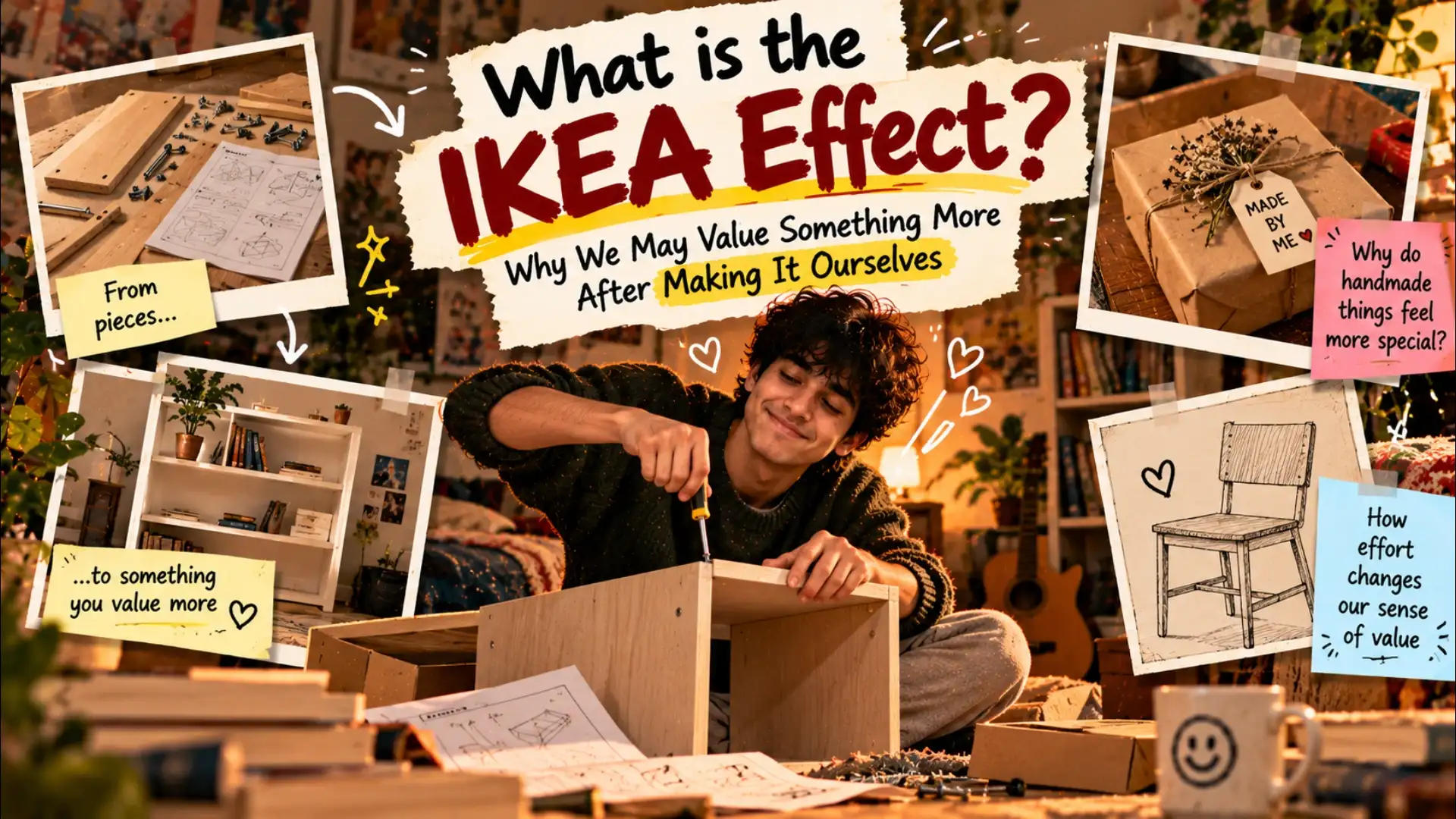
Why We Value Things We Make
A ready-made bookshelf and one assembled at home may serve exactly the same purpose. Yet the one you spent an evening putting together might feel more satisfying to own. Perhaps you remember following the instructions, finding the correct screws and struggling with one stubborn panel. By the time the bookshelf stands upright, it represents more than a place to store books. It also represents the effort you invested in making it.
This experience is often described as the IKEA effect, a concept in behavioural science that explains why people may value products more when they have contributed effort towards creating them.
The concept was examined in a 2012 research paper by Michael Norton, Daniel Mochon and Dan Ariely. Their experiments explored how labour invested in assembling or creating something could increase the value people placed on the result.
The name comes from IKEA, the furniture retailer known for products that customers assemble themselves. The effect is not limited to furniture. It can apply to handmade cards, customised notebooks, home décor, craft projects and other things people create through their own efforts.
The key point is that the work itself can influence how we perceive the finished product. However, this does not mean everyone will always value a self-made object more than a professionally made alternative.
Effort can also give an object a personal story. A simple table may become memorable because you spent hours assembling it, solved a problem along the way and finally completed the task. There can be a sense of achievement, too. Finishing a challenging project provides evidence that you were able to turn an idea into something tangible.
This helps explain why handmade gifts often carry emotional value beyond their material cost. A carefully knitted scarf or a scrapbook filled with personal memories may feel special because someone invested time, attention and thought into making it.
Still, effort alone is not enough. Research on the IKEA effect suggests that successful completion can matter. If a project is impossible to finish or leaves someone deeply frustrated, the positive feelings associated with creation may not emerge.
A person who designs a personalised photo album may also value it more than a commercially produced album because it reflects their decisions and memories.
Businesses can make use of this tendency by allowing customers to customise products, assemble furniture or participate in the creation process. Personalisation gives customers a more active role, which may strengthen their connection to what they buy.
Digital products can offer similar experiences. Building a playlist, designing a phone home screen or organising a personal workspace can make a digital environment feel more distinctly one's own.
However, the effect has limits. A customer who spends hours assembling a poorly designed chair may still recognise that it is uncomfortable. Personal effort can influence perceived value, but it does not automatically improve the product's quality.
This overlaps with the sunk cost fallacy, in which past investments influence decisions about what to do next, even when those investments cannot be recovered. The two concepts are related but not identical: the IKEA effect concerns the increased value we may assign to something we helped create, while the sunk cost fallacy concerns allowing unrecoverable past costs to shape future choices.
The practical lesson is not to avoid making things yourself. Creating, assembling and personalising objects can be satisfying and meaningful.
Instead, recognise that your effort may affect how you judge the result. Enjoy the bookshelf you assembled, appreciate the gift you made and take pride in your work, while remaining willing to admit when something needs improvement. Sometimes, the value of an object lies partly in what it is and partly in the experience of making it.
Why We Value Things We Make
A ready-made bookshelf and one assembled at home may serve exactly the same purpose. Yet the one you spent an evening putting together might feel more satisfying to own. Perhaps you remember following the instructions, finding the correct screws and struggling with one stubborn panel. By the time the bookshelf stands upright, it represents more than a place to store books. It also represents the effort you invested in making it.
This experience is often described as the IKEA effect, a concept in behavioural science that explains why people may value products more when they have contributed effort towards creating them.
What Is the IKEA Effect?
The IKEA effect is a cognitive bias in which people can assign greater value to products they have helped assemble or create than to comparable products they did not make themselves.The concept was examined in a 2012 research paper by Michael Norton, Daniel Mochon and Dan Ariely. Their experiments explored how labour invested in assembling or creating something could increase the value people placed on the result.
The name comes from IKEA, the furniture retailer known for products that customers assemble themselves. The effect is not limited to furniture. It can apply to handmade cards, customised notebooks, home décor, craft projects and other things people create through their own efforts.
The key point is that the work itself can influence how we perceive the finished product. However, this does not mean everyone will always value a self-made object more than a professionally made alternative.
Why Does Effort Make Something Feel More Valuable?
One explanation is that personal effort creates a stronger sense of ownership. When people contribute to making something, they may begin to see the finished result as an extension of their choices and abilities.Effort can also give an object a personal story. A simple table may become memorable because you spent hours assembling it, solved a problem along the way and finally completed the task. There can be a sense of achievement, too. Finishing a challenging project provides evidence that you were able to turn an idea into something tangible.
This helps explain why handmade gifts often carry emotional value beyond their material cost. A carefully knitted scarf or a scrapbook filled with personal memories may feel special because someone invested time, attention and thought into making it.
Still, effort alone is not enough. Research on the IKEA effect suggests that successful completion can matter. If a project is impossible to finish or leaves someone deeply frustrated, the positive feelings associated with creation may not emerge.
How the IKEA Effect Shows Up in Everyday Life
The effect can appear in surprisingly ordinary situations. Someone who paints a bedroom themselves may feel particularly pleased with the result, even if a professional could have completed the work more neatly.A person who designs a personalised photo album may also value it more than a commercially produced album because it reflects their decisions and memories.
You may also like
- Two boys, aged 11 and 7, left home to attempt a 24-hour challenge they saw on social media, prompting a search before they were found safe: How viral online trends can influence children's decisions and what parents can do to prevent risky imitation
- Hyderabad's biggest literary celebration to return this December
- Strict Fee Regulations in the State: Private Medical Colleges Can No Longer Act Arbitrarily
- Agreeing to cookies on every website could prove costly—find out why.
- Karwa Chauth 2026: Easy and Beautiful Thali Decoration Ideas for Puja
Businesses can make use of this tendency by allowing customers to customise products, assemble furniture or participate in the creation process. Personalisation gives customers a more active role, which may strengthen their connection to what they buy.
Digital products can offer similar experiences. Building a playlist, designing a phone home screen or organising a personal workspace can make a digital environment feel more distinctly one's own.
However, the effect has limits. A customer who spends hours assembling a poorly designed chair may still recognise that it is uncomfortable. Personal effort can influence perceived value, but it does not automatically improve the product's quality.
When Personal Investment Can Cloud Our Judgement
The IKEA effect can make everyday experiences more rewarding, but it can also influence decisions in less helpful ways. People may become reluctant to discard a project simply because they have spent time and energy on it. They may continue repairing an unsuitable object, defending a weak idea or investing in a hobby that no longer serves them because abandoning it feels like wasting their effort.This overlaps with the sunk cost fallacy, in which past investments influence decisions about what to do next, even when those investments cannot be recovered. The two concepts are related but not identical: the IKEA effect concerns the increased value we may assign to something we helped create, while the sunk cost fallacy concerns allowing unrecoverable past costs to shape future choices.
The practical lesson is not to avoid making things yourself. Creating, assembling and personalising objects can be satisfying and meaningful.
Instead, recognise that your effort may affect how you judge the result. Enjoy the bookshelf you assembled, appreciate the gift you made and take pride in your work, while remaining willing to admit when something needs improvement. Sometimes, the value of an object lies partly in what it is and partly in the experience of making it.






Loving Newspoint? Download the app now
