
In 1979, Florida recorded its first python in the Everglades. What followed was a decades-long invasion that transformed the region's wildlife and made the Burmese python infamous


A single snake did not announce what was coming. On October 24, 1979, a python was caught near Everglades Safari Park along Tamiami Trail. The record did not identify its species, although researchers now presume it was a Burmese python. The National Park Service also notes that large snakes from Asia had been reported in Florida even earlier.
The important part came later. By 2000, scientists had confirmed that Burmese pythons were breeding in Everglades National Park. The snakes had found an environment remarkably different from their native Southeast Asia, but surprisingly suitable for them.
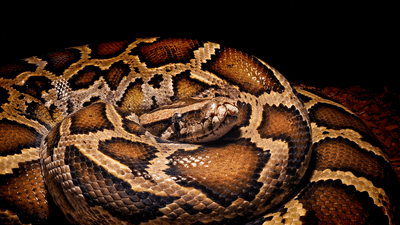
How did a pet snake become an Everglades problem?Burmese pythons were imported into the United States through the exotic pet trade . Scientists believe the Florida population began with escaped or released pets. Once established, the snakes encountered warm, wet habitats with plenty of prey and few effective controls on their spread.
This is what makes the story more complicated than simply blaming one animal. An invasive species crisis begins with a human decision, followed by an ecosystem that allows the newcomer to stay.
Then the food web began to changeBurmese pythons are ambush predators. They eat mammals, birds and reptiles, and their diet in southern Florida has included at least 76 species documented from the digestive contents of 1,716 snakes studied between 1995 and 2020.
The numbers involving native mammals are particularly striking. A USGS study found that raccoon observations fell 99.3%, opossum observations 98.9% and bobcat observations 87.5% between earlier surveys and surveys from 2003 to 2011. Rabbits were no longer detected in those surveys.
Later research provided stronger evidence. In one experiment, Burmese pythons accounted for 77% of marsh-rabbit deaths after rabbits were moved into the Everglades.
Why are these snakes so difficult to remove?The Everglades is a difficult place to search. Dense vegetation, water and the snake's camouflage allow Burmese pythons to remain remarkably hard to spot. The USGS describes detection and control as one of the major challenges of the invasion.
Their reproduction adds another layer. A female can lay 50 to more than 100 eggs at a time.
That does not mean every egg becomes a snake. It does explain why removing individual animals cannot, by itself, solve the larger problem.
Florida is still fighting a snake it cannot easily seeFlorida now uses several methods, including trained searchers, contractors, detection dogs, trapping and research into better detection techniques. The state also runs the Florida Python Challenge , a public removal competition. In 2026, 907 participants removed 280 Burmese pythons during the 10-day event.
Since 2000, nearly 28,000 wild Burmese pythons have been reported as removed from Florida's environment. That figure is a record of removals, not an estimate of the total population.
What the 1979 record really tells usThe 1979 snake was not, by itself, the invasion. It was an early documented sign of a problem whose scale became clear much later.
The Burmese python did not simply enter the Everglades and suddenly destroy its wildlife. The population became established over decades, spread through suitable habitat and altered relationships between predators and prey.
The result is now part of the Everglades story. A snake that once belonged to another continent became a powerful new predator in South Florida, leaving scientists with a difficult question: how much of an altered ecosystem can be restored once an invasive predator becomes firmly established?
The important part came later. By 2000, scientists had confirmed that Burmese pythons were breeding in Everglades National Park. The snakes had found an environment remarkably different from their native Southeast Asia, but surprisingly suitable for them.
How did a pet snake become an Everglades problem?Burmese pythons were imported into the United States through the exotic pet trade . Scientists believe the Florida population began with escaped or released pets. Once established, the snakes encountered warm, wet habitats with plenty of prey and few effective controls on their spread.
This is what makes the story more complicated than simply blaming one animal. An invasive species crisis begins with a human decision, followed by an ecosystem that allows the newcomer to stay.
Then the food web began to changeBurmese pythons are ambush predators. They eat mammals, birds and reptiles, and their diet in southern Florida has included at least 76 species documented from the digestive contents of 1,716 snakes studied between 1995 and 2020.
The numbers involving native mammals are particularly striking. A USGS study found that raccoon observations fell 99.3%, opossum observations 98.9% and bobcat observations 87.5% between earlier surveys and surveys from 2003 to 2011. Rabbits were no longer detected in those surveys.
Later research provided stronger evidence. In one experiment, Burmese pythons accounted for 77% of marsh-rabbit deaths after rabbits were moved into the Everglades.
Why are these snakes so difficult to remove?The Everglades is a difficult place to search. Dense vegetation, water and the snake's camouflage allow Burmese pythons to remain remarkably hard to spot. The USGS describes detection and control as one of the major challenges of the invasion.
Their reproduction adds another layer. A female can lay 50 to more than 100 eggs at a time.
That does not mean every egg becomes a snake. It does explain why removing individual animals cannot, by itself, solve the larger problem.
Florida is still fighting a snake it cannot easily seeFlorida now uses several methods, including trained searchers, contractors, detection dogs, trapping and research into better detection techniques. The state also runs the Florida Python Challenge , a public removal competition. In 2026, 907 participants removed 280 Burmese pythons during the 10-day event.
Since 2000, nearly 28,000 wild Burmese pythons have been reported as removed from Florida's environment. That figure is a record of removals, not an estimate of the total population.
What the 1979 record really tells usThe 1979 snake was not, by itself, the invasion. It was an early documented sign of a problem whose scale became clear much later.
The Burmese python did not simply enter the Everglades and suddenly destroy its wildlife. The population became established over decades, spread through suitable habitat and altered relationships between predators and prey.
The result is now part of the Everglades story. A snake that once belonged to another continent became a powerful new predator in South Florida, leaving scientists with a difficult question: how much of an altered ecosystem can be restored once an invasive predator becomes firmly established?
Next Story