
In the 1950s, European starlings were introduced to America: How Shakespeare's birds spread across the continent and began competing with native species for food


A flock of European starlings can look almost magical: hundreds of dark birds moving together across the sky, twisting into a single shape before suddenly scattering. But the North American story behind those birds begins with a much smaller scene: cages being opened in New York's Central Park more than a century ago.
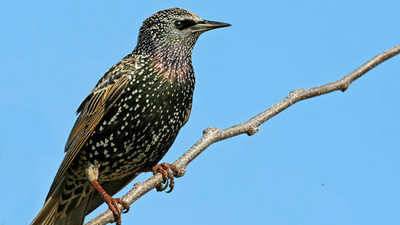
In 1890, Eugene Schieffelin released European starlings in Central Park, as per NYTimes. Another release followed in 1891. Their descendants eventually spread across much of North America. But there is a fascinating twist to the story: the oft-repeated claim that Schieffelin released the birds specifically because he wanted America to have every bird mentioned by Shakespeare is now disputed by historians.
The Shakespeare story is more complicated than it sounds
Schieffelin, a member of the American Acclimatization Society, supposedly wanted to bring Shakespeare's birds to America. The European starling appears in Henry IV, Part 1, giving the tale an irresistible literary connection.
A 2011 Smithsonian account described the famous scene dramatically, portraying Schieffelin bringing imported starlings to Central Park on a cold March day and releasing them.
Then the starlings did something unexpected
The birds survived.
And they multiplied.
Cornell researchers describe the North American population as an extraordinary example of rapid adaptation. A 2021 Cornell study reported that the population expanded from the small group introduced in New York into tens or hundreds of millions of birds across the continent, while also developing genetic adaptations to different environments. “The amazing thing about the evolutionary changes among starling populations since they were introduced in North America is that the changes happened in a span of just 130 years in parallel with a huge expansion in the bird’s range and population size,” said doctoral student Natalie Hofmeister, first author of “Environmental correlates of genetic variation in the invasive European starling in North America.”
That success was not simply about reproduction.
Researchers found evidence that different starling populations adapted to local conditions involving factors such as temperature and rainfall. In other words, the birds did not merely spread across a new continent; they changed in ways that helped them cope with different environments.
Why the starling became such a successful invader
The European starling is remarkably comfortable around people.
It can live in farmland, cities and other human-modified environments. It also competes aggressively for nesting cavities, sometimes taking over places that native birds might otherwise use. Cornell's bird experts note that starlings frequently occupy nest cavities and expel native occupants.
Some accounts have nevertheless portrayed the birds as an overwhelming ecological menace. An Oxford Academic history of the species, for example, quotes a historical Hattiesburg American description calling the starling an “undesirable alien” that multiplied rapidly and damaged crops.
Today, the species is widespread across North America, although its population has also declined substantially from its historical peak. Cornell estimates about 85–93 million European starlings in the US and Canada in recent assessments, compared with an estimated 166.2 million breeding birds in 1970.
So the next time a dark flock sweeps across a parking lot or gathers on a power line, the scene has a much longer history than it appears to.
In 1890, Eugene Schieffelin released European starlings in Central Park, as per NYTimes. Another release followed in 1891. Their descendants eventually spread across much of North America. But there is a fascinating twist to the story: the oft-repeated claim that Schieffelin released the birds specifically because he wanted America to have every bird mentioned by Shakespeare is now disputed by historians.
The Shakespeare story is more complicated than it sounds
Schieffelin, a member of the American Acclimatization Society, supposedly wanted to bring Shakespeare's birds to America. The European starling appears in Henry IV, Part 1, giving the tale an irresistible literary connection.
A 2011 Smithsonian account described the famous scene dramatically, portraying Schieffelin bringing imported starlings to Central Park on a cold March day and releasing them.
Then the starlings did something unexpected
The birds survived.
And they multiplied.
Cornell researchers describe the North American population as an extraordinary example of rapid adaptation. A 2021 Cornell study reported that the population expanded from the small group introduced in New York into tens or hundreds of millions of birds across the continent, while also developing genetic adaptations to different environments. “The amazing thing about the evolutionary changes among starling populations since they were introduced in North America is that the changes happened in a span of just 130 years in parallel with a huge expansion in the bird’s range and population size,” said doctoral student Natalie Hofmeister, first author of “Environmental correlates of genetic variation in the invasive European starling in North America.”
That success was not simply about reproduction.
Researchers found evidence that different starling populations adapted to local conditions involving factors such as temperature and rainfall. In other words, the birds did not merely spread across a new continent; they changed in ways that helped them cope with different environments.
Why the starling became such a successful invader
The European starling is remarkably comfortable around people.
It can live in farmland, cities and other human-modified environments. It also competes aggressively for nesting cavities, sometimes taking over places that native birds might otherwise use. Cornell's bird experts note that starlings frequently occupy nest cavities and expel native occupants.
Some accounts have nevertheless portrayed the birds as an overwhelming ecological menace. An Oxford Academic history of the species, for example, quotes a historical Hattiesburg American description calling the starling an “undesirable alien” that multiplied rapidly and damaged crops.
Today, the species is widespread across North America, although its population has also declined substantially from its historical peak. Cornell estimates about 85–93 million European starlings in the US and Canada in recent assessments, compared with an estimated 166.2 million breeding birds in 1970.
So the next time a dark flock sweeps across a parking lot or gathers on a power line, the scene has a much longer history than it appears to.
Next Story