
Planning a Heritage Trip? Discover India's Historic Postal Buildings, Old Letter Boxes and Telegraph Stories

India's communication history offers a fascinating way to explore the country's architecture, technology and social transformation. Long before mobile phones and instant messaging, post offices, letter boxes and telegraph lines connected families, businesses and government departments across vast distances. Many historic buildings associated with these services still stand, while museums and postal heritage galleries preserve objects that reveal how people communicated in earlier times. Planning a trip around this heritage can combine architecture, local history and cultural exploration. With a little research, travellers can create an itinerary that traces the journey from handwritten letters and telegrams to modern communication networks.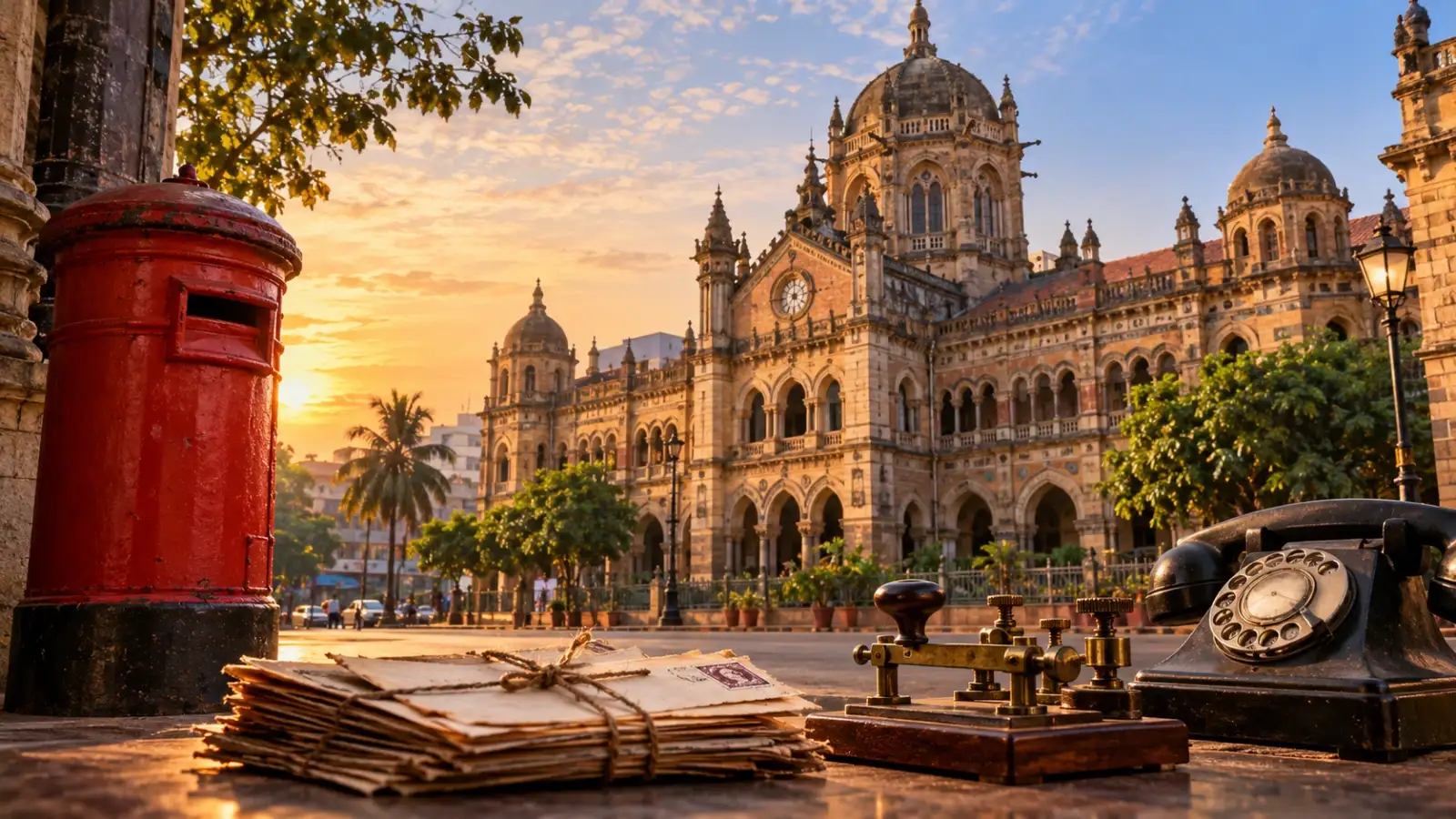
These systems influenced commerce, administration, travel and everyday life. Historic post office buildings often reflect the architectural styles and civic priorities of their time, while telegraph-related landmarks tell stories of technological change.
A heritage trip also offers a different perspective on familiar places. Instead of visiting only forts, palaces and monuments, you can explore buildings that served ordinary people and helped shape how the country communicated.
Mumbai's General Post Office is a notable example. Its large Indo-Saracenic-style building, completed in the early twentieth century, stands near the city's historic commercial district.
Kolkata and Chennai also have longstanding postal histories and prominent postal institutions. Before visiting, check whether the building permits public entry beyond its operating postal counters. Some areas may be restricted because they remain active workplaces.
Take time to examine the exterior, surrounding streets and nearby heritage landmarks. If photography is allowed, architectural details can help document the building's design and its place in the city.
The National Philatelic Museum in New Delhi is a useful starting point for travellers interested in Indian postage stamps and postal history. Check its current opening arrangements and exhibitions before planning your visit.
Postal heritage displays may include historical stamps, envelopes, cancellation marks, commemorative issues and equipment used in mail processing. These objects help explain how postal communication evolved and how designs were used to convey identity and information.
If you collect stamps, consider carrying a small notebook to record interesting issues, dates and themes. Museum shops or authorised philatelic counters may also be worth exploring, depending on availability.
The system also had a complicated colonial history. Its expansion supported faster communication across British India, including during major political events. Studying this history can reveal both the technological achievements and the power structures associated with the network.
To plan a telegraph-themed visit, search museum collections, archives and local heritage resources for preserved instruments, telegraph offices, communication equipment or documented sites connected to early telegraph lines.
Do not assume that every old government building was a telegraph office. Verify its historical use through reliable records, heritage descriptions or archival material before adding it to your itinerary.
Look for surviving postal features in older city centres, railway districts and former trading areas. These locations often developed around transport and administrative networks that depended on reliable communication.
However, old letter boxes may still be in use, relocated or purely decorative. Check for official markings and avoid placing mail into an unfamiliar box unless it is clearly operational.
Walking tours can be especially useful for discovering these details. A local historian or heritage guide may also help identify buildings whose original functions are not immediately obvious.
Some postal services operated in close coordination with railway networks, and railway mail sorting became an important part of distributing correspondence. Travelling between historic railway stations and nearby postal landmarks can therefore add another dimension to your itinerary.
Mumbai, Kolkata, Chennai and other older railway cities offer opportunities to explore the relationship between transport, commerce and communication. Research the history of individual stations and postal facilities rather than assuming that every railway building has a postal connection.
If you visit a working railway station, follow passenger rules and avoid entering restricted operational areas.
For a two-day visit to New Delhi, you could begin with the National Philatelic Museum, subject to its current opening arrangements. Continue with a walk through selected historic districts and public buildings whose communication-related histories can be verified in advance.
For a longer journey, consider a city such as Mumbai, where the General Post Office and the surrounding historic commercial area can form part of a broader architectural itinerary. Other cities can be added after checking their postal museums, archives and documented telegraph connections.
Before finalising your route:
The Department of Posts, postal museums, government archives, libraries and local heritage organisations can provide useful background information. Historical photographs, old maps and digitised documents may help you identify places connected to former communication networks.
Try to distinguish between a building that survives from the telegraph era and a site with a documented connection to telegraph operations. This prevents inaccurate assumptions and makes your journey more informative.
You can also organise your notes by theme, such as stamp design, mail transport, telegraph technology or the social history of letter writing. This creates a clearer narrative than visiting unrelated sites without a plan.
A journey through India's postal and telegraph heritage reveals a side of history that is often overlooked. Historic post offices, stamp collections, railway mail connections and documented telegraph sites show how communication changed everyday life across the country. Start with accessible museums and well-documented buildings, then expand your itinerary using reliable historical records. Confirm entry arrangements before travelling, particularly when sites remain operational. With thoughtful planning, this trip can combine architectural discovery, technological history and a deeper appreciation of how India stayed connected before the digital age.
Why Explore India's Postal and Telegraph Heritage?
India's postal and telegraph systems played an important role in connecting towns, villages and major cities. Postal services carried personal letters, official documents, newspapers and parcels, while the electric telegraph made it possible to transmit messages much faster than traditional mail.These systems influenced commerce, administration, travel and everyday life. Historic post office buildings often reflect the architectural styles and civic priorities of their time, while telegraph-related landmarks tell stories of technological change.
A heritage trip also offers a different perspective on familiar places. Instead of visiting only forts, palaces and monuments, you can explore buildings that served ordinary people and helped shape how the country communicated.
1. Start With the General Post Office Buildings
Many Indian cities have historic General Post Office buildings that are worth researching before you travel. These structures often occupy prominent locations and may feature impressive façades, high ceilings, stonework or architectural details associated with their period.Mumbai's General Post Office is a notable example. Its large Indo-Saracenic-style building, completed in the early twentieth century, stands near the city's historic commercial district.
Kolkata and Chennai also have longstanding postal histories and prominent postal institutions. Before visiting, check whether the building permits public entry beyond its operating postal counters. Some areas may be restricted because they remain active workplaces.
Take time to examine the exterior, surrounding streets and nearby heritage landmarks. If photography is allowed, architectural details can help document the building's design and its place in the city.
2. Visit the Philatelic Museums and Postal Heritage Galleries
Philately, the study and collection of postage stamps, provides another route into India's communication history. Stamps reflect political events, cultural figures, wildlife, science, architecture and national milestones.The National Philatelic Museum in New Delhi is a useful starting point for travellers interested in Indian postage stamps and postal history. Check its current opening arrangements and exhibitions before planning your visit.
Postal heritage displays may include historical stamps, envelopes, cancellation marks, commemorative issues and equipment used in mail processing. These objects help explain how postal communication evolved and how designs were used to convey identity and information.
If you collect stamps, consider carrying a small notebook to record interesting issues, dates and themes. Museum shops or authorised philatelic counters may also be worth exploring, depending on availability.
3. Trace the History of the Electric Telegraph
The electric telegraph transformed long-distance communication by allowing coded messages to travel along wires. In India, telegraph networks expanded during the nineteenth century and became important for administration, commerce and military communication.The system also had a complicated colonial history. Its expansion supported faster communication across British India, including during major political events. Studying this history can reveal both the technological achievements and the power structures associated with the network.
To plan a telegraph-themed visit, search museum collections, archives and local heritage resources for preserved instruments, telegraph offices, communication equipment or documented sites connected to early telegraph lines.
Do not assume that every old government building was a telegraph office. Verify its historical use through reliable records, heritage descriptions or archival material before adding it to your itinerary.
4. Explore Old Letter Boxes and Traditional Postal Streets
Some of the most interesting postal heritage can be found in small details rather than large museums. Old letter boxes, historic street names, traditional commercial districts and buildings that once housed postal services can all contribute to a broader picture of communication history.Look for surviving postal features in older city centres, railway districts and former trading areas. These locations often developed around transport and administrative networks that depended on reliable communication.
However, old letter boxes may still be in use, relocated or purely decorative. Check for official markings and avoid placing mail into an unfamiliar box unless it is clearly operational.
Walking tours can be especially useful for discovering these details. A local historian or heritage guide may also help identify buildings whose original functions are not immediately obvious.
5. Include Railway Mail and Transport Connections
Postal history is closely connected with the development of transport. As railways expanded, they helped move letters, parcels and official correspondence across the country more efficiently.Some postal services operated in close coordination with railway networks, and railway mail sorting became an important part of distributing correspondence. Travelling between historic railway stations and nearby postal landmarks can therefore add another dimension to your itinerary.
Mumbai, Kolkata, Chennai and other older railway cities offer opportunities to explore the relationship between transport, commerce and communication. Research the history of individual stations and postal facilities rather than assuming that every railway building has a postal connection.
If you visit a working railway station, follow passenger rules and avoid entering restricted operational areas.
6. Build a Practical Postal Heritage Itinerary
A well-planned trip should combine a manageable number of verified sites with enough time to explore each location.For a two-day visit to New Delhi, you could begin with the National Philatelic Museum, subject to its current opening arrangements. Continue with a walk through selected historic districts and public buildings whose communication-related histories can be verified in advance.
For a longer journey, consider a city such as Mumbai, where the General Post Office and the surrounding historic commercial area can form part of a broader architectural itinerary. Other cities can be added after checking their postal museums, archives and documented telegraph connections.
Before finalising your route:
- Confirm opening hours, entry rules and photography policies.
- Check travel time between sites and allow for city traffic.
- Look for official museum pages and heritage documentation.
- Contact institutions in advance if you need access to archives or specialist collections.
- Keep alternative stops ready in case a museum or historic building is closed.
7. Research Before You Travel
Postal and telegraph heritage is sometimes less visible than better-known monuments, so preparation makes a significant difference.The Department of Posts, postal museums, government archives, libraries and local heritage organisations can provide useful background information. Historical photographs, old maps and digitised documents may help you identify places connected to former communication networks.
Try to distinguish between a building that survives from the telegraph era and a site with a documented connection to telegraph operations. This prevents inaccurate assumptions and makes your journey more informative.
You can also organise your notes by theme, such as stamp design, mail transport, telegraph technology or the social history of letter writing. This creates a clearer narrative than visiting unrelated sites without a plan.
A journey through India's postal and telegraph heritage reveals a side of history that is often overlooked. Historic post offices, stamp collections, railway mail connections and documented telegraph sites show how communication changed everyday life across the country. Start with accessible museums and well-documented buildings, then expand your itinerary using reliable historical records. Confirm entry arrangements before travelling, particularly when sites remain operational. With thoughtful planning, this trip can combine architectural discovery, technological history and a deeper appreciation of how India stayed connected before the digital age.
Next Story