
Indian Desert Animals: 5 Rare Species That Survive in India’s Harsh Desert Ecosystems

When people think of deserts, they often imagine endless sand dunes, scorching heat, and an environment too harsh for life. Yet the Indian desert animals that inhabit these landscapes prove the opposite. From the vast Thar Desert to the salty stretches of the Little Rann of Kutch, India’s deserts are home to remarkable wildlife that has adapted to extreme temperatures, limited water, and scarce food.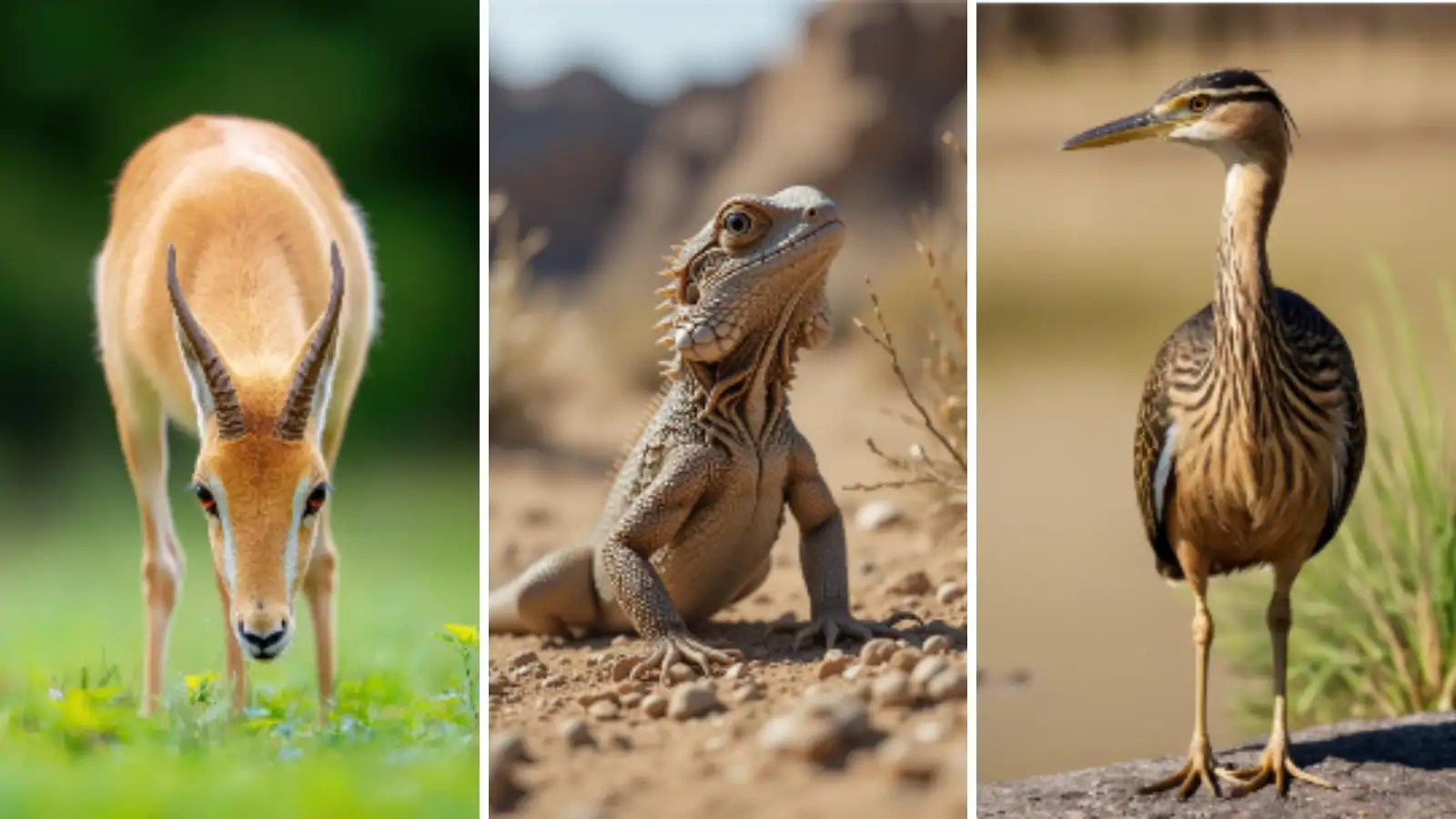
These species have evolved unique survival strategies that allow them to endure one of the most challenging environments on Earth. However, many of them are now rare due to habitat loss, climate change, and human activities. Here are five extraordinary animals that symbolise resilience and survival in India’s desert ecosystems.
Great Indian Bustard : One of the World’s Rarest Flying Birds
The Great Indian Bustard is among the heaviest birds capable of flight and one of the most endangered birds in the world. Once commonly seen across the grasslands of Rajasthan, today it survives mainly in small pockets of the Thar Desert.
This tall bird, with its long legs and upright stance, is an iconic species of India’s desert landscapes. It feeds on insects, seeds, and small reptiles, helping maintain ecological balance in fragile desert grasslands.
However, the species now faces severe threats. Collisions with power lines, shrinking natural habitats, and expanding human settlements have dramatically reduced its numbers. Conservationists consider every sighting of the bustard a rare and hopeful moment for the future of desert biodiversity.
Desert Cat: The Elusive Hunter of the Sand
The Desert Cat is one of the most secretive predators found in India’s arid regions. Small, agile, and mostly active at night, it moves quietly across the sand dunes of the Thar Desert.
Its pale sandy coat allows it to blend perfectly with the desert terrain, making it extremely difficult to spot. This wild feline feeds on rodents, birds, and insects, playing a crucial role in controlling pest populations in desert ecosystems.
Despite its adaptability, the Desert Cat faces growing challenges. Habitat disturbance and interbreeding with domestic cats threaten its genetic purity and long-term survival. As human settlements expand into desert areas, this shy hunter is slowly losing its natural home.
Indian Wild Ass : The Fast Runner of the White Desert
The Indian Wild Ass is a powerful and resilient animal found only in the Little Rann of Kutch in Gujarat. Known for its speed and stamina, this species thrives in the vast salt desert where temperatures fluctuate drastically.
With strong legs and a sturdy build, the wild ass can run swiftly across the barren terrain in search of food and water. During the monsoon season, when large parts of the desert flood, it travels between small patches of dry land to survive.
Although conservation efforts have helped stabilise its population, threats such as disease, climate change, and increasing human activities continue to pose challenges for this unique desert species.
Chinkara: The Graceful Gazelle of the Desert
Also known as the Indian Gazelle, the Chinkara is admired for its elegance and agility. Found across Rajasthan and parts of Gujarat, it is perfectly adapted to life in dry desert regions.
One of its most fascinating traits is its ability to survive with very little direct water intake. Instead, it obtains moisture from plants and desert vegetation. Its slender body and powerful legs allow it to run at remarkable speeds and leap high into the air when threatened.
Although still present in several desert areas, poaching and habitat loss have reduced its numbers. Protecting open grasslands is essential to ensure the long-term survival of this graceful species.
Desert Monitor Lizard : A Tough Survivor of Extreme Heat
Often misunderstood and feared, the Desert Monitor Lizard is one of the most resilient reptiles of India’s deserts. It thrives in the arid landscapes of Rajasthan and Gujarat, where temperatures can reach extreme levels.
This large reptile feeds on insects, small mammals, eggs, and carrion, playing an important role in maintaining ecological balance. Its strong limbs and sharp claws help it dig burrows that protect it from intense daytime heat.
Unfortunately, superstition and illegal hunting threaten the survival of this species. Despite its tough appearance, the Desert Monitor Lizard remains an important contributor to desert ecosystems.
Why Desert Wildlife Is Crucial for Ecosystem Balance
India’s deserts are far from empty landscapes. They are complex ecosystems where every species contributes to maintaining balance. Animals pollinate plants, regulate insect populations, and recycle nutrients within the environment.
Because desert ecosystems are fragile, the loss of even one species can disrupt the natural balance. Unlike forests, deserts offer limited refuge, making wildlife particularly vulnerable to environmental changes.
Protecting the Future of Indian Desert Animals
The survival of Indian desert animals depends largely on conservation efforts and responsible land use. Protecting habitats, reducing human interference, and raising awareness about desert biodiversity are crucial steps toward preserving these rare species.
India’s deserts may appear harsh and lifeless at first glance, but they are home to extraordinary creatures that have mastered survival in extreme conditions. Recognising their importance is the first step in ensuring that these remarkable animals continue to thrive for generations to come.
These species have evolved unique survival strategies that allow them to endure one of the most challenging environments on Earth. However, many of them are now rare due to habitat loss, climate change, and human activities. Here are five extraordinary animals that symbolise resilience and survival in India’s desert ecosystems.
Great Indian Bustard : One of the World’s Rarest Flying Birds
The Great Indian Bustard is among the heaviest birds capable of flight and one of the most endangered birds in the world. Once commonly seen across the grasslands of Rajasthan, today it survives mainly in small pockets of the Thar Desert.
This tall bird, with its long legs and upright stance, is an iconic species of India’s desert landscapes. It feeds on insects, seeds, and small reptiles, helping maintain ecological balance in fragile desert grasslands.
However, the species now faces severe threats. Collisions with power lines, shrinking natural habitats, and expanding human settlements have dramatically reduced its numbers. Conservationists consider every sighting of the bustard a rare and hopeful moment for the future of desert biodiversity.
Desert Cat: The Elusive Hunter of the Sand
The Desert Cat is one of the most secretive predators found in India’s arid regions. Small, agile, and mostly active at night, it moves quietly across the sand dunes of the Thar Desert.
Its pale sandy coat allows it to blend perfectly with the desert terrain, making it extremely difficult to spot. This wild feline feeds on rodents, birds, and insects, playing a crucial role in controlling pest populations in desert ecosystems.
Despite its adaptability, the Desert Cat faces growing challenges. Habitat disturbance and interbreeding with domestic cats threaten its genetic purity and long-term survival. As human settlements expand into desert areas, this shy hunter is slowly losing its natural home.
Indian Wild Ass : The Fast Runner of the White Desert
The Indian Wild Ass is a powerful and resilient animal found only in the Little Rann of Kutch in Gujarat. Known for its speed and stamina, this species thrives in the vast salt desert where temperatures fluctuate drastically.
With strong legs and a sturdy build, the wild ass can run swiftly across the barren terrain in search of food and water. During the monsoon season, when large parts of the desert flood, it travels between small patches of dry land to survive.
Although conservation efforts have helped stabilise its population, threats such as disease, climate change, and increasing human activities continue to pose challenges for this unique desert species.
Chinkara: The Graceful Gazelle of the Desert
Also known as the Indian Gazelle, the Chinkara is admired for its elegance and agility. Found across Rajasthan and parts of Gujarat, it is perfectly adapted to life in dry desert regions.
One of its most fascinating traits is its ability to survive with very little direct water intake. Instead, it obtains moisture from plants and desert vegetation. Its slender body and powerful legs allow it to run at remarkable speeds and leap high into the air when threatened.
Although still present in several desert areas, poaching and habitat loss have reduced its numbers. Protecting open grasslands is essential to ensure the long-term survival of this graceful species.
Desert Monitor Lizard : A Tough Survivor of Extreme Heat
Often misunderstood and feared, the Desert Monitor Lizard is one of the most resilient reptiles of India’s deserts. It thrives in the arid landscapes of Rajasthan and Gujarat, where temperatures can reach extreme levels.
This large reptile feeds on insects, small mammals, eggs, and carrion, playing an important role in maintaining ecological balance. Its strong limbs and sharp claws help it dig burrows that protect it from intense daytime heat.
Unfortunately, superstition and illegal hunting threaten the survival of this species. Despite its tough appearance, the Desert Monitor Lizard remains an important contributor to desert ecosystems.
Why Desert Wildlife Is Crucial for Ecosystem Balance
India’s deserts are far from empty landscapes. They are complex ecosystems where every species contributes to maintaining balance. Animals pollinate plants, regulate insect populations, and recycle nutrients within the environment.
Because desert ecosystems are fragile, the loss of even one species can disrupt the natural balance. Unlike forests, deserts offer limited refuge, making wildlife particularly vulnerable to environmental changes.
Protecting the Future of Indian Desert Animals
The survival of Indian desert animals depends largely on conservation efforts and responsible land use. Protecting habitats, reducing human interference, and raising awareness about desert biodiversity are crucial steps toward preserving these rare species.
India’s deserts may appear harsh and lifeless at first glance, but they are home to extraordinary creatures that have mastered survival in extreme conditions. Recognising their importance is the first step in ensuring that these remarkable animals continue to thrive for generations to come.
Next Story