
8 Indian Destinations Where You Can Experience Local Farming Life

A holiday does not always have to involve sightseeing, shopping or visiting famous monuments. Sometimes, the most memorable experiences come from spending time in the countryside, watching farmers tend their crops, walking through plantations and understanding how food reaches our tables. Across India, several destinations offer opportunities to discover rural traditions and agricultural practices through farm stays, village walks and locally organised activities.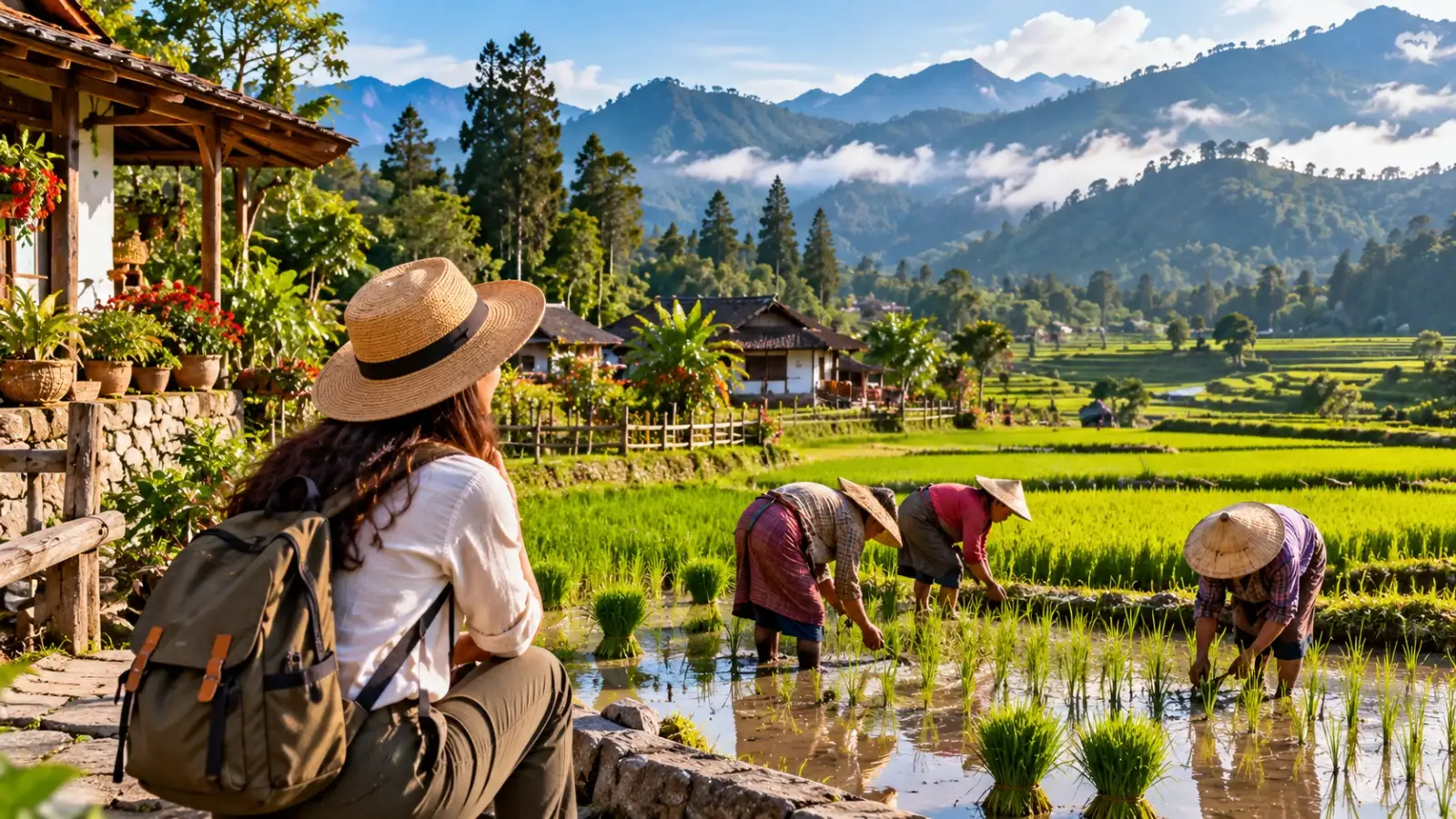
From the rice fields of Arunachal Pradesh to the coffee plantations of Karnataka, these destinations reveal different sides of India's farming culture. Depending on the season and the host, visitors may learn about harvesting, explore orchards, taste locally grown produce or simply enjoy the slower rhythm of village life.
The Apatani community is renowned for its traditional paddy-cum-fish cultivation system, in which rice and fish are raised together in carefully managed fields. This agricultural practice reflects generations of knowledge about water management and the efficient use of land.
Visitors can explore the rural landscape, learn about local agricultural traditions and visit places such as Tarin Fish Farm. The experience is particularly rewarding for travellers interested in indigenous knowledge and sustainable farming practices.
Visitors can learn about tea cultivation, discover how leaves are harvested and processed, and understand the work involved in producing a familiar everyday beverage. Depending on the arrangements available, a plantation visit may also include opportunities to sample locally produced tea.
The experience is best suited to travellers who enjoy scenic walks and want to understand plantation agriculture beyond what they see in a packet of tea. Sikkim's village homestays can also offer a closer look at local food and rural traditions.
Staying at a plantation homestay can help visitors understand how agricultural work changes through the year. Depending on the season, guests may learn about coffee harvesting, drying, processing or the cultivation of spices.
Many estates are family-run, allowing travellers to experience local hospitality while enjoying walks through cultivated landscapes. October to March is often a comfortable period for exploring the region, although plantation activities depend on the crop cycle and weather.
Farm stays and locally arranged agricultural visits can introduce visitors to plantation work, traditional food preparation and the relationship between farming and the surrounding landscape.
Rather than treating a plantation as merely a scenic backdrop, travellers can ask their hosts about crop seasons, irrigation methods and how different plants are cultivated together. Such conversations often provide a more meaningful understanding of the region than a quick sightseeing stop.
Visitors should arrange farm activities in advance because not every property offers hands-on participation.
Depending on the season, visitors may see orchards and cultivated fields growing different kinds of produce. A stay in the area can offer opportunities to learn about local farming, sample seasonal fruits and explore villages surrounded by agricultural land.
Kanthalloor is a good choice for travellers who want to combine countryside scenery with an understanding of how climate and elevation influence the crops grown in a region.
At participating farms, travellers may find farm visits, home-cooked meals, demonstrations of farming practices and activities connected with village life. Some programmes also include traditional cultural performances and opportunities to learn about local food.
The main advantage is that organised agri-tourism can make farming easier to understand for people who have little experience with rural work. Visitors should check which activities are available before booking, as experiences differ between properties.
A farm stay can introduce visitors to everyday rural routines, seasonal crops and traditional Punjabi hospitality. Depending on the host and time of year, guests may learn about field preparation, sowing, harvesting or the handling of agricultural produce.
Meals prepared with locally sourced ingredients can add another dimension to the experience. The best visits are those that allow travellers to ask questions and observe daily work without treating farmers' routines as a tourist performance.
Community-based homestays provide opportunities to learn about local food, customs and livelihoods. Depending on the host, season and available activities, visitors may also gain insight into small-scale farming and the crops cultivated in the surrounding Himalayan landscape.
The setting is especially appealing to travellers who prefer walking through villages, meeting local residents and experiencing a quieter side of Uttarakhand. Since agricultural work in mountain regions changes with elevation and season, visitors should ask hosts what activities are actually taking place during their stay.
Keep these points in mind before booking:
Each destination has something different to offer. Ziro introduces visitors to a distinctive rice-and-fish cultivation system, Temi showcases Himalayan tea production, Coorg highlights coffee and spice plantations, while Baramati offers organised agricultural tourism experiences.
The most rewarding farm holidays are not necessarily the ones with the longest activity lists. They are the ones that create opportunities to learn from local people, respect their livelihoods and appreciate the countryside at its own pace.
From the rice fields of Arunachal Pradesh to the coffee plantations of Karnataka, these destinations reveal different sides of India's farming culture. Depending on the season and the host, visitors may learn about harvesting, explore orchards, taste locally grown produce or simply enjoy the slower rhythm of village life.
1. Ziro Valley, Arunachal Pradesh
Ziro Valley is known for its rolling green landscape, pine-covered hills and traditional Apatani villages. It is also an interesting destination for travellers who want to understand how agriculture has shaped local life.The Apatani community is renowned for its traditional paddy-cum-fish cultivation system, in which rice and fish are raised together in carefully managed fields. This agricultural practice reflects generations of knowledge about water management and the efficient use of land.
Visitors can explore the rural landscape, learn about local agricultural traditions and visit places such as Tarin Fish Farm. The experience is particularly rewarding for travellers interested in indigenous knowledge and sustainable farming practices.
2. Temi, Sikkim
Temi Tea Garden offers a different perspective on farming, with orderly rows of tea bushes spreading across the hills of southern Sikkim. The surrounding landscape combines green plantations, mountain views and a cool Himalayan atmosphere.Visitors can learn about tea cultivation, discover how leaves are harvested and processed, and understand the work involved in producing a familiar everyday beverage. Depending on the arrangements available, a plantation visit may also include opportunities to sample locally produced tea.
The experience is best suited to travellers who enjoy scenic walks and want to understand plantation agriculture beyond what they see in a packet of tea. Sikkim's village homestays can also offer a closer look at local food and rural traditions.
3. Somwarpet and Virajpet, Coorg, Karnataka
Coorg is widely associated with coffee, but its agricultural landscape includes much more than coffee bushes. The Somwarpet and Virajpet areas are known for plantations where coffee grows alongside crops such as pepper, cardamom and citrus fruits.Staying at a plantation homestay can help visitors understand how agricultural work changes through the year. Depending on the season, guests may learn about coffee harvesting, drying, processing or the cultivation of spices.
Many estates are family-run, allowing travellers to experience local hospitality while enjoying walks through cultivated landscapes. October to March is often a comfortable period for exploring the region, although plantation activities depend on the crop cycle and weather.
4. Wayanad, Kerala
Wayanad combines forested hills, villages and agricultural land, making it a suitable destination for travellers interested in rural Kerala. The region is associated with crops such as coffee, pepper, cardamom and other plantation produce.Farm stays and locally arranged agricultural visits can introduce visitors to plantation work, traditional food preparation and the relationship between farming and the surrounding landscape.
Rather than treating a plantation as merely a scenic backdrop, travellers can ask their hosts about crop seasons, irrigation methods and how different plants are cultivated together. Such conversations often provide a more meaningful understanding of the region than a quick sightseeing stop.
Visitors should arrange farm activities in advance because not every property offers hands-on participation.
5. Kanthalloor, Kerala
Kanthalloor, in Kerala's Idukki district, is known for its cooler climate, mountain scenery and agricultural landscapes. Unlike the tropical plantations found in many other parts of Kerala, this area is associated with a variety of fruit and vegetable cultivation.Depending on the season, visitors may see orchards and cultivated fields growing different kinds of produce. A stay in the area can offer opportunities to learn about local farming, sample seasonal fruits and explore villages surrounded by agricultural land.
Kanthalloor is a good choice for travellers who want to combine countryside scenery with an understanding of how climate and elevation influence the crops grown in a region.
6. Baramati, Maharashtra
For a more structured introduction to agricultural tourism, Baramati is worth considering. The area has established farm-based tourism initiatives that introduce visitors to agricultural activities and rural experiences.At participating farms, travellers may find farm visits, home-cooked meals, demonstrations of farming practices and activities connected with village life. Some programmes also include traditional cultural performances and opportunities to learn about local food.
The main advantage is that organised agri-tourism can make farming easier to understand for people who have little experience with rural work. Visitors should check which activities are available before booking, as experiences differ between properties.
7. Rural Punjab: Experience Life on a Farm
Punjab's countryside offers a chance to understand the agricultural traditions behind its reputation as one of India's major farming states. Rural areas around towns such as Amritsar, Jalandhar and Ludhiana have landscapes shaped by cultivated fields, irrigation channels and village settlements.A farm stay can introduce visitors to everyday rural routines, seasonal crops and traditional Punjabi hospitality. Depending on the host and time of year, guests may learn about field preparation, sowing, harvesting or the handling of agricultural produce.
Meals prepared with locally sourced ingredients can add another dimension to the experience. The best visits are those that allow travellers to ask questions and observe daily work without treating farmers' routines as a tourist performance.
You may also like
- Turn ₹2,000 into ₹2 crore—how can the dream of becoming a millionaire (crorepati) be realized? Check the calculation..
- SIP Calculation: When will a fund of ₹1 crore be accumulated through a monthly SIP of ₹9,999?
- “We'll talk about your feelings when you are...”: Kunal Kemmu on his old-school parenting style; why parents need to make some decisions for children
- Psychology says parents who read bedtime stories every night may be building more than a love of books, language skills and healthy routines
- This is what you did not know about the Jaggery capital of India
8. Sarmoli, Uttarakhand
Sarmoli, a village in the Kumaon region near Munsiyari, offers a way to explore mountain community life and the relationship between villages and their natural surroundings.Community-based homestays provide opportunities to learn about local food, customs and livelihoods. Depending on the host, season and available activities, visitors may also gain insight into small-scale farming and the crops cultivated in the surrounding Himalayan landscape.
The setting is especially appealing to travellers who prefer walking through villages, meeting local residents and experiencing a quieter side of Uttarakhand. Since agricultural work in mountain regions changes with elevation and season, visitors should ask hosts what activities are actually taking place during their stay.
What Should You Know Before Planning a Farm Holiday?
A farming holiday is different from a conventional resort stay. Agricultural work follows natural cycles, so the experience depends on the time of year and the type of farm you visit.Keep these points in mind before booking:
- Check the season: Harvesting and planting activities vary by crop and region.
- Choose a genuine farm stay: Ask whether the property is a working farm or simply accommodation surrounded by fields.
- Arrange activities in advance: Hands-on experiences may require permission and supervision.
- Respect local routines: Farming is a livelihood, so avoid interrupting work or entering fields without consent.
- Support local businesses: Choose community-run stays, local guides and meals prepared by nearby households where possible.
- Pack appropriately: Comfortable walking shoes, sun protection and rainwear may be useful depending on the destination.
Why Farm-Based Travel Offers a Different Experience
Experiencing farming life helps travellers see destinations beyond their most photographed attractions. It offers a better understanding of regional food, agricultural knowledge, seasonal changes and the work involved in producing everyday ingredients.Each destination has something different to offer. Ziro introduces visitors to a distinctive rice-and-fish cultivation system, Temi showcases Himalayan tea production, Coorg highlights coffee and spice plantations, while Baramati offers organised agricultural tourism experiences.
The most rewarding farm holidays are not necessarily the ones with the longest activity lists. They are the ones that create opportunities to learn from local people, respect their livelihoods and appreciate the countryside at its own pace.






Loving Newspoint? Download the app now
