
Indian Foods Made From Ingredients Most People Throw Away

What if some of the food you throw into the bin is actually an ingredient? Across India, traditional kitchens have long used parts of plants and vegetables that modern households often discard. Banana peels can be cooked into spiced preparations, watermelon rind can be transformed into curries or preserves, and vegetable stems can find their way into chutneys and stir-fries. These recipes were not originally created as fashionable “zero-waste cooking”. They emerged from practical household wisdom, seasonal availability and the simple idea that edible food should not be wasted. Today, as food waste becomes a growing environmental concern, these old-fashioned recipes are attracting fresh attention.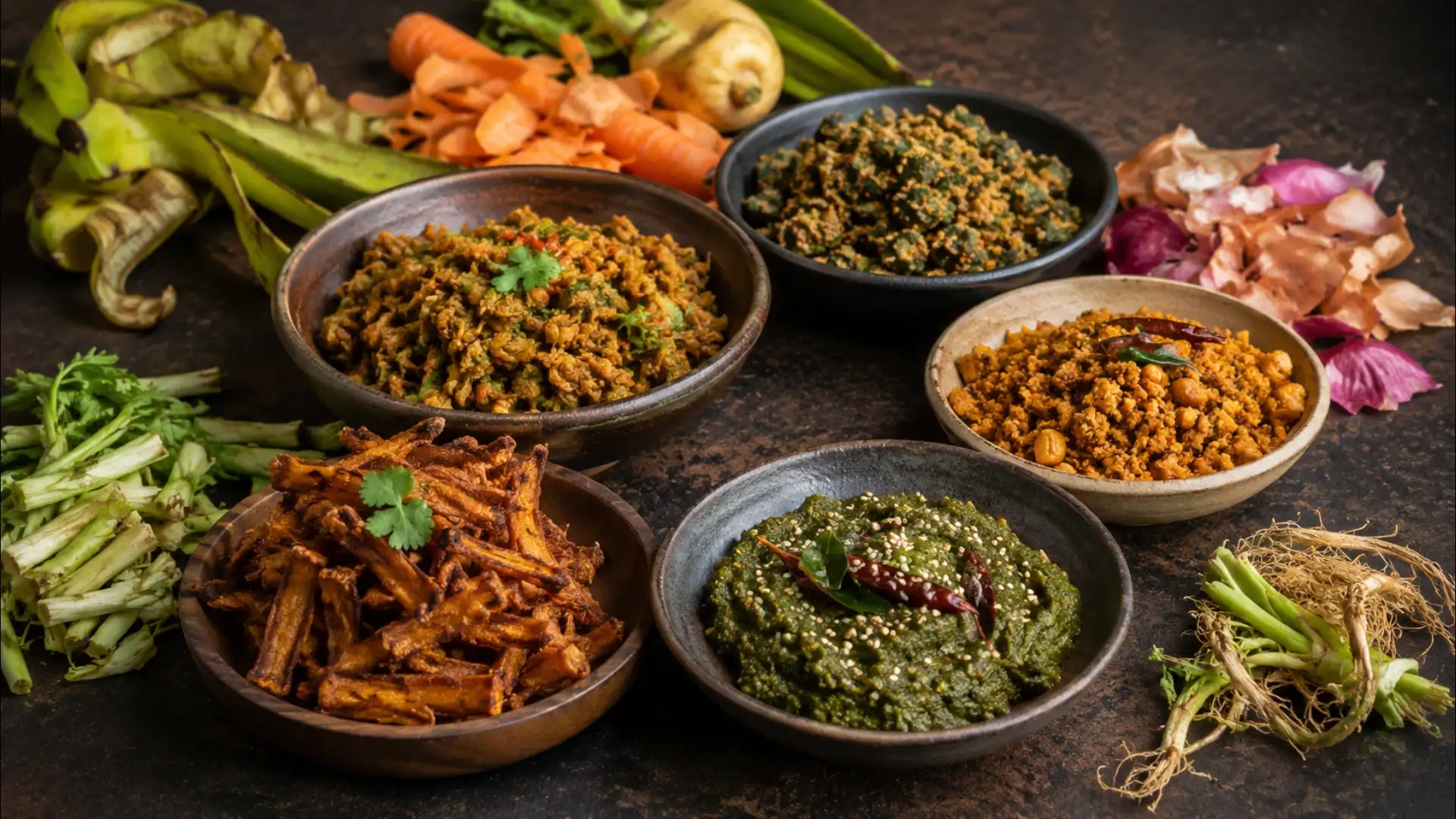
The peel can be finely chopped, softened and combined with spices, coconut, lentils or other ingredients depending on the regional recipe. Proper preparation is important because raw banana peel can be tough and fibrous.
The practice reflects an older approach to cooking in which the entire usable part of a plant was considered valuable rather than automatically treated as waste.
After removing the hard outer skin, the softer white portion can be chopped and prepared with spices. In different culinary traditions, watermelon rind has also been used in preserves and other preparations.
It is an especially interesting example of how traditional cooking can make use of seasonal ingredients beyond their most obvious edible portion.
Radish leaves, cauliflower leaves, pumpkin shoots and various vegetable stems can be cooked with spices or incorporated into regional dishes. In some communities, these parts are valued for their flavour and texture rather than regarded as leftovers.
The exact practice varies considerably by region because Indian agriculture produces a huge variety of local vegetables and leafy plants.
Before supermarkets made food easily available throughout the year, households had stronger incentives to make the most of seasonal produce. Food was often purchased locally, grown at home or sourced from nearby farms. Throwing away an edible part could mean throwing away something that had required considerable effort to grow.
Preservation and resourcefulness were therefore closely linked to everyday cooking.
Traditional Indian recipes cannot solve the entire problem, and not every discarded food part is safe to eat. Some plant parts may contain naturally occurring toxins or become difficult to digest, so recipes should always use ingredients known to be edible and properly prepared.
Still, these culinary traditions offer a useful lesson. Before “zero waste” became a modern sustainability slogan, many Indian kitchens were already practising a simple principle: use what you can, waste as little as possible and let generations of cooking knowledge decide what belongs in the bin and what belongs in the pan.
Sometimes, the most sustainable ingredient may be the one we have been throwing away.
Banana Peels Can Become a Proper Dish
Bananas are eaten across India, but the peel is often immediately discarded. In parts of southern India, however, banana peel has traditionally been used in cooked preparations.The peel can be finely chopped, softened and combined with spices, coconut, lentils or other ingredients depending on the regional recipe. Proper preparation is important because raw banana peel can be tough and fibrous.
The practice reflects an older approach to cooking in which the entire usable part of a plant was considered valuable rather than automatically treated as waste.
Watermelon Rind Has a Second Life
A juicy watermelon may look like a fruit with only one useful part, but its pale inner rind can also be cooked.After removing the hard outer skin, the softer white portion can be chopped and prepared with spices. In different culinary traditions, watermelon rind has also been used in preserves and other preparations.
It is an especially interesting example of how traditional cooking can make use of seasonal ingredients beyond their most obvious edible portion.
Vegetable Stems Often End Up in the Pan
Many Indian households have recipes for edible parts that modern cooking frequently ignores.Radish leaves, cauliflower leaves, pumpkin shoots and various vegetable stems can be cooked with spices or incorporated into regional dishes. In some communities, these parts are valued for their flavour and texture rather than regarded as leftovers.
You may also like
- In this Assam school, children pay their fees with plastic waste: How Akshar School is turning trash into a tool for education
- Raksha Bandhan 2026: Why August 28 Matters More Than August 27 2026
- AI is changing more than technology: Why the TOI AI Quotient Awards 2026 are also about the leaders behind the change
- The fire that witnessed Shiva and Parvati's wedding still burns in Uttarakhand: Couples are now choosing this sacred temple for getting married in place of fancy hotels
- When 'I'm fine' means anything but fine
The exact practice varies considerably by region because Indian agriculture produces a huge variety of local vegetables and leafy plants.
Why These Recipes Developed
The reason is partly cultural and partly practical.Before supermarkets made food easily available throughout the year, households had stronger incentives to make the most of seasonal produce. Food was often purchased locally, grown at home or sourced from nearby farms. Throwing away an edible part could mean throwing away something that had required considerable effort to grow.
Preservation and resourcefulness were therefore closely linked to everyday cooking.
Could Traditional Food Waste Ideas Matter Today?
Food waste has become an important environmental issue because wasted food also represents wasted water, land, energy and labour.Traditional Indian recipes cannot solve the entire problem, and not every discarded food part is safe to eat. Some plant parts may contain naturally occurring toxins or become difficult to digest, so recipes should always use ingredients known to be edible and properly prepared.
Still, these culinary traditions offer a useful lesson. Before “zero waste” became a modern sustainability slogan, many Indian kitchens were already practising a simple principle: use what you can, waste as little as possible and let generations of cooking knowledge decide what belongs in the bin and what belongs in the pan.
Sometimes, the most sustainable ingredient may be the one we have been throwing away.






Loving Newspoint? Download the app now
