
Why Do Indian Homes Have Different Traditions for Welcoming Guests? The Meaning Behind Everyday Rituals

In India, welcoming a guest is often about much more than opening the front door. From offering a glass of water to serving homemade snacks, everyday acts of hospitality reflect the values, customs and cultural traditions of a household. However, the way guests are welcomed can vary widely across regions, religions and communities.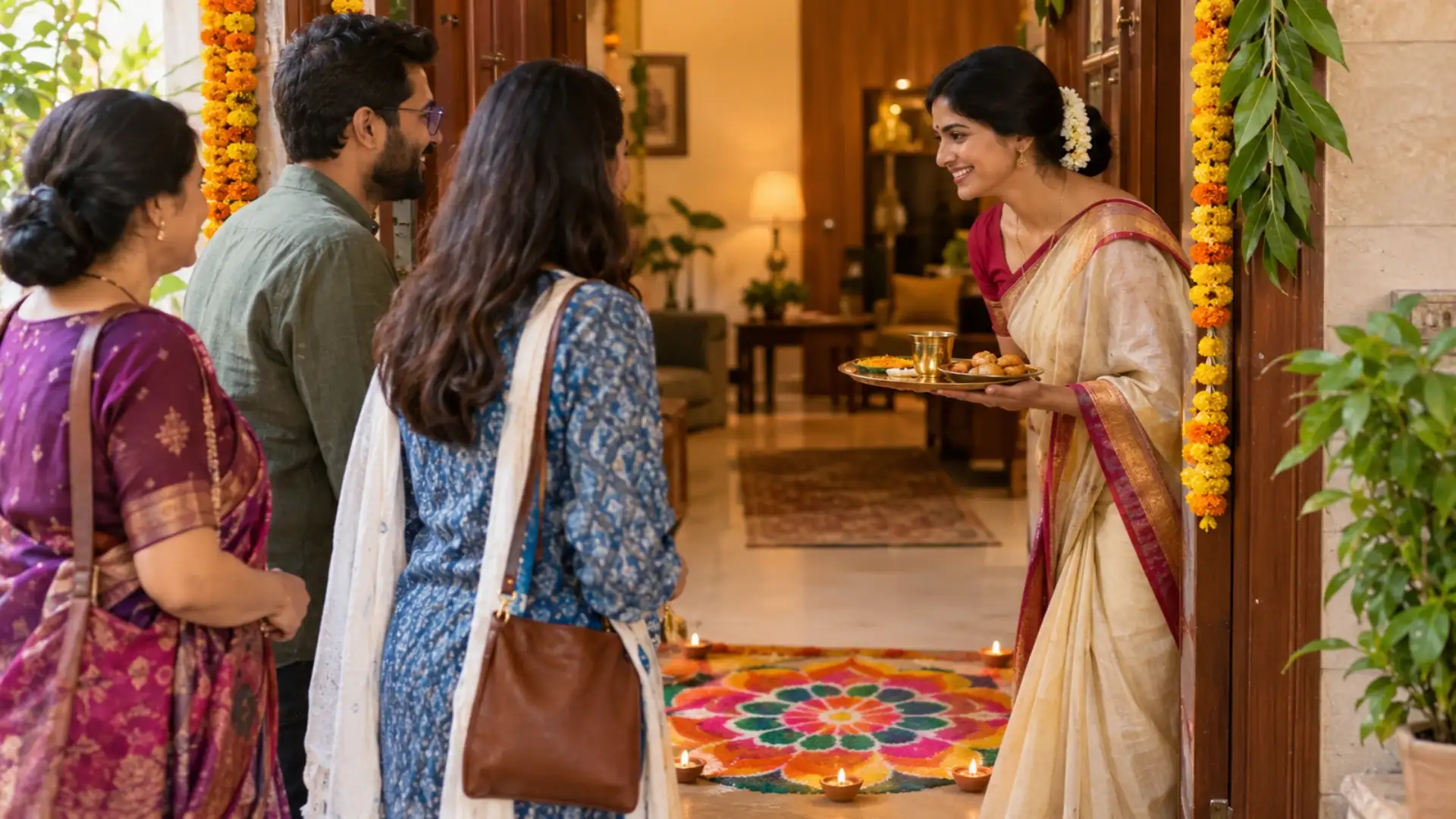
These Indian hospitality traditions are shaped by local customs, family practices and ideas about respect. Whether it is a greeting at the entrance or a carefully prepared meal, these small gestures offer a glimpse into India's diverse cultural heritage.
In many Indian households, this belief appears through simple gestures rather than elaborate arrangements. Offering water, asking about a guest's journey or inviting them to sit down are everyday ways of showing warmth. Although practices differ between families, the emphasis on making visitors feel welcome remains an important part of Indian hospitality.
In South India, kolam designs made with rice flour are a familiar sight outside many homes. In other parts of the country, colourful rangoli patterns may decorate entrances during Diwali, weddings and family celebrations. While these practices vary by region and household, they often make the entrance a welcoming space and reflect local artistic traditions.
Other greetings reflect local languages and customs. People may welcome visitors with a warm verbal greeting, a handshake or a traditional gesture associated with their community. These differences highlight how Indian hospitality combines shared values of respect with distinct regional identities.
The food offered can vary depending on the region, season and occasion. Some families serve local snacks, while others prepare sweets or special dishes for festivals and celebrations. Religious practices and dietary preferences may also influence what is served. Beyond the meal itself, sharing food creates opportunities for conversation and connection.
Christian families may also host visitors with meals and refreshments during celebrations, while numerous regional communities maintain their own welcoming rituals. These practices are not identical across every household, but they demonstrate how hospitality can express cultural identity, generosity and a sense of belonging.
Some families maintain elaborate festive rituals, while others follow simpler versions of the same customs. The details may change, but the intention often remains similar: to make guests feel comfortable and valued.
Although customs vary across regions, religions and families, hospitality continues to be an important part of how many Indian households express respect, generosity and warmth.
These Indian hospitality traditions are shaped by local customs, family practices and ideas about respect. Whether it is a greeting at the entrance or a carefully prepared meal, these small gestures offer a glimpse into India's diverse cultural heritage.
1. The Meaning Behind Welcoming Guests
The idea of treating guests with respect has deep roots in Indian culture. The Sanskrit expression Atithi Devo Bhava, meaning "the guest is equivalent to God", is often associated with Indian hospitality. It reflects the importance traditionally placed on making visitors feel comfortable, respected and cared for.In many Indian households, this belief appears through simple gestures rather than elaborate arrangements. Offering water, asking about a guest's journey or inviting them to sit down are everyday ways of showing warmth. Although practices differ between families, the emphasis on making visitors feel welcome remains an important part of Indian hospitality.
2. Why Entrances and Doorways Matter
In several Indian communities, the entrance to a home has cultural and symbolic significance. In many Hindu households, rangoli or kolam designs are created near doorways, particularly during festivals and special occasions. These patterns can represent welcome, auspiciousness and good fortune.In South India, kolam designs made with rice flour are a familiar sight outside many homes. In other parts of the country, colourful rangoli patterns may decorate entrances during Diwali, weddings and family celebrations. While these practices vary by region and household, they often make the entrance a welcoming space and reflect local artistic traditions.
3. Greetings That Reflect Regional Culture
The way people greet guests in India also depends on regional and cultural traditions. A namaste, often accompanied by folded hands, is widely recognised as a respectful greeting. In some communities, elders may be greeted by touching their feet as a sign of respect and seeking blessings.Other greetings reflect local languages and customs. People may welcome visitors with a warm verbal greeting, a handshake or a traditional gesture associated with their community. These differences highlight how Indian hospitality combines shared values of respect with distinct regional identities.
4. Why Offering Food Is So Important
Food is one of the most familiar expressions of hospitality in Indian homes. Offering water, tea, coffee, sweets or homemade snacks is a common way to make guests feel comfortable. In many households, refusing to let a visitor leave without offering something to eat is part of the family's idea of good hosting.The food offered can vary depending on the region, season and occasion. Some families serve local snacks, while others prepare sweets or special dishes for festivals and celebrations. Religious practices and dietary preferences may also influence what is served. Beyond the meal itself, sharing food creates opportunities for conversation and connection.
5. Hospitality Across Different Communities
India's diverse religious and cultural communities have their own ways of welcoming visitors. In many Sikh households and gurdwaras, the tradition of langar reflects the values of service, equality and sharing food with others. Muslim households may welcome guests with tea, dates, sweets or meals, depending on family and regional customs, particularly during festivals and gatherings.Christian families may also host visitors with meals and refreshments during celebrations, while numerous regional communities maintain their own welcoming rituals. These practices are not identical across every household, but they demonstrate how hospitality can express cultural identity, generosity and a sense of belonging.
6. How These Traditions Continue Today
Modern lifestyles have changed how people host guests, particularly in cities where apartments, busy schedules and smaller gatherings are common. Yet many Indian hospitality traditions continue through everyday habits such as offering refreshments, greeting elders respectfully and preparing food for visitors.Some families maintain elaborate festive rituals, while others follow simpler versions of the same customs. The details may change, but the intention often remains similar: to make guests feel comfortable and valued.
The Meaning Behind Indian Hospitality
Indian traditions for welcoming guests reflect the country's cultural diversity and shared appreciation for human connection. From rangoli at the entrance to a cup of tea offered after a long journey, these everyday rituals carry meanings that go beyond the gestures themselves.Although customs vary across regions, religions and families, hospitality continues to be an important part of how many Indian households express respect, generosity and warmth.
Next Story