
Golden Hour at Nine PM: Indian Places Where the Sun Sets Surprisingly Late

When you imagine twilight falling across the Indian subcontinent, you likely picture the sky darkening around six or seven in the evening. However, because the country spans nearly thirty degrees of longitude from east to west without daylight saving adjustments, local sunset times vary dramatically across different states. India operates on a single official time zone known as Indian Standard Time, calculated along the central meridian near Mirzapur in Uttar Pradesh. Because of this single clock system, Western regions situated thousands of kilometres west of the central meridian experience extended evening daylight hours, especially during summer months. While Eastern states like Arunachal Pradesh experience pitch black skies as early as four in the afternoon in winter, Western frontier towns stay illuminated long into the night. Exploring Indian places where the sun sets surprisingly late reveals how geographical coordinates, longitudinal width, and borderland landscapes create lingering golden hours.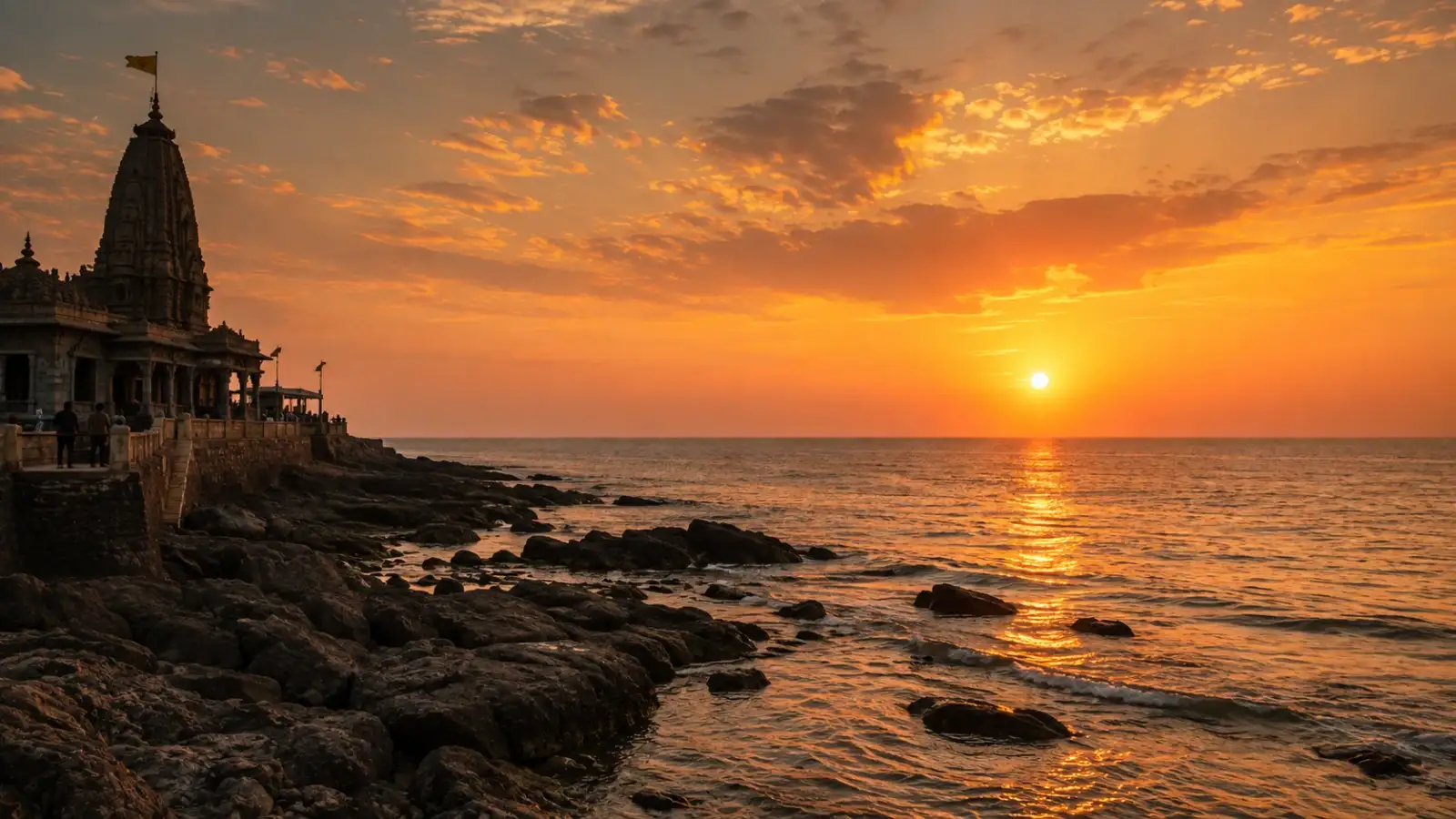
During the summer solstice in June, daylight lingers in Guhar Moti well past eight in the evening, with bright twilight glowing on the horizon until nearly nine at night. Local residents enjoy lingering twilight long after families in eastern cities like Kolkata or Guwahati have finished dinner in complete darkness. Watching the massive red sun sink slowly into the Arabian Sea waters while the clock reads past eight in the evening is a surreal experience for travellers visiting this remote western frontier.
During peak summer months, tourists riding camels across the Sam Sand Dunes can watch golden sunlight illuminate the desert landscape long past seven thirty in the evening. The dry desert air and clear atmospheric conditions stretch the evening light even further, creating an exceptionally long, lingering golden hour. Travelers can easily explore historic havelis, shop in open markets, and enjoy desert folk performances under natural daylight late into the night, making Jaisalmer a top destination for sunset photography.
Standing over three thousand five hundred metres above sea level, the thin atmospheric layer allows clear sunlight to penetrate the sky for longer periods. During summer, the sun sinks behind the towering Himalayan peaks around eight in the evening, but because of high altitude atmospheric reflection, dusk lasts for nearly an additional hour. Visitors sitting near the famous Shanti Stupa can gaze out over illuminated valley floors, winding rivers, and snow covered peaks bathed in soft purple light late into the night.
Because the land slopes directly into the open ocean toward the west, there are no mountain ranges or urban towers to block the setting sun. During summer, evening strolls along Porbandar beach or near the ancient Dwarkadhish temple take place under bright daylight until nearly eight in the evening. The long, gentle twilight allows locals and pilgrims to gather comfortably by the seashore, enjoying cool evening breezes long after the afternoon heat fades away.
Guhar Moti and Koteshwar in Gujarat at the western edge
Located in the Kutch district of Gujarat, the tiny hamlet of Guhar Moti and the nearby coastal shrine of Koteshwar hold the distinction of being the westernmost inhabited points in the entire country. Sitting right along the edge of the Arabian Sea near the border, these coastal locations experience the absolute latest sunset time anywhere in the nation.During the summer solstice in June, daylight lingers in Guhar Moti well past eight in the evening, with bright twilight glowing on the horizon until nearly nine at night. Local residents enjoy lingering twilight long after families in eastern cities like Kolkata or Guwahati have finished dinner in complete darkness. Watching the massive red sun sink slowly into the Arabian Sea waters while the clock reads past eight in the evening is a surreal experience for travellers visiting this remote western frontier.
Jaisalmer and the golden desert dunes of Rajasthan
Further north along the western border lies the iconic desert city of Jaisalmer, famous for its yellow sandstone fort and rolling Thar Desert sand dunes. Due to its far western longitude, Jaisalmer enjoys remarkably long summer afternoons and extended evening light.During peak summer months, tourists riding camels across the Sam Sand Dunes can watch golden sunlight illuminate the desert landscape long past seven thirty in the evening. The dry desert air and clear atmospheric conditions stretch the evening light even further, creating an exceptionally long, lingering golden hour. Travelers can easily explore historic havelis, shop in open markets, and enjoy desert folk performances under natural daylight late into the night, making Jaisalmer a top destination for sunset photography.
You may also like
- 'It had been our dream since childhood': Six sets of twins at one Kerala wedding, as twin brothers marry twin sisters, with twin priests and twin altar boys
- 5 easy DIY hacks to create a luxury plant corner without spending a fortune
- Why do some houses always smell good, even without room fresheners?
- Dog Parents Alert: 7 Common Kitchen Foods That Can Be Dangerous for Your Pet
- Karnataka man spent nearly 3 hours in the Arabian Sea; rescuer Eshwar Malpe swam almost 3 nautical miles to reach him and bring him back
Leh and the high altitude summer twilight of Ladakh
Heading into the high altitude mountain desert of northern India, Leh and the surrounding valleys of Ladakh offer another breathtaking example of late evening daylight. While Ladakh is situated further east than Gujarat, its high northern latitude and high altitude produce exceptionally long daylight hours during summer months.Standing over three thousand five hundred metres above sea level, the thin atmospheric layer allows clear sunlight to penetrate the sky for longer periods. During summer, the sun sinks behind the towering Himalayan peaks around eight in the evening, but because of high altitude atmospheric reflection, dusk lasts for nearly an additional hour. Visitors sitting near the famous Shanti Stupa can gaze out over illuminated valley floors, winding rivers, and snow covered peaks bathed in soft purple light late into the night.
Dwarka and Porbandar along the Kathiawar coastline
Returning to the coastal peninsula of Gujarat, ancient coastal towns like Dwarka and Porbandar experience some of the most extended evening light in southern Asia. Situated along the western shore of the Kathiawar peninsula, these sacred coastal destinations offer panoramic, unobstructed views of the ocean horizon.Because the land slopes directly into the open ocean toward the west, there are no mountain ranges or urban towers to block the setting sun. During summer, evening strolls along Porbandar beach or near the ancient Dwarkadhish temple take place under bright daylight until nearly eight in the evening. The long, gentle twilight allows locals and pilgrims to gather comfortably by the seashore, enjoying cool evening breezes long after the afternoon heat fades away.
Experiencing the wonder of western Indian daylight
Visiting Indian places where the sun sets surprisingly late highlights the incredible geographical scale of the subcontinent. Standing on a western shore watching twilight linger at nine at night offers a delightful reminder of how nature constantly bends our perception of time.





Loving Newspoint? Download the app now
