
Forget the Car Keys: Indian Places Where You Can Walk Through an Entire Town in an Hour

In an era of expanding urban concrete metropolises, high-speed flyovers, and endless bumper to bumper traffic jams, exploring a new destination on foot has become a luxury. In major modern cities, walking from one district to another takes hours of navigating crowded sidewalks, crossing chaotic multi-lane roads, and dodging traffic emissions. However, tucked away in quiet corners of the Indian subcontinent are remarkable settlements where the concept of urban transportation feels delightfully obsolete. These compact destinations were laid out centuries ago according to natural geography, historical river boundaries, or defensive hill perimeters. Because of their cozy physical boundaries, you can park your vehicle at the edge and casually stroll across the entire town in under sixty minutes. Exploring Indian places where you can walk through an entire town in an hour reveals how Landour, Mawlynnong, Fontainhas, and Malana offer intimate, foot-friendly travel experiences.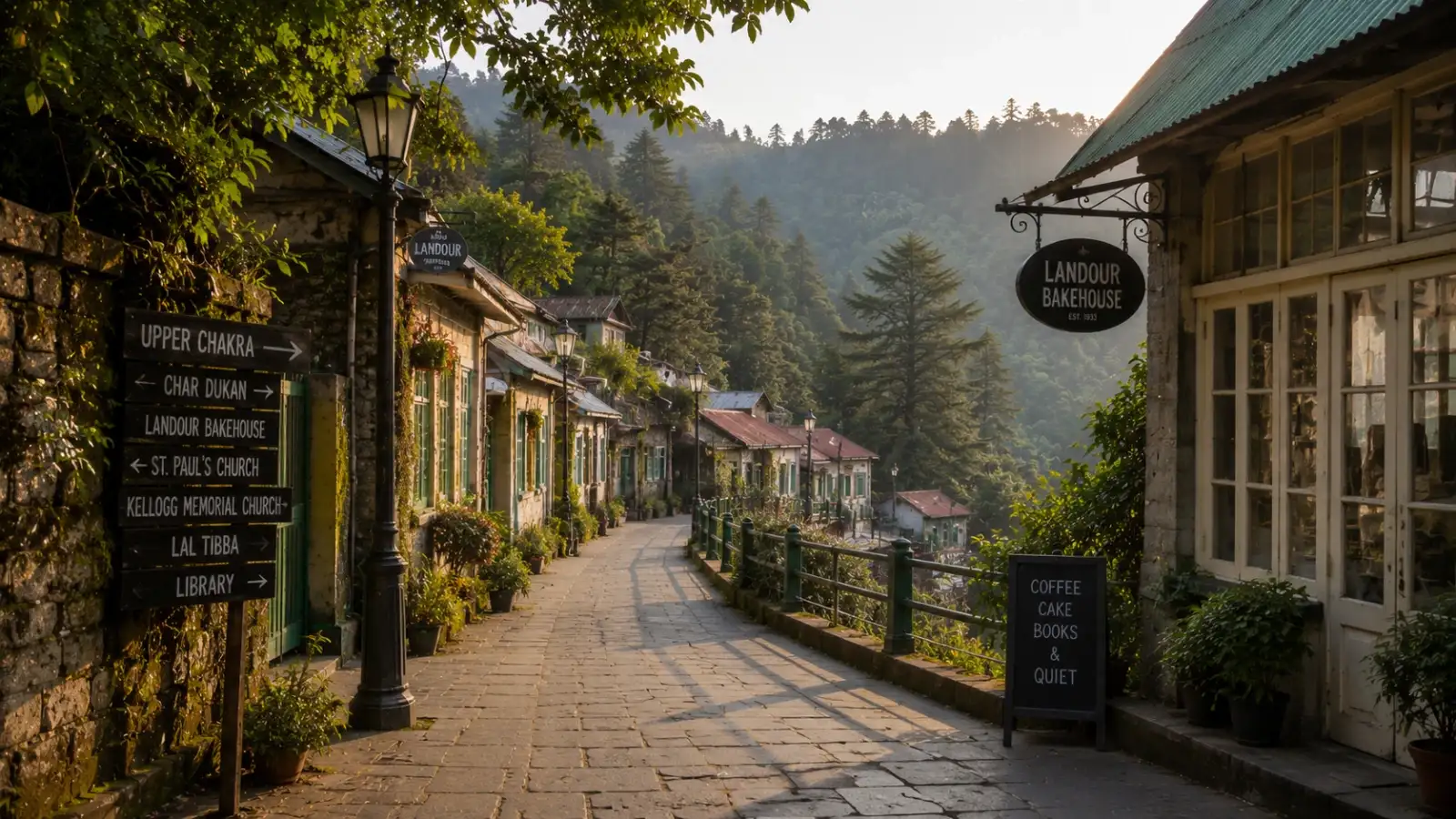
The entire settlement centers around a famous circular walking path known as the Upper Chakra. Starting at the iconic Char Dukan bakery cluster, you can follow the narrow paved lane shaded by majestic pine, deodar, and oak trees, passing quiet stone cottages, historic churches, and quiet cemeteries. In less than an hour of gentle walking, you complete a full loop around the mountain top, returning to your starting spot while taking in unobstructed views of snow-capped Himalayan peaks along the way.
Visitors park their vehicles at the village entrance parking lot and step onto smooth stone pathways lined with colorful flower beds, bamboo dustbins, and traditional wooden homes. Walking from the northern entrance past traditional Khasi homes, climbing up to the bamboo sky view tower, and reaching the natural living root bridge stream on the southern edge takes just forty-five minutes. The village is so compact and meticulously maintained that every step feels like strolling through a private botanical garden.
The narrow cobblestone lanes are flanked by brightly painted Portuguese colonial houses featuring vibrant red, yellow, and cobalt blue walls, wrought-iron balconies, and tiled roofs. Because the narrow alleys were constructed before modern motorcars existed, driving through them is difficult, making walking the ideal way to explore. You can walk from the historic Saint Sebastian Chapel, explore art galleries, pass cozy heritage cafes, and reach the Ourem Creek border in under forty-five minutes.
After completing a short walk up from the valley road, you enter a settlement where time seems to stand still. Wooden houses built with slate roofs line narrow stone alleyways centered around a historic temple square. Walking across the entire village, observing local weaving traditions, and returning to the outer valley rim takes well under an hour, offering a fascinating glimpse into an ancient way of life.
Landour in Uttarakhand and the tranquil mountain loop
Perched high on a quiet forested ridge above the bustling town of Mussoorie, the tiny historic cantonment settlement of Landour is a masterclass in pedestrian mountain living. Built by the British in the early nineteenth century as a sanatorium for soldiers, Landour was mapped along a compact cliff top ridge.The entire settlement centers around a famous circular walking path known as the Upper Chakra. Starting at the iconic Char Dukan bakery cluster, you can follow the narrow paved lane shaded by majestic pine, deodar, and oak trees, passing quiet stone cottages, historic churches, and quiet cemeteries. In less than an hour of gentle walking, you complete a full loop around the mountain top, returning to your starting spot while taking in unobstructed views of snow-capped Himalayan peaks along the way.
Mawlynnong in Meghalaya and its pristine garden pathways
Located in the lush East Khasi Hills of Meghalaya near the Bangladesh border, Mawlynnong holds national fame as one of the cleanest villages in Asia. What makes Mawlynnong so special for walkers is its complete absence of vehicular traffic inside the central living area.Visitors park their vehicles at the village entrance parking lot and step onto smooth stone pathways lined with colorful flower beds, bamboo dustbins, and traditional wooden homes. Walking from the northern entrance past traditional Khasi homes, climbing up to the bamboo sky view tower, and reaching the natural living root bridge stream on the southern edge takes just forty-five minutes. The village is so compact and meticulously maintained that every step feels like strolling through a private botanical garden.
You may also like
- 'It had been our dream since childhood': Six sets of twins at one Kerala wedding, as twin brothers marry twin sisters, with twin priests and twin altar boys
- Why Shiva Appeared After a Demon Attacked His Lingam
- 5 easy DIY hacks to create a luxury plant corner without spending a fortune
- Why do some houses always smell good, even without room fresheners?
- Dog Parents Alert: 7 Common Kitchen Foods That Can Be Dangerous for Your Pet
Fontainhas in Goa and the historic Portuguese Latin Quarter
If you travel down to the sunny coastal city of Panaji in Goa, the historic neighborhood of Fontainhas presents a European style, foot-friendly quarter that feels like a world away from surrounding beach resorts. Established in the late nineteenth century at the foot of Altinho Hill, Fontainhas was laid out as a compact residential zone.The narrow cobblestone lanes are flanked by brightly painted Portuguese colonial houses featuring vibrant red, yellow, and cobalt blue walls, wrought-iron balconies, and tiled roofs. Because the narrow alleys were constructed before modern motorcars existed, driving through them is difficult, making walking the ideal way to explore. You can walk from the historic Saint Sebastian Chapel, explore art galleries, pass cozy heritage cafes, and reach the Ourem Creek border in under forty-five minutes.
Malana in Himachal Pradesh and the secluded valley village
Deep inside the Kullu Valley of Himachal Pradesh lies Malana, an ancient, isolated mountain village renowned for its unique social system, ancient parliament, and distinct local culture. Because motor vehicles are strictly banned from entering the sacred village boundaries to protect local customs, access is strictly limited to foot travel.After completing a short walk up from the valley road, you enter a settlement where time seems to stand still. Wooden houses built with slate roofs line narrow stone alleyways centered around a historic temple square. Walking across the entire village, observing local weaving traditions, and returning to the outer valley rim takes well under an hour, offering a fascinating glimpse into an ancient way of life.
Rediscovering slow travel on two feet
Discovering Indian places where you can walk through an entire town in an hour reminds us of the joy of slow, mindful exploration. Leaving cars behind allows you to notice subtle architectural details, smell local flora, converse with friendly residents, and truly absorb your surroundings.





Loving Newspoint? Download the app now
