
Indian Prints That Have Survived Generations and Still Look Stylish Today

Some fashion trends disappear within a few seasons. Others survive because they carry more than visual appeal. Indian textile prints such as Ajrakh , Bagru , Sanganeri and Kalamkari have been passed through generations, with their colours, motifs and techniques reflecting regional histories and artistic traditions. Block printing itself is an old textile practice, while Kalamkari developed distinctive traditions in Andhra Pradesh, including hand-painted and printed fabrics using natural dyes. Today these prints appear on saris, kurtas, dresses, shirts, dupattas and home textiles. Their survival is not simply about tradition. Their strong visual identity makes them remarkably adaptable.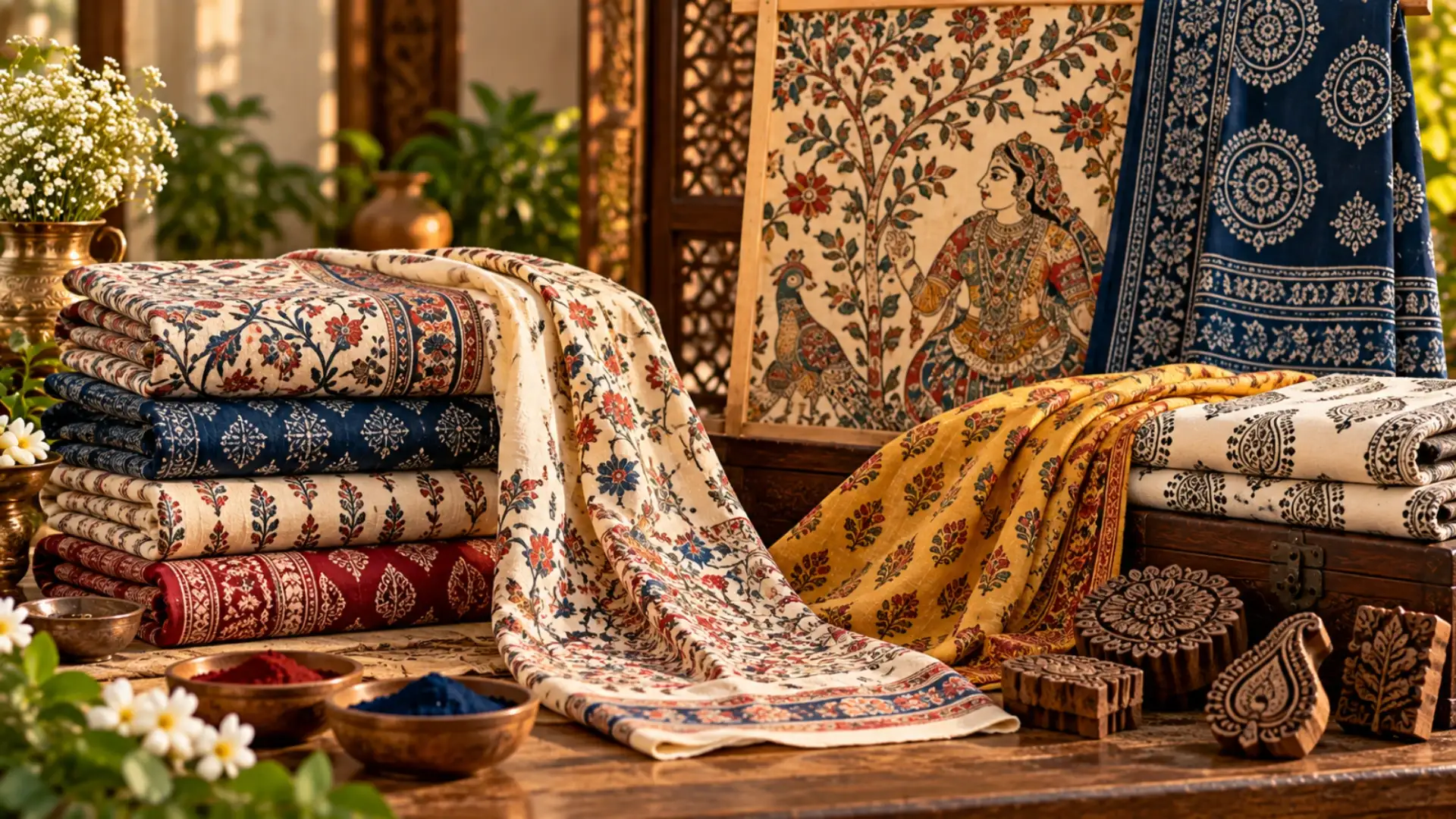
The design language works particularly well in contemporary fashion because geometric prints can look sophisticated without requiring elaborate embroidery.
A traditional Ajrakh textile can therefore be turned into a shirt, jacket, dress or relaxed co-ord while retaining its original character.
Traditional wooden blocks are used to create repeating motifs, producing the slight variations that distinguish hand printing from perfectly uniform digital patterns.
Modern versions can be found in everyday kurtas, dresses, scarves and shirts.
According to the Centre for Cultural Resources and Training, the term combines the words "kalam", meaning pen, and "kari", meaning work. The tradition is associated particularly with Srikalahasti and Machilipatnam in Andhra Pradesh.
Historically, Srikalahasti developed strong connections with temple traditions and mythological storytelling, while Machilipatnam became associated with designs influenced by Persian tastes.
A paisley, floral or geometric motif can look traditional when used on a sari and entirely contemporary when placed on a cropped jacket or oversized shirt.
The Indian government-backed India Handmade marketplace continues to feature Ajrakh, Bagru, Kalamkari, Ikat, Bandhani, Madhubani and numerous other print and textile traditions across its product ecosystem.
That is why the future of Indian prints may depend less on keeping them exactly as they were and more on allowing them to enter new silhouettes, new wardrobes and new generations.
The motifs may be centuries old, but fashion gives them a new life every time someone chooses to wear them.
Ajrakh and the Power of Geometry
Ajrakh is recognised for its structured geometric patterns and rich colour combinations.The design language works particularly well in contemporary fashion because geometric prints can look sophisticated without requiring elaborate embroidery.
A traditional Ajrakh textile can therefore be turned into a shirt, jacket, dress or relaxed co-ord while retaining its original character.
Bagru Keeps Block Printing Relevant
Bagru printing from Rajasthan is another example of a craft that has moved successfully between generations.Traditional wooden blocks are used to create repeating motifs, producing the slight variations that distinguish hand printing from perfectly uniform digital patterns.
Modern versions can be found in everyday kurtas, dresses, scarves and shirts.
Kalamkari Carries Stories
Kalamkari is particularly interesting because it can function almost like visual storytelling.According to the Centre for Cultural Resources and Training, the term combines the words "kalam", meaning pen, and "kari", meaning work. The tradition is associated particularly with Srikalahasti and Machilipatnam in Andhra Pradesh.
Historically, Srikalahasti developed strong connections with temple traditions and mythological storytelling, while Machilipatnam became associated with designs influenced by Persian tastes.
Why These Prints Still Work Today
The strength of Indian prints lies partly in their ability to be separated from their original context.A paisley, floral or geometric motif can look traditional when used on a sari and entirely contemporary when placed on a cropped jacket or oversized shirt.
The Indian government-backed India Handmade marketplace continues to feature Ajrakh, Bagru, Kalamkari, Ikat, Bandhani, Madhubani and numerous other print and textile traditions across its product ecosystem.
Tradition Survives Through Adaptation
A print does not remain alive simply because people preserve old examples in museums. It survives when artisans continue producing it and consumers continue finding reasons to wear it.That is why the future of Indian prints may depend less on keeping them exactly as they were and more on allowing them to enter new silhouettes, new wardrobes and new generations.
The motifs may be centuries old, but fashion gives them a new life every time someone chooses to wear them.
Next Story