
From Quiet Streets to Cultural Carnivals: Indian Towns That Completely Change During One Festival

Across the vast geography of India, small settlements often move at a calm, predictable daily pace. Local residents go about their morning routines, shops open quietly along narrow lanes, and the surrounding countryside remains peaceful for most of the year. However, when specific sacred dates or seasonal milestones arrive, a remarkable physical and cultural transformation takes place.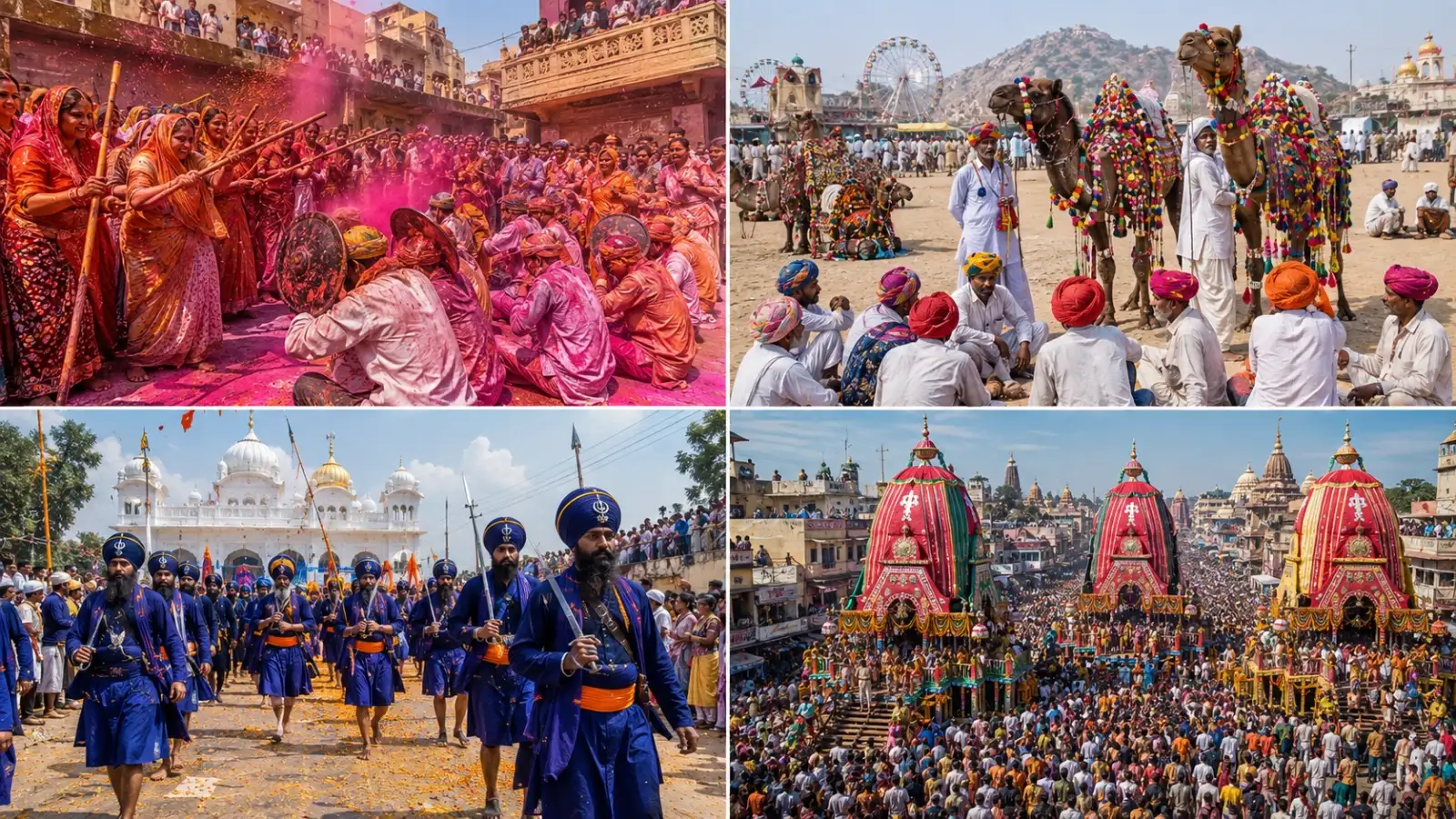
Sleepy hamlets, historic desert outposts, and quiet river settlements suddenly shed their everyday appearance to become sprawling, vibrant stages for grand human gatherings. Streets fill with colorful processions, ancient folk melodies echo through the air, and thousands of visiting pilgrims or travelers flood local markets. Exploring Indian towns that completely change during one festival reveals how deeply spiritual customs, regional heritage, and community energy can redefine a geographic location overnight.
The town's narrow stone alleys are flooded with vibrant gulal powder, floral scents, and thousands of eager spectators. In a unique re-enactment of ancient Krishna mythology, local women playfully beat visiting men from neighboring Nandgaon with long wooden sticks called laths, while the men use woven shields to defend themselves. Courtyards, rooftops, and street corners transform into a sea of red, orange, and yellow hues, turning this humble town into one of the most energetic festive epicenters on Earth.
Virtually overnight, quiet desert plains transform into a sprawling tented city filled with over fifty thousand camels, horses, and cattle. Nomadic traders, folk musicians, fire dancers, and international tourists converge on the town. The tranquil atmosphere gives way to vibrant livestock parades, turban-tying competitions, ferris wheels, and bustling handicraft bazaars, temporarily making this compact town a global spectacle.
Established by Guru Gobind Singh Ji in the seventeenth century, this festival turns the entire city into a display of martial arts, bravery, and community service. Nihang warriors clad in electric blue robes and massive, weapon-adorned turbans march through the streets. The town echoes with horse racing displays, mock sword battles, traditional archery, and poetry recitations. Massive free community kitchens feed millions of visitors, transforming the quiet pilgrim center into a majestic celebration of heritage.
The main grand avenue of the town is cleared to accommodate three gigantic, hand-carved wooden chariots carrying the deities. Over a million devotees gather on the streets, pulling the heavy rope strands with their bare hands amid chanting, drumming, and flying flower petals. Temporary lodging camps, street food stalls, and devotional music stages spring up in every neighborhood, turning the coastal town into a massive open-air sea of faith and devotion for days on end.
Sleepy hamlets, historic desert outposts, and quiet river settlements suddenly shed their everyday appearance to become sprawling, vibrant stages for grand human gatherings. Streets fill with colorful processions, ancient folk melodies echo through the air, and thousands of visiting pilgrims or travelers flood local markets. Exploring Indian towns that completely change during one festival reveals how deeply spiritual customs, regional heritage, and community energy can redefine a geographic location overnight.
Barsana in Uttar Pradesh and the dramatic energy of Lathmar Holi
Nestled quietly near Mathura in Uttar Pradesh, Barsana is a small, peaceful town revered as the childhood home of Radha. For nearly eleven months of the year, it remains a tranquil destination where devotees visit historic hilltop temples to offer quiet prayers. However, as the spring festival of Holi approaches, Barsana undergoes a fiery, chaotic metamorphosis during Lathmar Holi.The town's narrow stone alleys are flooded with vibrant gulal powder, floral scents, and thousands of eager spectators. In a unique re-enactment of ancient Krishna mythology, local women playfully beat visiting men from neighboring Nandgaon with long wooden sticks called laths, while the men use woven shields to defend themselves. Courtyards, rooftops, and street corners transform into a sea of red, orange, and yellow hues, turning this humble town into one of the most energetic festive epicenters on Earth.
Pushkar in Rajasthan and the desert transformation of the Pushkar Fair
Situated beside a sacred lake on the edge of the Thar Desert, Pushkar is normally a serene, spiritual town known for its peaceful bathing ghats and rare Brahma Temple. The tempo of life here is traditionally slow, governed by gentle temple bells and morning prayers. Everything changes dramatically during the autumn month of Kartik Purnima, when the world-famous Pushkar Fair takes over the surrounding sand dunes.You may also like
- You probably know your credit score, but do you know your physical fitness index?
- 7 small everyday habits that are ageing your skin faster than time
- Samsung Health's new score tells you what your heart has been trying to say
- BTS stills from a photo session on campus
- Say Goodbye to Daily Statins? Breakthrough Gene Therapy 'VERVE-102' Cuts Bad Cholesterol by 62% With Just One IV Injection
Virtually overnight, quiet desert plains transform into a sprawling tented city filled with over fifty thousand camels, horses, and cattle. Nomadic traders, folk musicians, fire dancers, and international tourists converge on the town. The tranquil atmosphere gives way to vibrant livestock parades, turban-tying competitions, ferris wheels, and bustling handicraft bazaars, temporarily making this compact town a global spectacle.
Anandpur Sahib in Punjab and the martial grandeur of Hola Mohalla
Located in the scenic foothills of the Shivalik range, Anandpur Sahib is a calm, historic city that serves as one of the most important spiritual seats in Sikhism. For most of the year, pilgrims visit its gleaming white gurdwaras to pray in serene silence. However, immediately following the day of Holi, Anandpur Sahib comes alive during the grand three-day festival of Hola Mohalla.Established by Guru Gobind Singh Ji in the seventeenth century, this festival turns the entire city into a display of martial arts, bravery, and community service. Nihang warriors clad in electric blue robes and massive, weapon-adorned turbans march through the streets. The town echoes with horse racing displays, mock sword battles, traditional archery, and poetry recitations. Massive free community kitchens feed millions of visitors, transforming the quiet pilgrim center into a majestic celebration of heritage.
Puri in Odisha during the majestic wooden chariot procession of Rath Yatra
Puri is a coastal town in Odisha famous for its long ocean beaches and the massive Jagannath Temple. While it attracts steady waves of visitors throughout the year, the town completely changes during the annual Rath Yatra chariot festival.The main grand avenue of the town is cleared to accommodate three gigantic, hand-carved wooden chariots carrying the deities. Over a million devotees gather on the streets, pulling the heavy rope strands with their bare hands amid chanting, drumming, and flying flower petals. Temporary lodging camps, street food stalls, and devotional music stages spring up in every neighborhood, turning the coastal town into a massive open-air sea of faith and devotion for days on end.
Experiencing the living heartbeat of Indian culture
Visiting Indian towns that completely change during one festival allows travelers to witness the extraordinary power of collective tradition. These temporary, grand transformations prove that culture in the Indian subcontinent is not locked away in static museums, but lives dynamically through the changing rhythms of its historic towns.





Loving Newspoint? Download the app now
