
How Much Protein Does an Average Indian Vegetarian Diet Really Deliver?

Protein has become one of the loudest words in modern fitness culture. Social media makes it easy to believe that every meal needs a protein shake, a scoop of powder or a carefully measured portion of some fashionable high-protein food. For Indian vegetarians, that conversation can be especially confusing. Traditional meals already contain dal, roti, rice, curd, milk, beans, chana and other protein sources, yet many fitness plans suggest that a vegetarian diet is automatically too low in protein. The reality sits somewhere in between. A well-planned vegetarian diet can meet protein requirements, but the typical meal pattern may not always make that easy.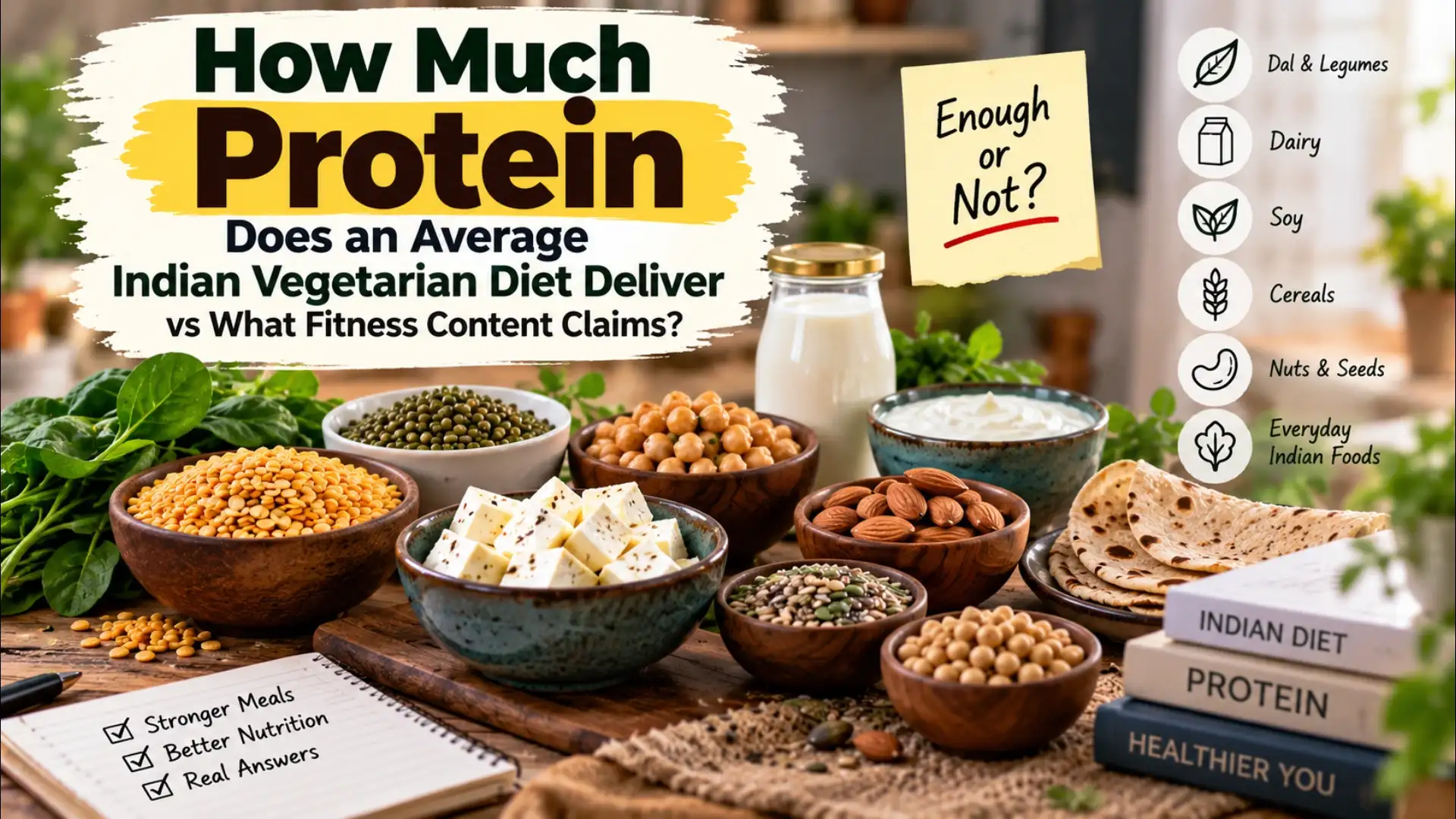
Indian dietary research has found that vegetarian diets can be nutritionally adequate while generally providing less protein than comparable non-vegetarian diets. One large Indian migration study found that vegetarians consumed significantly less protein than non-vegetarians, while still broadly meeting recommended nutritional requirements. So the idea that vegetarian automatically means protein deficient is too simplistic.
This is one reason traditional combinations such as dal with rice or roti with dal make nutritional sense. A diverse vegetarian or vegan diet can provide adequate protein when foods are appropriately combined. In other words, the Indian thali has been doing some protein mathematics long before fitness influencers started talking about macros.
Someone training seriously for muscle gain may have different needs from a sedentary adult. Body size, training volume, age, total calorie intake and fitness goals all influence what makes sense.
This is where online fitness advice can become misleading. A person may genuinely benefit from eating more protein, but that does not mean every vegetarian needs 120 or 150 grams a day.
None of those foods is inherently problematic. The problem is that protein becomes an afterthought. Adding curd to lunch, increasing the dal portion, including chana or rajma regularly, choosing paneer or tofu when appropriate, and adding soy foods can change the overall picture without turning every meal into a bodybuilding meal.
So before reaching for a protein powder, look at the ordinary food already on the plate. For many people, the first improvement is not a supplement. It is simply making dal, beans, dairy, soy, nuts and other protein-rich foods a more deliberate part of everyday meals.
The Average Plate Is Not Necessarily Protein-Free
Dal, rajma, chana, peas, soy products, dairy, nuts and seeds all contribute protein. Even cereals provide protein, although their amino-acid profiles differ from those of many pulses and dairy foods.Indian dietary research has found that vegetarian diets can be nutritionally adequate while generally providing less protein than comparable non-vegetarian diets. One large Indian migration study found that vegetarians consumed significantly less protein than non-vegetarians, while still broadly meeting recommended nutritional requirements. So the idea that vegetarian automatically means protein deficient is too simplistic.
The Bigger Issue: What Kind of Protein?
Protein quantity is only part of the story. Indian diets have historically derived a substantial share of their protein from cereals. Research has pointed out that cereals tend to have lower levels of certain essential amino acids, particularly lysine, compared with pulses.This is one reason traditional combinations such as dal with rice or roti with dal make nutritional sense. A diverse vegetarian or vegan diet can provide adequate protein when foods are appropriately combined. In other words, the Indian thali has been doing some protein mathematics long before fitness influencers started talking about macros.
You may also like
- Essential Hindi Terms for Travelers in India
- Essential Travel Tips for Hartalika Teej Celebrations
- Fifth Disease Explained: What Parents Need to Know
- American flight attendant reveals why you should never eat off airplane's tray tables: “Why do people do this?”
- Smartphone Overuse Causes Sharp Decline in Teenagers' Math and Science Scores
So How Much Protein Do We Actually Need?
The ICMR-NIN recommended dietary allowance for healthy Indian adults is 0.83 grams of protein per kilogram of body weight per day. For a 65 kg adult, that works out to roughly 54 grams a day. That number is a population-level recommendation, not a universal fitness target.Someone training seriously for muscle gain may have different needs from a sedentary adult. Body size, training volume, age, total calorie intake and fitness goals all influence what makes sense.
This is where online fitness advice can become misleading. A person may genuinely benefit from eating more protein, but that does not mean every vegetarian needs 120 or 150 grams a day.
Where Vegetarian Diets Often Fall Short
The problem is frequent distribution. Breakfast may be mostly tea and toast. Lunch may contain rice, roti and a small serving of dal. Evening snacks may be biscuits or namkeen. Dinner might again revolve around roti and vegetables with only a modest portion of pulses.None of those foods is inherently problematic. The problem is that protein becomes an afterthought. Adding curd to lunch, increasing the dal portion, including chana or rajma regularly, choosing paneer or tofu when appropriate, and adding soy foods can change the overall picture without turning every meal into a bodybuilding meal.
The Practical Answer
An Indian vegetarian diet does not need to imitate a Western fitness diet to provide protein. The more useful question is whether protein-rich foods appear consistently across the day. ICMR-NIN also emphasises that a varied plant-based diet can meet protein requirements and that protein quality improves when cereals and pulses are combined.So before reaching for a protein powder, look at the ordinary food already on the plate. For many people, the first improvement is not a supplement. It is simply making dal, beans, dairy, soy, nuts and other protein-rich foods a more deliberate part of everyday meals.






Loving Newspoint? Download the app now
