
Indian Village Foods That Deserve Global Attention

Some of India's most remarkable foods are not served in luxury hotels or fashionable restaurants. They are prepared in village kitchens, cooked over simple stoves and made with ingredients that may have travelled only a few kilometres from field, forest or river to plate. These foods are often overlooked because they do not fit neatly into the international image of Indian cuisine. Yet many are practical, nutritious and deeply connected to local environments. From millet-based dishes to fermented foods, forest greens and pulse preparations, Indian village food offers a different way of understanding both sustainability and culinary heritage.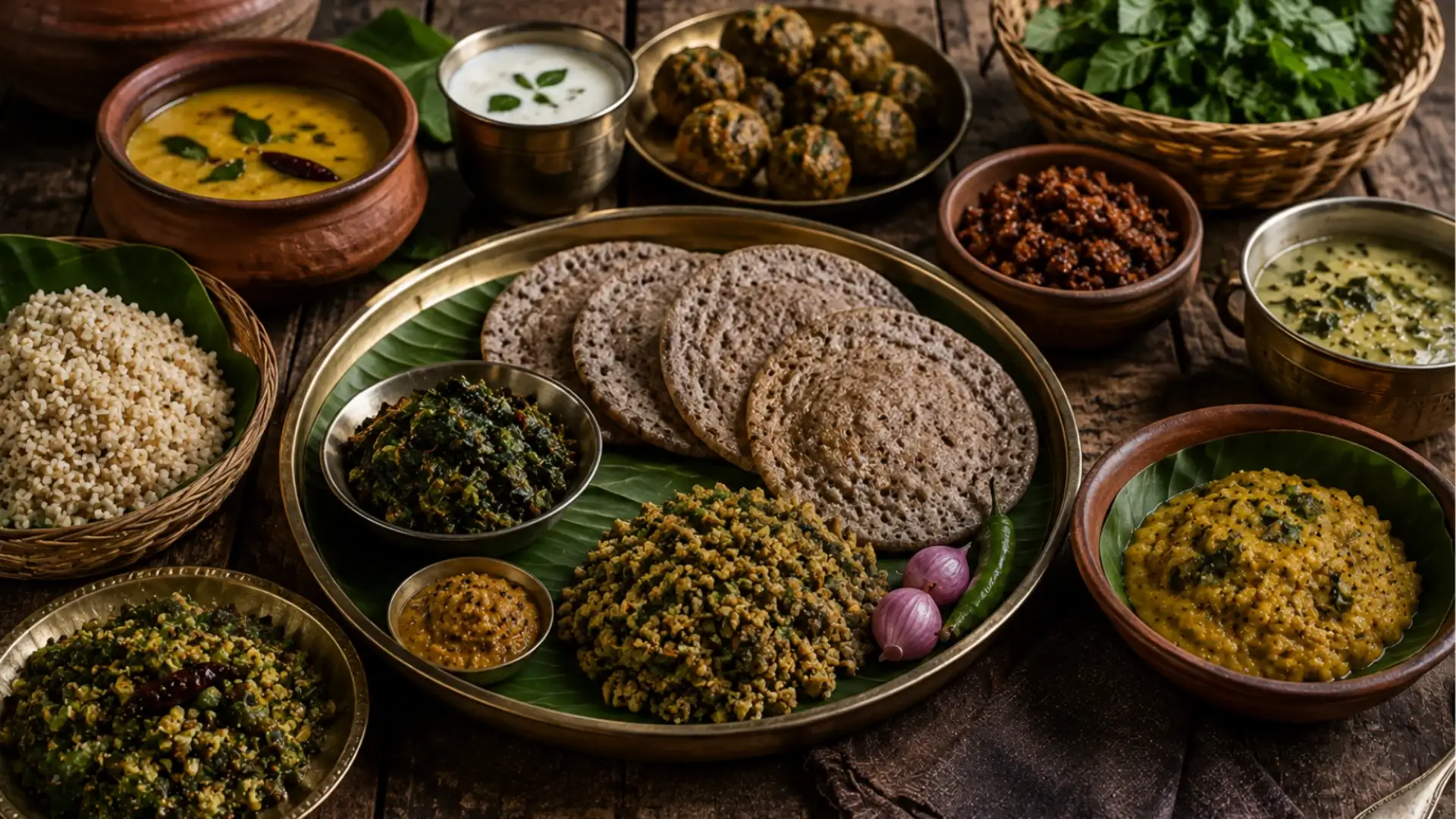
Jharkhand provides a striking example. Foods such as dhuska, chilka roti, kurthi dal and seasonal rugdha demonstrate how rice, pulses and forest resources have shaped local cooking. Rugdha, in particular, is a seasonal monsoon delicacy, showing how closely some foods remain tied to natural cycles.
The recent revival of millets is especially interesting because it is not simply a modern health trend. In many communities, these grains never disappeared. What changed was their visibility.
Fermentation, sun-drying, smoking, grinding, steaming and slow cooking allow communities to preserve food and transform inexpensive ingredients into distinctive dishes. Traditional recipes often developed precisely because people needed food to survive seasonal shortages and make the most of what was available.
India's village kitchens offer useful lessons because many traditional meals are built around seasonal ingredients and relatively simple processing.
The next global food trend may therefore not come from an experimental restaurant. It could come from a village recipe that has quietly survived for generations.
India's culinary future may depend partly on remembering what its villages never forgot.
Food Built Around What the Land Provides
Village cuisine has historically been shaped by availability. Farmers and forest communities developed recipes around grains, pulses, vegetables, seasonal produce and locally gathered ingredients.Jharkhand provides a striking example. Foods such as dhuska, chilka roti, kurthi dal and seasonal rugdha demonstrate how rice, pulses and forest resources have shaped local cooking. Rugdha, in particular, is a seasonal monsoon delicacy, showing how closely some foods remain tied to natural cycles.
Millets Have a Much Bigger Story
Across rural India, traditional grains such as ragi, bajra, jowar and kodo millet have long been used in everyday meals. They are now receiving renewed attention because of their nutritional qualities and their suitability to several dryland farming systems.The recent revival of millets is especially interesting because it is not simply a modern health trend. In many communities, these grains never disappeared. What changed was their visibility.
You may also like
- A town in the Netherlands will not let you live there unless you grow food on at least half of your land
- From beauty to self-care: Cosmetics are becoming everyday essentials
- Four things every diner should check before ordering food
- In Pune's Camp area, Solanki Booksellers has become an iconic landmark for bibliophiles
- Hip-hop artiste Addy TPC on Blitz 26: Consistency has become my biggest creative statement
Simple Cooking Can Be Remarkably Sophisticated
Village food is sometimes dismissed as basic because it does not rely on expensive ingredients. That misses the skill involved.Fermentation, sun-drying, smoking, grinding, steaming and slow cooking allow communities to preserve food and transform inexpensive ingredients into distinctive dishes. Traditional recipes often developed precisely because people needed food to survive seasonal shortages and make the most of what was available.
Why the World Should Pay Attention
The renewed interest in traditional Indian foods comes at an important moment. Climate change, biodiversity loss and concerns about food security are encouraging researchers and consumers to reconsider resilient local crops and food systems.India's village kitchens offer useful lessons because many traditional meals are built around seasonal ingredients and relatively simple processing.
The next global food trend may therefore not come from an experimental restaurant. It could come from a village recipe that has quietly survived for generations.
India's culinary future may depend partly on remembering what its villages never forgot.






Loving Newspoint? Download the app now
