
Hidden Heritage: Indian Villages Famous For One Unusual Craft

Across the vast countryside of India, rural life often revolves around agriculture, seasonal harvests, and quiet local markets. Yet, hidden within distant valleys, coastal plains, and forest margins are remarkable settlements where entire populations dedicate their lives to a single, extraordinary artistic skill. In these unique artisan settlements, virtually every household functions as an active workshop.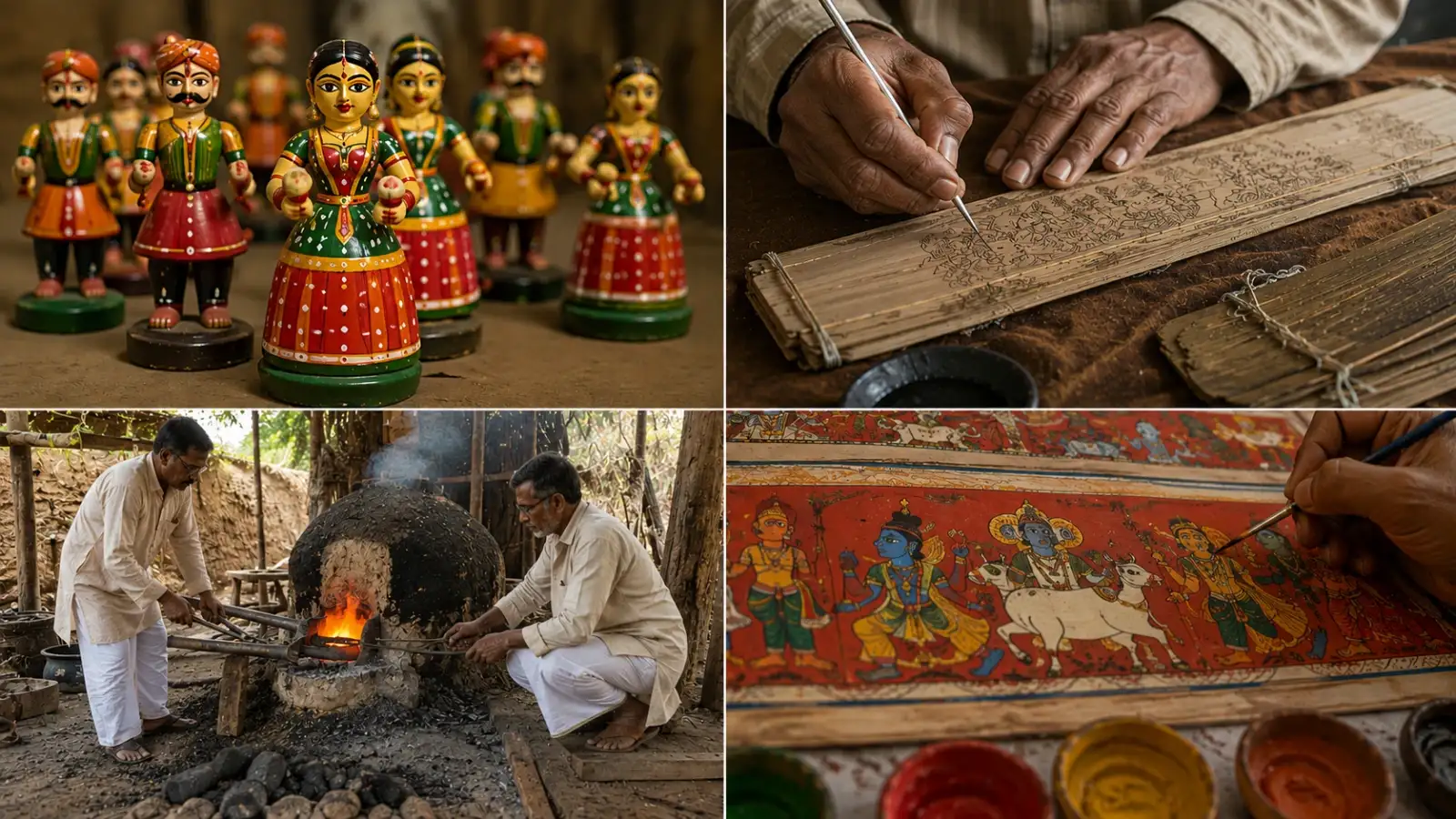
Techniques, secrets, and raw material wisdom are handed down directly from parents to children over centuries, preserving trades that exist nowhere else on Earth. Instead of mass factory production, these artisan hubs rely on natural metal alloys, seasonal clay, wild plant dyes, and pure patience. Exploring Indian villages famous for one unusual craft reveals how living heritage, ancient craftsmanship, and rural dedication transform ordinary hamlets into world-famous creative capitals.
The wood is carefully dried, carved into delicate figurines using small hand chisels, and sanded until perfectly smooth. What makes these toys truly unusual is their dynamic design and vibrant finish. Artisans craft charming bobblehead dancers, village scenes, and mythological figures that move delightfully with a gentle touch. Painted using vegetable dyes and natural gum, these lightweight wooden creations remain a cherished symbol of regional folk art and sustainable toy making.
Artisans harvest young leaves from palm trees, dry them under the sun, and stitch them together into flexible scrolls. Using a sharp steel stylus, master engravers manually etch intricate scenes from ancient epics directly onto the delicate leaf surfaces with incredible precision. Black soot mixed with oil is rubbed over the leaf, settling into the tiny etched grooves to reveal astonishingly detailed black and white artwork. These durable palm leaf manuscripts can last for generations, offering an exceptional showcase of patience and artistic mastery.
Villagers collect iron ore stones from riverbeds and build small, dome-shaped clay furnaces fueled by charcoal made from local hardwood trees. Using hand-operated foot bellows crafted from wood and leather, they pump continuous air into the furnace to achieve extreme melting temperatures. The resulting bloom of raw iron is forged by hand into durable agricultural tools, knives, and household implements. This ancient metallurgical craft is a rare living connection to human iron age history.
Using fine brushes made from squirrel hair, painters use rich natural mineral pigments to paint dramatic, comic-strip style narrative scenes depicting regional folklore, local legends, and rural life. The bold outlines, bright red backgrounds, and expressive figures give Cheriyal scroll paintings a distinctive visual identity found nowhere else in the world.
Techniques, secrets, and raw material wisdom are handed down directly from parents to children over centuries, preserving trades that exist nowhere else on Earth. Instead of mass factory production, these artisan hubs rely on natural metal alloys, seasonal clay, wild plant dyes, and pure patience. Exploring Indian villages famous for one unusual craft reveals how living heritage, ancient craftsmanship, and rural dedication transform ordinary hamlets into world-famous creative capitals.
Kondapalli in Andhra Pradesh and its soft wood jumping toys
Situated near Vijayawada in Andhra Pradesh, the peaceful village of Kondapalli is famous across the globe for a distinctive wooden toy making heritage that stretches back over four hundred years. Local artisan families use a very light, soft local wood harvested from surrounding hills, known locally as Tella Poniki.The wood is carefully dried, carved into delicate figurines using small hand chisels, and sanded until perfectly smooth. What makes these toys truly unusual is their dynamic design and vibrant finish. Artisans craft charming bobblehead dancers, village scenes, and mythological figures that move delightfully with a gentle touch. Painted using vegetable dyes and natural gum, these lightweight wooden creations remain a cherished symbol of regional folk art and sustainable toy making.
Raghurajpur in Odisha and the living art of palm leaf engravings
Nestled amid coconut groves and betel nut plantations near Puri, Raghurajpur is an extraordinary heritage craft village where every single home is a painted art gallery. While the village practices several traditional arts, its most unusual and demanding skill is Talapatra Chitra, or traditional palm leaf engraving.You may also like
- Understanding Global Anxiety: What Level 3 Means and How Millions Cope Across India and Pakistan
- Rising Temperatures Pose Severe Health Risks to the Elderly: New Study Warns South Asia
- Natural Relief: How Ginger and Traditional Home Remedies Cure Coughs and Colds
- Kylie Jenner Spotlights the Chic Lilian Bag at Malibu Wedding
- 6 Signs Someone Lies About Everything - Chanakya Niti
Artisans harvest young leaves from palm trees, dry them under the sun, and stitch them together into flexible scrolls. Using a sharp steel stylus, master engravers manually etch intricate scenes from ancient epics directly onto the delicate leaf surfaces with incredible precision. Black soot mixed with oil is rubbed over the leaf, settling into the tiny etched grooves to reveal astonishingly detailed black and white artwork. These durable palm leaf manuscripts can last for generations, offering an exceptional showcase of patience and artistic mastery.
Netharhat area in Jharkhand and the rare iron smelting of the Asur tribe
Tucked away in the dense forest belts of Jharkhand, small tribal hamlets around Netarhat preserve one of the world's oldest and rarest metallurgical traditions. The indigenous Asur tribe has practiced pre-industrial iron smelting using natural forest resources for centuries without reliance on modern machinery.Villagers collect iron ore stones from riverbeds and build small, dome-shaped clay furnaces fueled by charcoal made from local hardwood trees. Using hand-operated foot bellows crafted from wood and leather, they pump continuous air into the furnace to achieve extreme melting temperatures. The resulting bloom of raw iron is forged by hand into durable agricultural tools, knives, and household implements. This ancient metallurgical craft is a rare living connection to human iron age history.
Cheriyal in Telangana and the scroll painting heritage
Located in the Siddipet district of Telangana, the small village of Cheriyal is the exclusive home of Cheriyal scroll painting, a rare visual storytelling art used historically by itinerant ballad singers. Master artists prepare long strips of canvas using khadi cloth treated with a mixture of tamarind seed paste, white clay, and tree gum.Using fine brushes made from squirrel hair, painters use rich natural mineral pigments to paint dramatic, comic-strip style narrative scenes depicting regional folklore, local legends, and rural life. The bold outlines, bright red backgrounds, and expressive figures give Cheriyal scroll paintings a distinctive visual identity found nowhere else in the world.
Preserving rare rural craft traditions for future generations
Visiting Indian villages famous for one unusual craft offers a profound appreciation for human ingenuity and cultural resilience. By supporting these dedicated rural artisans, we help preserve irreplaceable creative skills that enrich our shared global heritage.





Loving Newspoint? Download the app now
