
Wooden Wonders of India: Explore Villages Famous for Their Traditional Houses and Craftsmanship

India's villages preserve some remarkable examples of traditional architecture, shaped by local climates, available materials and centuries-old building knowledge. In the Himalayan regions, wooden houses with intricately carved balconies, sloping roofs and earthquake-resistant construction remain part of the landscape. In other parts of the country, timber pillars, carved doors and traditional wooden courtyards reflect regional craftsmanship. These buildings are more than places to live; they represent the skills and cultural identities of local communities. Exploring such villages offers an opportunity to discover India's architectural diversity beyond its famous forts and monuments.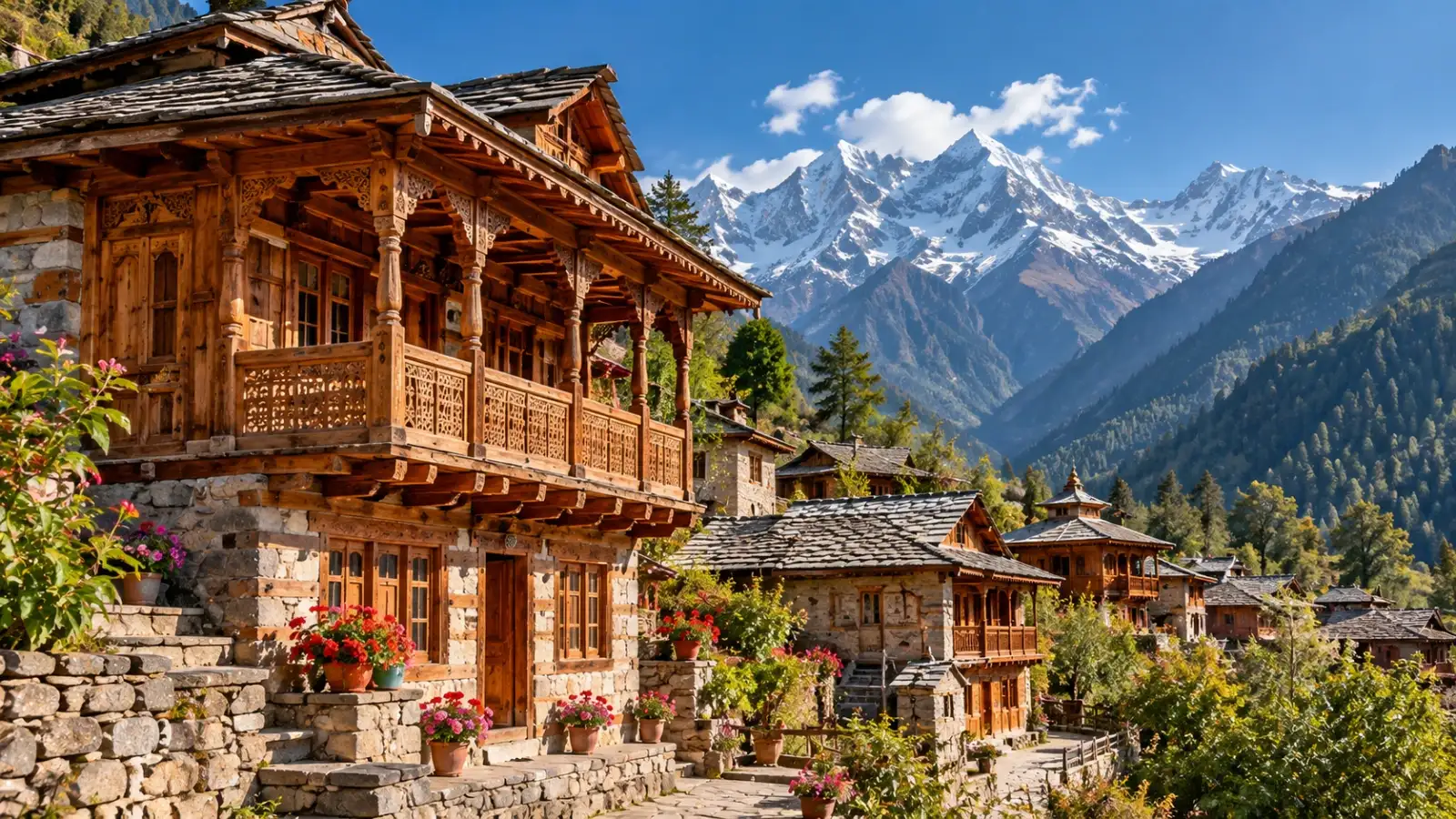
Traditional homes in the region often feature sloping roofs, wooden balconies and thick walls designed to cope with cold mountain weather. The use of timber and stone also reflects local knowledge of building in an earthquake-prone Himalayan landscape.
The Kinnauri architectural style is particularly interesting because wooden beams are carefully integrated with stone masonry. Some traditional homes and religious structures also feature carved wooden elements, decorative balconies and distinctive roofs.
The village's historic buildings stand against the dramatic backdrop of the Kinner Kailash mountain range.
Wood and stone are commonly combined in older structures, while slate and other locally available materials are used for roofing. Wooden balconies, compact layouts and sloping roofs help buildings respond to the region's cold climate.
The village is also known for its traditional temples, which display intricate wooden craftsmanship.
The village's historic temples are particularly notable for their wooden construction and decorative craftsmanship. The Jamlu Devta Temple complex is an important example of the area's traditional religious architecture.
Visitors should respect local customs and community rules while exploring the settlement.
Older homes commonly use stone, mud and timber, with compact designs that help retain warmth. Wooden doors, beams and small openings are practical features of traditional houses in this cold desert region.
Although stone and mud dominate much of the construction, wooden elements remain important in the architectural character of the settlement.
The region's traditional building style reflects the influence of local Dard communities and the need to adapt to heavy snowfall and cold conditions. Wood has historically been an important construction material because of its availability in the surrounding landscape.
The village settlements also offer a glimpse into the region's distinctive cultural heritage.
Traditional Kashmiri houses may feature carved wooden balconies, decorative window frames and projecting structures known as dabb. These architectural details give older neighbourhoods a distinctive appearance.
The use of timber framing and masonry also reflects traditional approaches to building in an earthquake-prone region.
Some homes and community structures use locally available timber and bamboo, with raised platforms and sloping roofs suited to the region's heavy rainfall. Wooden elements are often combined with other natural materials, reflecting the close relationship between local architecture and the surrounding environment.
The village provides an interesting contrast to the stone-and-timber homes of the Himalayas.
Carved doors, balconies, pillars and window frames also reflect the craftsmanship of local artisans. These details often carry cultural meaning, while construction methods demonstrate generations of knowledge about climate, materials and the landscape.
India's traditional wooden architecture offers a fascinating look at how communities have built homes according to their surroundings and cultural traditions. From the timber-and-stone houses of Kinnaur to the wooden structures of Kashmir and the bamboo-influenced buildings of Meghalaya, each region has developed its own architectural identity. Exploring these villages is an opportunity to appreciate local craftsmanship and understand why preserving traditional building techniques remains important.
1. Naggar, Himachal Pradesh
Located in the Kullu Valley, Naggar is known for its traditional Himachali architecture, particularly houses built using wood and stone. One of its most recognised structures is Naggar Castle, a historic building that combines local timber construction with stone masonry.Traditional homes in the region often feature sloping roofs, wooden balconies and thick walls designed to cope with cold mountain weather. The use of timber and stone also reflects local knowledge of building in an earthquake-prone Himalayan landscape.
2. Kalpa, Himachal Pradesh
Kalpa, situated in the Kinnaur district, offers beautiful examples of traditional mountain architecture. Many older buildings combine stone, timber and slate, creating structures suited to the region's cold winters and changing weather.The Kinnauri architectural style is particularly interesting because wooden beams are carefully integrated with stone masonry. Some traditional homes and religious structures also feature carved wooden elements, decorative balconies and distinctive roofs.
The village's historic buildings stand against the dramatic backdrop of the Kinner Kailash mountain range.
3. Chitkul, Himachal Pradesh
Chitkul is a picturesque village in the Sangla Valley of Kinnaur. Its traditional houses reflect the architectural practices of high-altitude Himalayan communities.Wood and stone are commonly combined in older structures, while slate and other locally available materials are used for roofing. Wooden balconies, compact layouts and sloping roofs help buildings respond to the region's cold climate.
The village is also known for its traditional temples, which display intricate wooden craftsmanship.
4. Malana, Himachal Pradesh
Malana, located in the Parvati Valley, is known for its distinctive cultural traditions and traditional architecture. Older houses often combine timber and stone, with wooden balconies and carved details that reflect the region's building heritage.The village's historic temples are particularly notable for their wooden construction and decorative craftsmanship. The Jamlu Devta Temple complex is an important example of the area's traditional religious architecture.
Visitors should respect local customs and community rules while exploring the settlement.
5. Kibber, Himachal Pradesh
Kibber, in the Spiti Valley, is one of the high-altitude villages where traditional building techniques respond to an extreme mountain climate.Older homes commonly use stone, mud and timber, with compact designs that help retain warmth. Wooden doors, beams and small openings are practical features of traditional houses in this cold desert region.
Although stone and mud dominate much of the construction, wooden elements remain important in the architectural character of the settlement.
6. Gurez Valley Villages , Jammu and Kashmir
The villages of Gurez Valley are known for their distinctive wooden houses and traditional mountain architecture. Older homes often feature timber construction, sloping roofs and carved wooden details.The region's traditional building style reflects the influence of local Dard communities and the need to adapt to heavy snowfall and cold conditions. Wood has historically been an important construction material because of its availability in the surrounding landscape.
The village settlements also offer a glimpse into the region's distinctive cultural heritage.
7. Srinagar's Old Neighbourhoods, Jammu and Kashmir
Although Srinagar is a city rather than a village, its old neighbourhoods preserve some of India's finest examples of traditional wooden architecture. The region is particularly known for dhajji-dewari, a construction technique involving timber frames filled with masonry.Traditional Kashmiri houses may feature carved wooden balconies, decorative window frames and projecting structures known as dabb. These architectural details give older neighbourhoods a distinctive appearance.
The use of timber framing and masonry also reflects traditional approaches to building in an earthquake-prone region.
8. Mawlynnong, Meghalaya
Mawlynnong, in Meghalaya's East Khasi Hills, is better known for its community-led cleanliness initiatives, but it also offers examples of traditional Khasi building practices.Some homes and community structures use locally available timber and bamboo, with raised platforms and sloping roofs suited to the region's heavy rainfall. Wooden elements are often combined with other natural materials, reflecting the close relationship between local architecture and the surrounding environment.
The village provides an interesting contrast to the stone-and-timber homes of the Himalayas.
What Makes Traditional Wooden Architecture Special?
Traditional wooden architecture in India varies considerably between regions. In the Himalayas, timber is often combined with stone and mud to create buildings suited to cold weather and seismic activity. In the northeast, bamboo and wood are frequently used in structures designed for heavy rainfall and humid conditions.Carved doors, balconies, pillars and window frames also reflect the craftsmanship of local artisans. These details often carry cultural meaning, while construction methods demonstrate generations of knowledge about climate, materials and the landscape.
India's traditional wooden architecture offers a fascinating look at how communities have built homes according to their surroundings and cultural traditions. From the timber-and-stone houses of Kinnaur to the wooden structures of Kashmir and the bamboo-influenced buildings of Meghalaya, each region has developed its own architectural identity. Exploring these villages is an opportunity to appreciate local craftsmanship and understand why preserving traditional building techniques remains important.
Next Story