
India's newest lizard: Scientists discover hidden leopard gecko in Bihar's Kaimur hills


Scientists have officially identified a new species of leopard gecko from the rocky forests of Bihar’s Kaimur hills, marking the first recorded leopard gecko species ever discovered in the state. Named Eublepharis jhuma or Jhuma’s leopard gecko, the reptile was first spotted during wildlife surveys in 2021 but only recently confirmed as a completely distinct species after detailed DNA and physical analysis. Researchers say the discovery is significant because leopard geckos are heavily trafficked in the illegal exotic pet trade, while the finding itself suggests the Kaimur Plateau may be an overlooked biodiversity hotspot with ancient evolutionary lineages still hidden across its rocky landscapes.
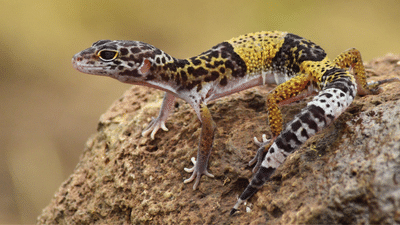
New lizard species leopard gecko discovered in Bihar
The newly identified reptile was discovered near the Kaimur Wildlife Sanctuary in Bihar during surveys conducted by researchers from the Zoological Survey of India, the Wildlife Institute of India, Ravenshaw University, Fakir Mohan University and other institutions.
Scientists initially believed the animal resembled already known leopard gecko species from central India. However, closer examination revealed several unusual physical traits. Researchers later conducted mitochondrial DNA analysis, which confirmed the reptile belonged to a previously unknown evolutionary lineage.
The species has now been officially named Eublepharis jhuma and added to India’s growing list of native leopard geckos.
The discovery is drawing scientific attention because leopard geckos of the genus Eublepharis are considered ancient reptiles with highly localised distributions. Before this discovery, most Indian leopard gecko species had been recorded mainly from dry and rocky landscapes across states such as Gujarat, Rajasthan, Madhya Pradesh and Maharashtra.
The Bihar discovery expands the known geographic range of Indian leopard geckos further east into the Vindhyan-Kaimur landscape. Scientists believe the species may have evolved separately for millions of years due to geological isolation across the plateau systems of eastern and central India.
Researchers say the discovery also highlights how understudied many Indian ecosystems still remain, especially rocky plateaus and dry forest regions outside traditional biodiversity hotspots.
What makes Jhuma’s leopard gecko different
Scientists identified several features that distinguish the new reptile from its closest relatives. The medium-sized lizard reaches roughly 14 centimetres in body length and has a dark brown back covered with pale spotted bands.
Unlike related species, the gecko possesses large flat bumpy scales across its back with unusually wide gaps between them. Researchers also documented a higher number of tiny textured ridges called lamellae beneath its fourth toe, which help provide grip while climbing rocky terrain.
Another distinguishing characteristic involves the reptile’s tail. If the tail breaks and regenerates, the replacement scales grow back in flat rectangular patterns rather than circular formations commonly seen in related species.
Why the species was named ‘Jhuma’
The research team named the reptile after Dr Dhriti Banerjee, the first female director of the Zoological Survey of India. “Jhuma” is reportedly her nickname.
Researchers said the name was chosen to honour her contributions to Indian zoology, biodiversity documentation and wildlife conservation. Dr Banerjee became the first woman to lead the century-old institution in 2021.
Illegal wildlife trade remains a concern
The discovery is also important from a conservation perspective because leopard geckos are among the reptiles frequently targeted in the international exotic pet trade. Their spotted appearance, manageable size and calm behaviour make them highly desirable among collectors.
Wild populations across India remain poorly studied, and conservationists warn that newly discovered species can quickly become vulnerable to illegal trafficking once public attention increases.
Researchers say habitat destruction is another growing threat. Expansion of agriculture, quarrying, deforestation and human settlement continue fragmenting rocky dry forest habitats across eastern India.
Kaimur hills may hold more undiscovered wildlife
Scientists now believe the Kaimur Plateau could represent an overlooked hotspot for biodiversity. Compared with regions such as the Western Ghats or the Eastern Himalayas, the plateau has received far less scientific attention over the years.
Its isolated rocky escarpments and dry deciduous forests may have allowed ancient animal lineages to survive undetected for long periods. Researchers believe additional undiscovered reptiles, amphibians and invertebrates may still exist across the region.
The discovery of Jhuma’s leopard gecko is increasingly being viewed as evidence that some of India’s least explored landscapes may still contain major biological surprises waiting to be documented.
New lizard species leopard gecko discovered in Bihar
The newly identified reptile was discovered near the Kaimur Wildlife Sanctuary in Bihar during surveys conducted by researchers from the Zoological Survey of India, the Wildlife Institute of India, Ravenshaw University, Fakir Mohan University and other institutions.
Scientists initially believed the animal resembled already known leopard gecko species from central India. However, closer examination revealed several unusual physical traits. Researchers later conducted mitochondrial DNA analysis, which confirmed the reptile belonged to a previously unknown evolutionary lineage.
The species has now been officially named Eublepharis jhuma and added to India’s growing list of native leopard geckos.
The discovery is drawing scientific attention because leopard geckos of the genus Eublepharis are considered ancient reptiles with highly localised distributions. Before this discovery, most Indian leopard gecko species had been recorded mainly from dry and rocky landscapes across states such as Gujarat, Rajasthan, Madhya Pradesh and Maharashtra.
The Bihar discovery expands the known geographic range of Indian leopard geckos further east into the Vindhyan-Kaimur landscape. Scientists believe the species may have evolved separately for millions of years due to geological isolation across the plateau systems of eastern and central India.
Researchers say the discovery also highlights how understudied many Indian ecosystems still remain, especially rocky plateaus and dry forest regions outside traditional biodiversity hotspots.
What makes Jhuma’s leopard gecko different
Scientists identified several features that distinguish the new reptile from its closest relatives. The medium-sized lizard reaches roughly 14 centimetres in body length and has a dark brown back covered with pale spotted bands.
Unlike related species, the gecko possesses large flat bumpy scales across its back with unusually wide gaps between them. Researchers also documented a higher number of tiny textured ridges called lamellae beneath its fourth toe, which help provide grip while climbing rocky terrain.
Another distinguishing characteristic involves the reptile’s tail. If the tail breaks and regenerates, the replacement scales grow back in flat rectangular patterns rather than circular formations commonly seen in related species.
Why the species was named ‘Jhuma’
The research team named the reptile after Dr Dhriti Banerjee, the first female director of the Zoological Survey of India. “Jhuma” is reportedly her nickname.
Researchers said the name was chosen to honour her contributions to Indian zoology, biodiversity documentation and wildlife conservation. Dr Banerjee became the first woman to lead the century-old institution in 2021.
Illegal wildlife trade remains a concern
The discovery is also important from a conservation perspective because leopard geckos are among the reptiles frequently targeted in the international exotic pet trade. Their spotted appearance, manageable size and calm behaviour make them highly desirable among collectors.
Wild populations across India remain poorly studied, and conservationists warn that newly discovered species can quickly become vulnerable to illegal trafficking once public attention increases.
Researchers say habitat destruction is another growing threat. Expansion of agriculture, quarrying, deforestation and human settlement continue fragmenting rocky dry forest habitats across eastern India.
Kaimur hills may hold more undiscovered wildlife
Scientists now believe the Kaimur Plateau could represent an overlooked hotspot for biodiversity. Compared with regions such as the Western Ghats or the Eastern Himalayas, the plateau has received far less scientific attention over the years.
Its isolated rocky escarpments and dry deciduous forests may have allowed ancient animal lineages to survive undetected for long periods. Researchers believe additional undiscovered reptiles, amphibians and invertebrates may still exist across the region.
The discovery of Jhuma’s leopard gecko is increasingly being viewed as evidence that some of India’s least explored landscapes may still contain major biological surprises waiting to be documented.
Next Story