
India’s Top 5 Monuments: Icons of History Every Tourist Must See

India’s Icons of History continue to captivate travellers from across the globe, blending architectural grandeur, cultural significance, and centuries-old stories. Visitor statistics reveal which monuments attract millions, highlighting not only tourism trends but also the enduring charm of India’s heritage sites. From Mughal masterpieces to temple marvels, these landmarks offer a window into India’s rich past and ongoing preservation efforts.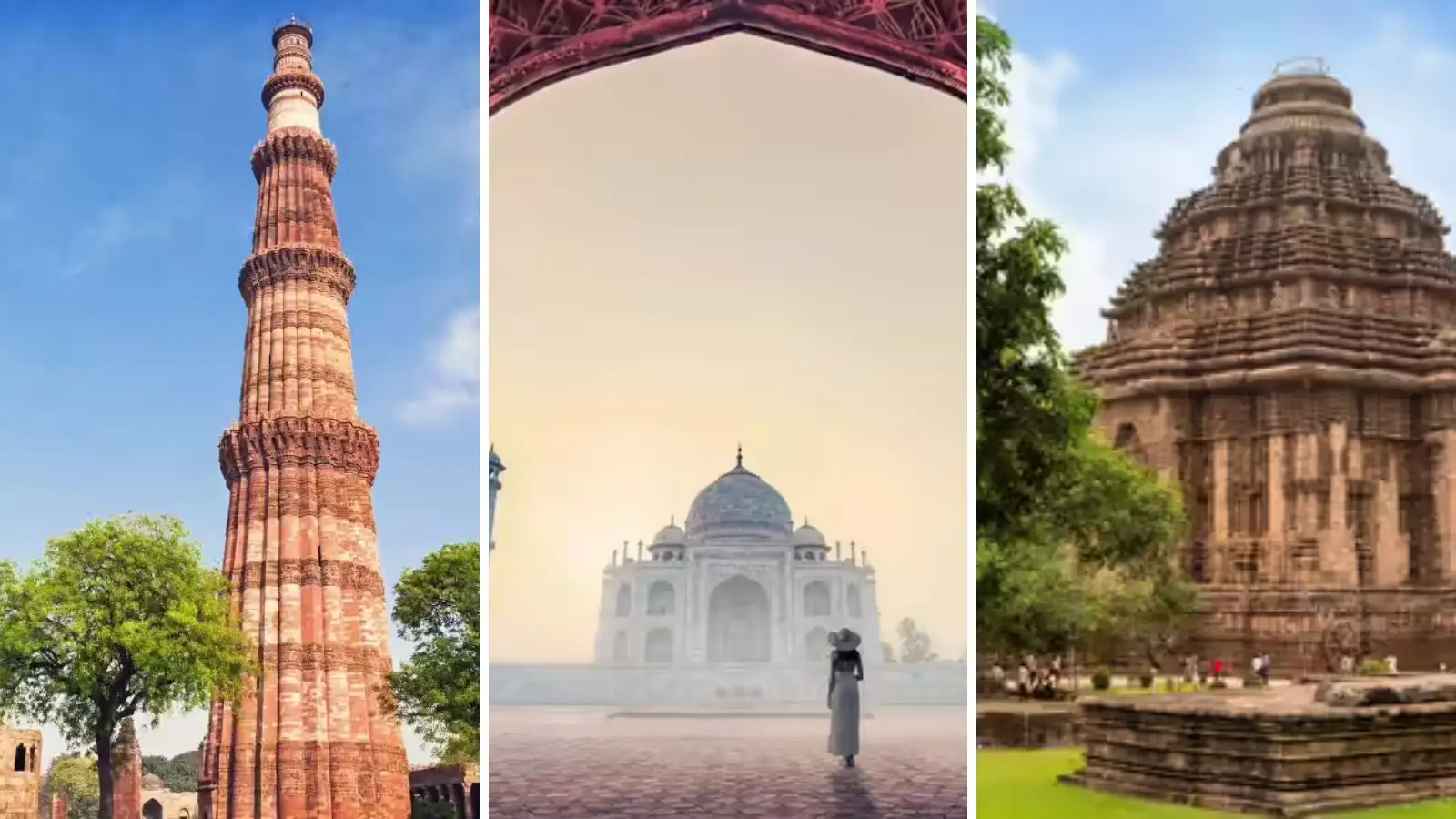
1. Taj Mahal, Agra, Uttar Pradesh – The Eternal Symbol of Love
With over 62.64 lakh visitors, the Taj Mahal remains India’s most beloved monument. Commissioned in 1632 by Shah Jahan in memory of Mumtaz Mahal, this ivory-white marble mausoleum transforms under different lighting, creating a breathtaking visual spectacle. Its perfectly symmetrical dome, minarets, and Charbagh gardens showcase an exquisite blend of Persian and Indian artistry through delicate pietra dura inlay work. Continuous conservation by the Archaeological Survey of India (ASI) ensures this UNESCO World Heritage site retains its timeless beauty despite environmental and pollution challenges.
2. Sun Temple, Konark, Odisha – A Chariot of Stone
The Sun Temple at Konark, drawing 35.71 lakh visitors, is a 13th-century marvel built by King Narasimhadeva I. Designed as a massive stone chariot for the sun god Surya, it features 12 intricately carved wheels and seven horses in apparent motion. Khondalite carvings depict sacred myths alongside daily life scenes, making it an artistic treasure. Its coastal location exposes the monument to salt and moisture, making conservation a constant battle against nature’s elements.
3. Qutub Minar, Delhi – Delhi’s Majestic Tower
Standing tall with 32.04 lakh visitors, the Qutub Minar is an iconic testament to Delhi’s history. Construction began in 1199 under Qutb-ud-din Aibak and was completed by his successors. This fluted sandstone tower, adorned with intricate inscriptions, rises above a historic complex that includes the Quwwat-ul-Islam Mosque and the Iron Pillar. High visitor numbers necessitate careful maintenance and monitoring to preserve its structural integrity while keeping its centuries-old story accessible to all.
4. Red Fort , Delhi – Mughal Majesty Meets Modern India
The Red Fort attracts 28.84 lakh visitors, offering both Mughal splendor and a symbol of India’s independence. Built in 1648 by Shah Jahan, its red sandstone walls house palaces, audience halls, and gardens that once thrived with courtly life. Key areas like the Diwan-i-Aam and Diwan-i-Khas still reflect ceremonial grandeur. Conservation efforts include restoration of water systems, crowd management during national events, and ongoing structural upkeep, ensuring this UNESCO World Heritage site remains vibrant amidst modern Delhi’s hustle.
5. Bibi Ka Maqbara , Aurangabad, Maharashtra – The Taj’s Serene Cousin
Often called the “Taj of the Deccan,” Bibi Ka Maqbara receives 20.04 lakh visitors seeking a quieter, more intimate experience. Built in the late 17th century by Prince Azam Shah in memory of his mother, Dilras Banu Begum, it mirrors the Taj Mahal’s garden layout but features marble sparingly over a basalt and plaster core. The monument’s symmetry and landscaped gardens offer a tranquil retreat, with ongoing conservation focused on plaster repair and garden maintenance to preserve its serene charm.
Preserving India’s Heritage for Future Generations
Visiting India’s Icons of History is more than sightseeing - it’s a journey through time, culture, and artistry. Each monument tells a story of the people, rulers, and traditions that shaped the nation. As tourism grows, ongoing conservation efforts ensure these treasures remain intact, allowing future generations to experience the grandeur and legacy of India’s rich heritage.
1. Taj Mahal, Agra, Uttar Pradesh – The Eternal Symbol of Love
With over 62.64 lakh visitors, the Taj Mahal remains India’s most beloved monument. Commissioned in 1632 by Shah Jahan in memory of Mumtaz Mahal, this ivory-white marble mausoleum transforms under different lighting, creating a breathtaking visual spectacle. Its perfectly symmetrical dome, minarets, and Charbagh gardens showcase an exquisite blend of Persian and Indian artistry through delicate pietra dura inlay work. Continuous conservation by the Archaeological Survey of India (ASI) ensures this UNESCO World Heritage site retains its timeless beauty despite environmental and pollution challenges.
2. Sun Temple, Konark, Odisha – A Chariot of Stone
The Sun Temple at Konark, drawing 35.71 lakh visitors, is a 13th-century marvel built by King Narasimhadeva I. Designed as a massive stone chariot for the sun god Surya, it features 12 intricately carved wheels and seven horses in apparent motion. Khondalite carvings depict sacred myths alongside daily life scenes, making it an artistic treasure. Its coastal location exposes the monument to salt and moisture, making conservation a constant battle against nature’s elements.
3. Qutub Minar, Delhi – Delhi’s Majestic Tower
Standing tall with 32.04 lakh visitors, the Qutub Minar is an iconic testament to Delhi’s history. Construction began in 1199 under Qutb-ud-din Aibak and was completed by his successors. This fluted sandstone tower, adorned with intricate inscriptions, rises above a historic complex that includes the Quwwat-ul-Islam Mosque and the Iron Pillar. High visitor numbers necessitate careful maintenance and monitoring to preserve its structural integrity while keeping its centuries-old story accessible to all.
4. Red Fort , Delhi – Mughal Majesty Meets Modern India
The Red Fort attracts 28.84 lakh visitors, offering both Mughal splendor and a symbol of India’s independence. Built in 1648 by Shah Jahan, its red sandstone walls house palaces, audience halls, and gardens that once thrived with courtly life. Key areas like the Diwan-i-Aam and Diwan-i-Khas still reflect ceremonial grandeur. Conservation efforts include restoration of water systems, crowd management during national events, and ongoing structural upkeep, ensuring this UNESCO World Heritage site remains vibrant amidst modern Delhi’s hustle.
5. Bibi Ka Maqbara , Aurangabad, Maharashtra – The Taj’s Serene Cousin
Often called the “Taj of the Deccan,” Bibi Ka Maqbara receives 20.04 lakh visitors seeking a quieter, more intimate experience. Built in the late 17th century by Prince Azam Shah in memory of his mother, Dilras Banu Begum, it mirrors the Taj Mahal’s garden layout but features marble sparingly over a basalt and plaster core. The monument’s symmetry and landscaped gardens offer a tranquil retreat, with ongoing conservation focused on plaster repair and garden maintenance to preserve its serene charm.
Preserving India’s Heritage for Future Generations
Visiting India’s Icons of History is more than sightseeing - it’s a journey through time, culture, and artistry. Each monument tells a story of the people, rulers, and traditions that shaped the nation. As tourism grows, ongoing conservation efforts ensure these treasures remain intact, allowing future generations to experience the grandeur and legacy of India’s rich heritage.
Next Story