
India’s Traditional Pickles That Need Months Before They Are Ready

A jar of Indian pickle can look deceptively simple. A few pieces of fruit or vegetables, some oil, salt and spices, perhaps. But some traditional Indian pickles are anything but quick. They can spend weeks or months sitting in clay jars, glass containers or large ceramic vessels while sunlight, salt, oil and fermentation gradually transform their flavour. These slow methods developed long before refrigerators and supermarkets made food available throughout the year. Pickling allowed families to preserve seasonal produce and create something that could be eaten long after the harvest. Across India, the recipes vary dramatically, but the underlying idea remains remarkably similar: patience can turn ordinary ingredients into food with extraordinary depth.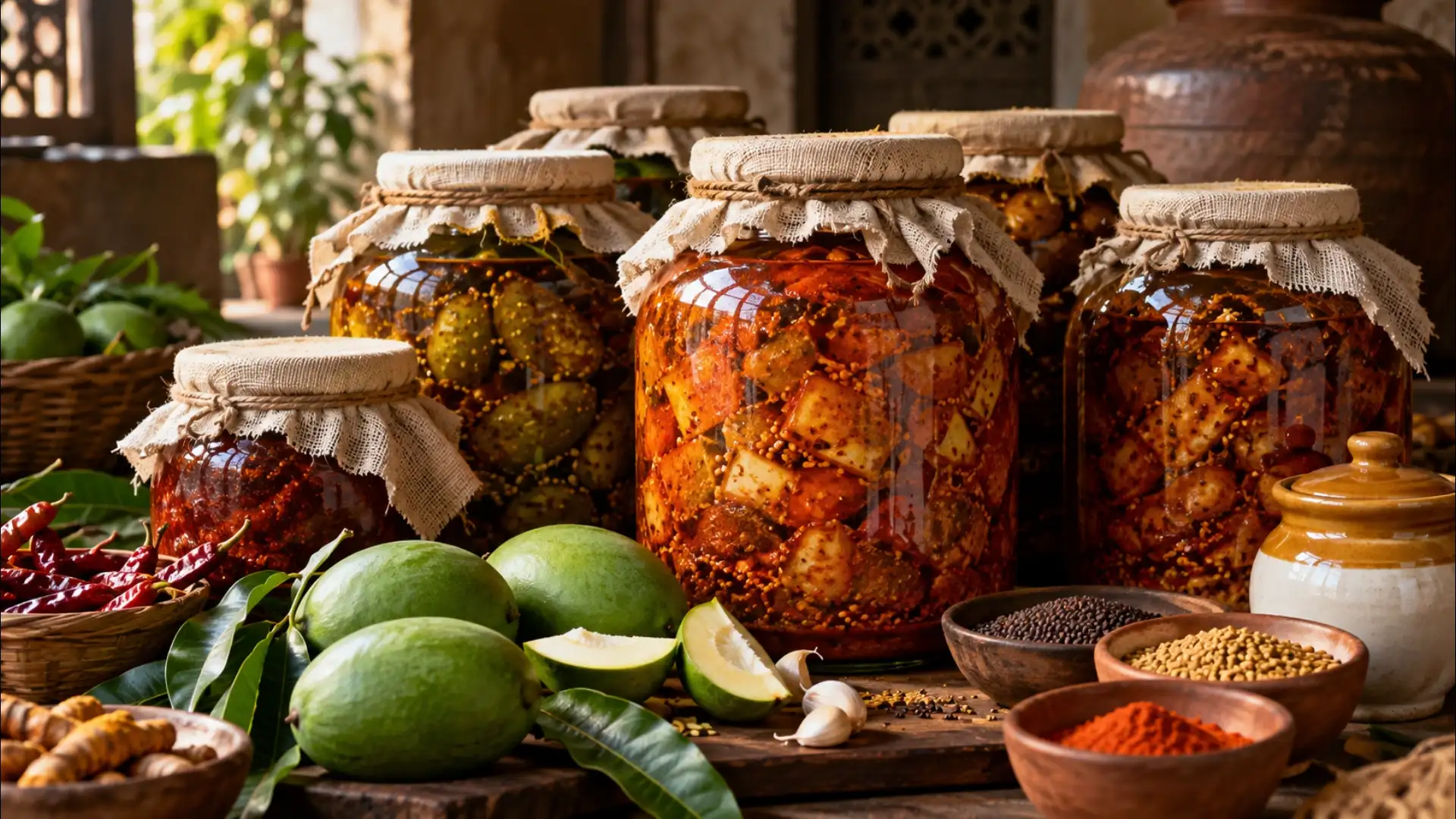
Raw, firm mangoes are cut into pieces and combined with salt, spices and oil. Depending on the regional recipe, the mixture may be placed in a jar and left to mature.
During this period, the mango gradually absorbs the seasoning while its texture and flavour change.
In many Indian households, pickle-making is closely linked to the arrival of raw mangoes in summer. Families prepare large batches because the finished pickle can be enjoyed for months.
The process also reflects an older relationship with seasonal food. Instead of expecting mangoes to be available throughout the year, households found ways to preserve their flavour beyond the season.
The leaves can be turned into a pickle using oil, chillies, spices and salt. The combination produces a distinctive accompaniment to rice and other everyday meals.
Traditional preparations vary between households, with some allowing the mixture time to mature before serving.
Gongura also demonstrates how regional pickling developed around locally available plants. What might appear to be a simple side dish is actually the result of generations of experimentation with ingredients, preservation and flavour.
Fresh bamboo shoots contain compounds that require careful preparation, and traditional methods often involve processing or fermentation before they are eaten.
In several communities, fermented bamboo shoots become an important ingredient in regional dishes and preserved preparations.
The resulting flavour can be intensely sour and aromatic, making it very different from the sweet-and-spicy mango pickles familiar across much of India.
These preparations also demonstrate how preservation techniques can be shaped by local ecology. Communities used plants that grew abundantly around them and developed methods to make them useful for longer periods.
The fruit is often cut and salted before being mixed with other ingredients. Depending on the recipe, it may be left to mature for an extended period.
Salt draws moisture from the fruit and creates conditions that discourage many unwanted microorganisms. The acidic nature of lime provides another layer of preservation.
The result is a condiment capable of lasting far longer than fresh citrus.
That was particularly valuable before refrigeration became commonplace.
Many households traditionally placed pickle jars in the sun for periods during preparation. Heat could encourage the ingredients to mature while also helping reduce moisture.
The jars were often covered carefully, because keeping unwanted moisture and contaminants away was essential.
This is a reminder that traditional food preservation was based on close observation. People learnt through experience how temperature, moisture, salt and oil affected food over time.
Seasonal fruits and vegetables could be processed when abundant and stored for later use.
A successful batch reduced waste and provided variety when fresh produce was less available.
In rural households especially, this could make a meaningful difference to how food was managed across the year.
The flavour develops gradually. Ingredients soften, spices integrate and fermentation can introduce additional complexity.
Pickles also preserve regional identity. A recipe can vary from one district, community or family to another, with small differences in oil, chilli, salt or spices producing a completely different result.
The recipes were not created by following laboratory measurements. They evolved through generations of observation and practice. Families learnt when mangoes were ready, how much salt was necessary, how long a jar should be exposed to sunlight and when the pickle had matured.
That knowledge is easy to overlook because the finished product occupies such a small space on the dining table.
Mango Pickle That Changes With Time
Mango pickle is one of India's best-known preserved foods, but traditional preparation can involve considerable waiting.Raw, firm mangoes are cut into pieces and combined with salt, spices and oil. Depending on the regional recipe, the mixture may be placed in a jar and left to mature.
During this period, the mango gradually absorbs the seasoning while its texture and flavour change.
In many Indian households, pickle-making is closely linked to the arrival of raw mangoes in summer. Families prepare large batches because the finished pickle can be enjoyed for months.
The process also reflects an older relationship with seasonal food. Instead of expecting mangoes to be available throughout the year, households found ways to preserve their flavour beyond the season.
Gongura Pickle and the Flavour of Andhra Pradesh
In Andhra Pradesh and Telangana, gongura is prized for its sharp, sour flavour.The leaves can be turned into a pickle using oil, chillies, spices and salt. The combination produces a distinctive accompaniment to rice and other everyday meals.
Traditional preparations vary between households, with some allowing the mixture time to mature before serving.
Gongura also demonstrates how regional pickling developed around locally available plants. What might appear to be a simple side dish is actually the result of generations of experimentation with ingredients, preservation and flavour.
Bamboo Shoot Pickles of the North-East
Some of India's most distinctive pickles come from the North-East, where bamboo shoots have long been part of local food traditions.Fresh bamboo shoots contain compounds that require careful preparation, and traditional methods often involve processing or fermentation before they are eaten.
In several communities, fermented bamboo shoots become an important ingredient in regional dishes and preserved preparations.
The resulting flavour can be intensely sour and aromatic, making it very different from the sweet-and-spicy mango pickles familiar across much of India.
These preparations also demonstrate how preservation techniques can be shaped by local ecology. Communities used plants that grew abundantly around them and developed methods to make them useful for longer periods.
Lime Pickle and the Power of Salt
Lime pickle is another example of preservation through a combination of salt, acidity, spices and oil.The fruit is often cut and salted before being mixed with other ingredients. Depending on the recipe, it may be left to mature for an extended period.
Salt draws moisture from the fruit and creates conditions that discourage many unwanted microorganisms. The acidic nature of lime provides another layer of preservation.
The result is a condiment capable of lasting far longer than fresh citrus.
That was particularly valuable before refrigeration became commonplace.
The Sun Was Part of the Recipe
One of the most fascinating features of traditional Indian pickling is the use of sunlight.Many households traditionally placed pickle jars in the sun for periods during preparation. Heat could encourage the ingredients to mature while also helping reduce moisture.
The jars were often covered carefully, because keeping unwanted moisture and contaminants away was essential.
This is a reminder that traditional food preservation was based on close observation. People learnt through experience how temperature, moisture, salt and oil affected food over time.
You may also like
- Ganga Aarti held on the River Thames for the first time
- 4 Anti-Ageing Foods Nobody Talks About Enough
- First trip abroad? 7 money mistakes Indian travellers wish they had known sooner
- Prince George followed his father to Eton, and now King Charles may revive a secret royal ritual for him
- Intelligent ways you reuse boiled rice water (Maad) at home
Pickling Was About Survival, Not Just Taste
It is easy to think of pickle simply as something served alongside a meal. Historically, however, preservation could be an important part of household food security.Seasonal fruits and vegetables could be processed when abundant and stored for later use.
A successful batch reduced waste and provided variety when fresh produce was less available.
In rural households especially, this could make a meaningful difference to how food was managed across the year.
Why Traditional Pickles Still Matter
Modern refrigeration has reduced the necessity of preserving food for survival, but traditional pickles remain popular because they carry something that industrial food often struggles to reproduce.The flavour develops gradually. Ingredients soften, spices integrate and fermentation can introduce additional complexity.
Pickles also preserve regional identity. A recipe can vary from one district, community or family to another, with small differences in oil, chilli, salt or spices producing a completely different result.
A Jar That Carries Generations of Knowledge
Traditional pickle-making is ultimately a lesson in patience.The recipes were not created by following laboratory measurements. They evolved through generations of observation and practice. Families learnt when mangoes were ready, how much salt was necessary, how long a jar should be exposed to sunlight and when the pickle had matured.
That knowledge is easy to overlook because the finished product occupies such a small space on the dining table.






Loving Newspoint? Download the app now
